FTC Disclosure: LimeCrema has an affiliate partnership with TappWater, and we are a participant in the Amazon Services LLC Associates Program. If you buy through the links on this page, we may earn a commission – and it costs you nothing extra. TappWater is a direct-to-consumer brand, so its link goes to tappwater.co through our partner link; the rest go to Amazon. Learn more.
It is the question every new espresso owner asks sooner or later: does my machine need special water, or will the tap do? The honest answer is that espresso does not demand bottled, engineered or "barista-grade" water – but it does have a sweet spot, and water that lands far outside it changes both the taste in the cup and the lifespan of the machine. This page answers the question directly, then explains the four numbers that actually matter, and tells you plainly when tap water is fine and when it is worth treating.
If you want the product side – filter picks and prices – see best water for espresso machines. For the full measured guide to TDS, hardness and alkalinity, read our coffee water TDS, hardness & alkalinity guide.
The Short Answer: You Don't Need "Special" Water — You Need the Right Water
There is no magic brand of espresso water and no need to buy bottles. What espresso actually needs is water that sits in a fairly wide, well-understood window: moderately mineralised, neutral, and free of chlorine. That is the whole idea. Within that window, ordinary filtered tap water performs as well as anything you can buy.
The reason the question keeps coming up is that the two failure modes are invisible at first. Water that is too hard looks and tastes normal but quietly deposits scale inside the boiler. Water that is too soft tastes normal out of the tap but extracts coffee poorly, so the shots come out thin and sour. Both are fixable, and both are easy to diagnose if you measure.
What "Special Water" Actually Means: Four Numbers
"Special water" is really shorthand for four measurable things. Get them roughly right and you are done. These are the SCA's published target values for brew water, not a rule you must obey to the decimal:
| Parameter | Target / range | What it controls |
|---|---|---|
| Total dissolved solids (TDS) | ~150 ppm (accept 75–250) | Overall mineral load; too low = flat and sour, too high = chalky and bitter |
| Total hardness (as CaCO3) | ~68 ppm (~50–175) | The calcium and magnesium that drive extraction — and that form scale when too high |
| Total alkalinity (as CaCO3) | ~40 ppm | The bicarbonate buffer; high alkalinity flattens acidity and accelerates scale |
| pH | ~7 (6.5–7.5) | How acids and bitters are perceived |
| Chlorine | 0 | The most common off-flavour in tap water; also hard on seals and boilers |
Hardness and alkalinity are the two people confuse most. Hardness is the calcium-and-magnesium content – it is what extracts flavour and what scales your boiler. Alkalinity is the buffering capacity – it is what dulls acidity when it is too high. A water can be hard and low-alkalinity, or soft and high-alkalinity; that is why a single "hardness" number is not enough. If you want the deep dive with the full target table and how to test each one, we keep it in the TDS, hardness & alkalinity guide.
Magnesium is the mineral worth calling out by name. Along with calcium it does the heavy lifting in extraction, and it is especially good at pulling out the fruity, sweet compounds in coffee. That is why some filters add magnesium back and why mineral packs include it. Very soft or distilled water has almost none, which is exactly why plain distilled water brews flat espresso.
When Tap Water Is Fine
For a large share of homes, tap water needs no treatment at all – or at most a chlorine filter. Tap water is generally fine for espresso when:
- Hardness is low to moderate – roughly below 5 grains per gallon (about 85 ppm). Below that line, scale builds slowly enough that normal descaling keeps the boiler clean.
- Alkalinity is moderate and stable – not so high that it flattens every coffee, not so low that shots taste sharp.
- Chlorine is the only obvious problem – a chemical, flat, "pool" taste. A simple carbon filter removes it.
- You are willing to descale on schedule – even good tap water eventually leaves some scale; the fix is routine maintenance, covered in how to descale an espresso machine.
If your numbers are in the window, the cheapest quality upgrade is not a product at all – it is leaving your water alone and descaling twice a year.
When You Need to Treat Your Water
Treatment is worth it when your water is clearly outside the window. There are three common cases:
1. Very hard water — the machine killer
Above roughly 5 grains per gallon, hardness becomes a machine-health problem. Heat drives dissolved calcium and bicarbonate out of solution as limescale (calcium carbonate), which coats the boiler, thermoblock and narrow passages. Symptoms build slowly: shots run slower, temperature drifts, pressure falls, and eventually a boiler or valve fails. The fix is softening or an in-tank/inline filter – see water filters for espresso machines.
2. Very soft or distilled water — the taste problem
Water with almost no minerals – distilled or reverse-osmosis, or naturally very soft tap water – under-extracts. There is nothing for the water to carry flavour with, so espresso tastes hollow and sour. The fix is remineralising: either a filter that adds magnesium back, or mineral packs you add to distilled water.
3. Heavy chlorine (or off-flavours) — the easy fix
Chlorine flattens aroma and reads as a chemical note in the cup. It is also the simplest problem to solve: any decent carbon filter handles it, and the change is immediate. If contamination rather than taste is your concern, that is a separate topic – see PFAS in drinking water.
Does Water Really Change the Taste of Espresso?
Yes, and more than most upgrades. A 36 g double shot is roughly 90% water, so the water is the majority of the drink. The measurable effects line up with the numbers above: very hard water tends to over-extract and read bitter and chalky; very soft water under-extracts and reads flat and sour; too much alkalinity mutes brightness. Fixing those numbers is one of the cheapest changes you can make to a cup – no grinder, machine or bean swap required. If you want the full explanation of the flavour mechanics, the TDS guide covers each parameter in depth.
What to Measure First (and What to Buy)
Before buying a filter, spend ten dollars and find out what you actually have. A TDS meter tells you where you sit in the 75–250 ppm window; hardness strips (or a test kit) separate hardness from alkalinity, which the TDS number cannot. Only then does it make sense to choose between a filter, a remineralising cartridge, mineral packs or nothing at all.
Craft911 Water Tester — Digital TDS Meter
Best First Tool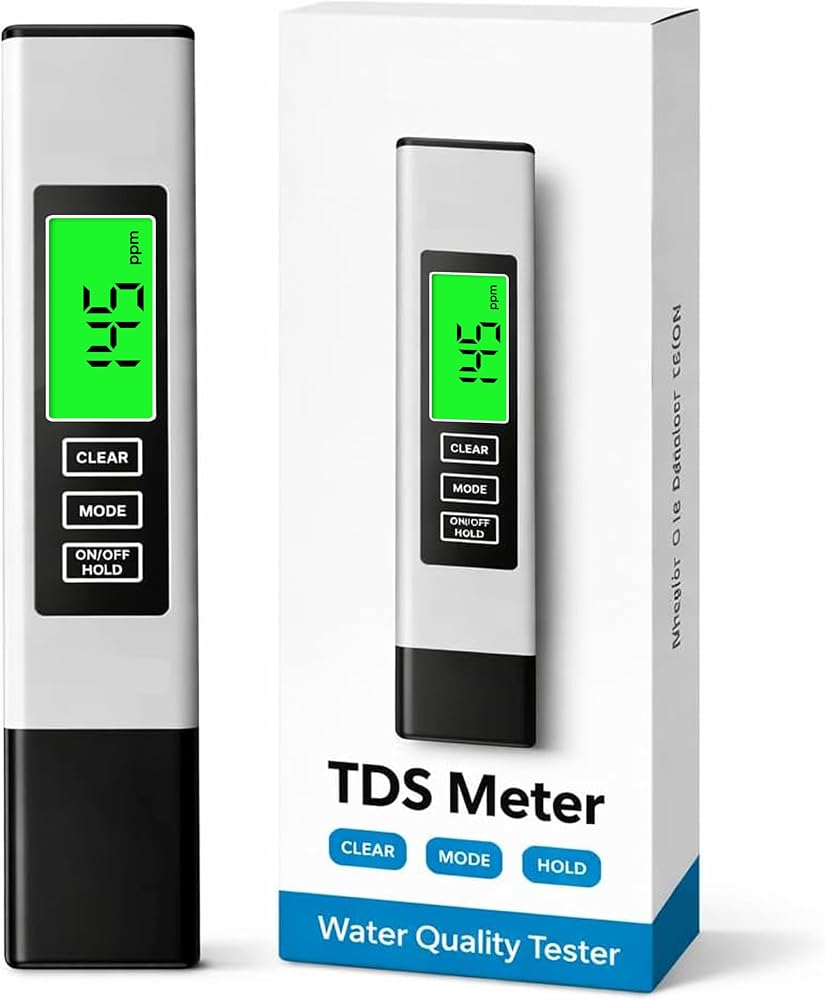
★ 4.4/5 from 3,285 verified Amazon reviews. The smallest purchase on this page and arguably the most useful: a TDS meter turns "my water tastes fine" into a number in ppm, which is the fastest way to see whether you are inside the SCA's 75–250 window, too hard, or too soft. It does not split hardness from alkalinity – pair it with the test kit below for that – but it answers the first question for ten dollars.
- Pros
- Only $9.99
- Instant ppm reading
- Tells you if you even have a problem
- 4.4★ from 3,285 reviews
- Cons
- TDS only – not hardness or alkalinity separately
- Needs occasional calibration
- Does not fix anything by itself
Varify Water Hardness Test Kit
Best for Hardness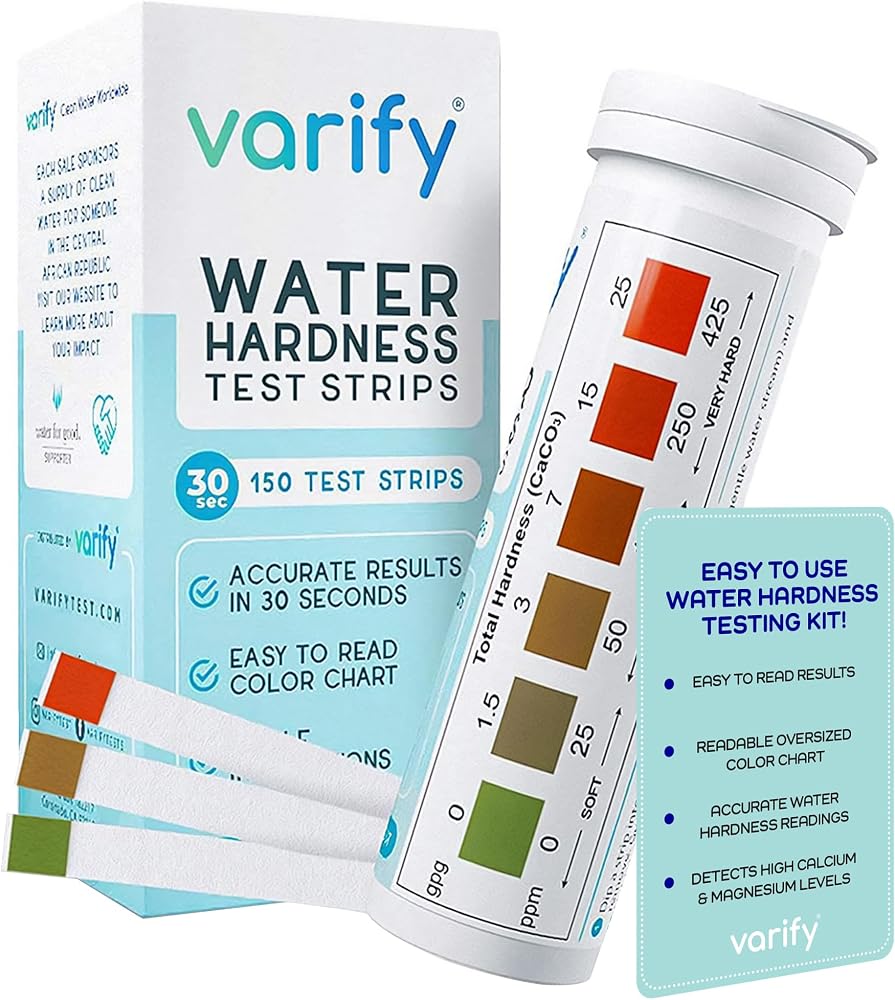
★ 4.4/5 from 7,234 verified Amazon reviews. TDS is a single number; hardness strips tell you the part of it that actually scales a boiler. If your TDS reads high and you want to know whether it is hardness (bad for the machine) or something else, this is the cheap check that answers it. Together with a TDS meter it gives you the two readings – hardness and total dissolved solids – that decide whether you need to soften, remineralise, or do nothing.
- Pros
- Separates hardness from overall TDS
- 100 tests in the kit
- 4.4★ from 7,234 reviews
- Fast, no lab involved
- Cons
- Approximate range, not a lab result
- Does not read alkalinity directly
- Reads colour bands by eye
TappWater — Filtered Tap Water for Espresso
Best Overall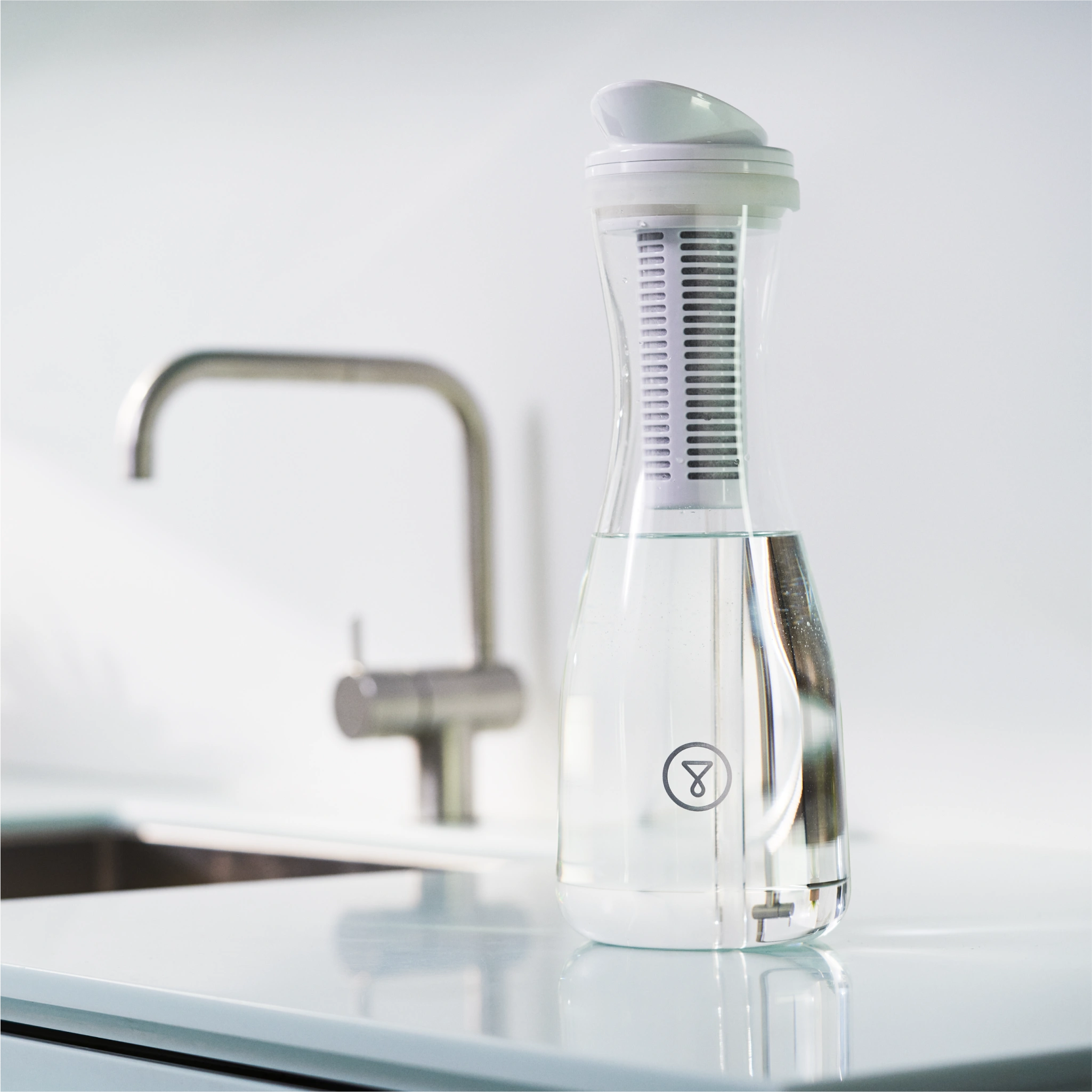
TappWater is our partner for the water topic and the simplest fix for the most common problem – chlorine. Its range scales from a travel bottle up to a countertop reverse-osmosis system, so you can strip chlorine and other contaminants without reordering jugs of distilled water. For most people whose tap water is otherwise in range, a faucet or pitcher system is the whole answer. If your water is hard, step up to a system that also addresses scale. It is affiliate partner content and we earn a commission, which we state plainly; the exact models, prices and the 10% discount are in our TappWater review.
- Pros
- Filtered tap water – no jug ritual
- Range covers pitcher, faucet, under-sink and RO
- 10% partner offer via our link
- Removes chlorine and a broad set of contaminants (manufacturer claim)
- Cons
- DTC only – not sold on Amazon
- Not every model addresses hardness/scale
- Recurring filter cost (like all filters)
Third Wave Water Espresso Profile — For Distilled Water
Best Build-From-Scratch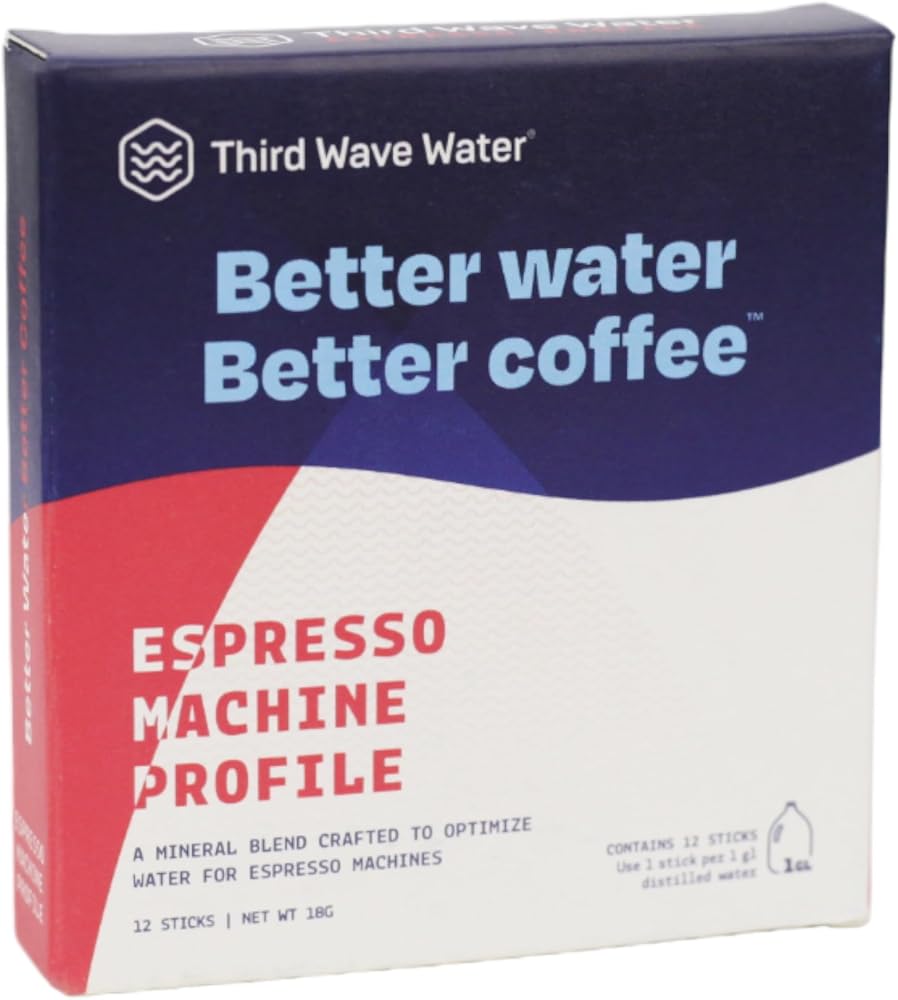
★ 4.5/5 from 919 verified Amazon reviews. If your water is very hard or very soft and you want the same result every time, this is the "special water" route done properly: start from distilled or reverse-osmosis water and stir in a mineral packet to hit a defined profile. The Espresso Profile is the one tuned for espresso machines. The trade-off is real – you must source distilled water and mix – but it is the most controllable way to land in the SCA window. It is a manufacturer-formulated blend; we have not lab-tested it.
- Pros
- Most repeatable, dial-in-able water
- 4.5★ from 919 reviews
- Espresso-specific mineral profile
- Fixes RO water that would otherwise be too soft
- Cons
- You must source distilled/RO water yourself
- Extra step before every brew
- Per-gallon cost adds up vs filtering tap
BWT Magnesium Mineralized Water Filter — 3 Long-Life Mg2+ Cartridges
Best Remineralising Filter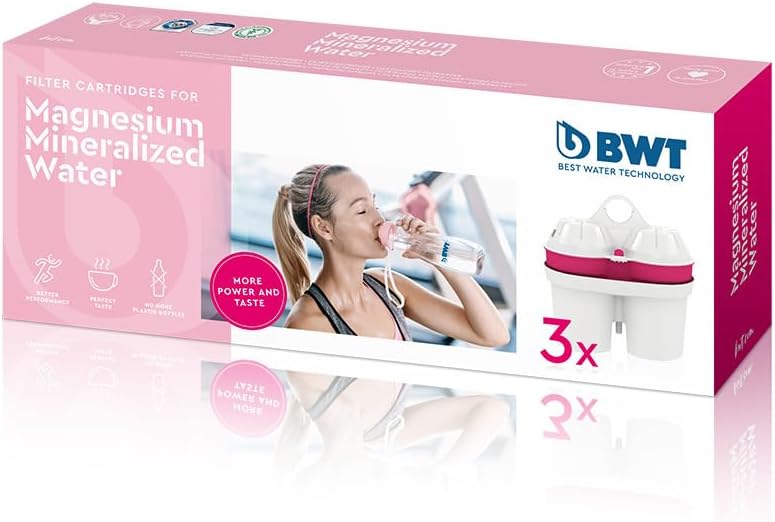
★ 4.7/5 from 5,390 verified Amazon reviews. BWT's magnesium cartridges filter the water and add magnesium back in one step – useful when your filtered water ends up a little too flat, which is exactly the "soft water" taste problem. It is the same company behind the inline BWT Bestmax espresso filters in the filter guide. The exact compatibility depends on which BWT host system you have, so check the listing for the cartridge series that matches your unit.
- Pros
- Filters and remineralises in one step
- Adds magnesium – good for extraction
- 4.7★ from 5,390 reviews
- Same maker as BWT's pro espresso filters
- Cons
- Must match the right BWT host system
- Not a standalone system
- Untested by us – manufacturer spec
Brita Large 10-Cup Water Filter Pitcher
Best Budget Starting Point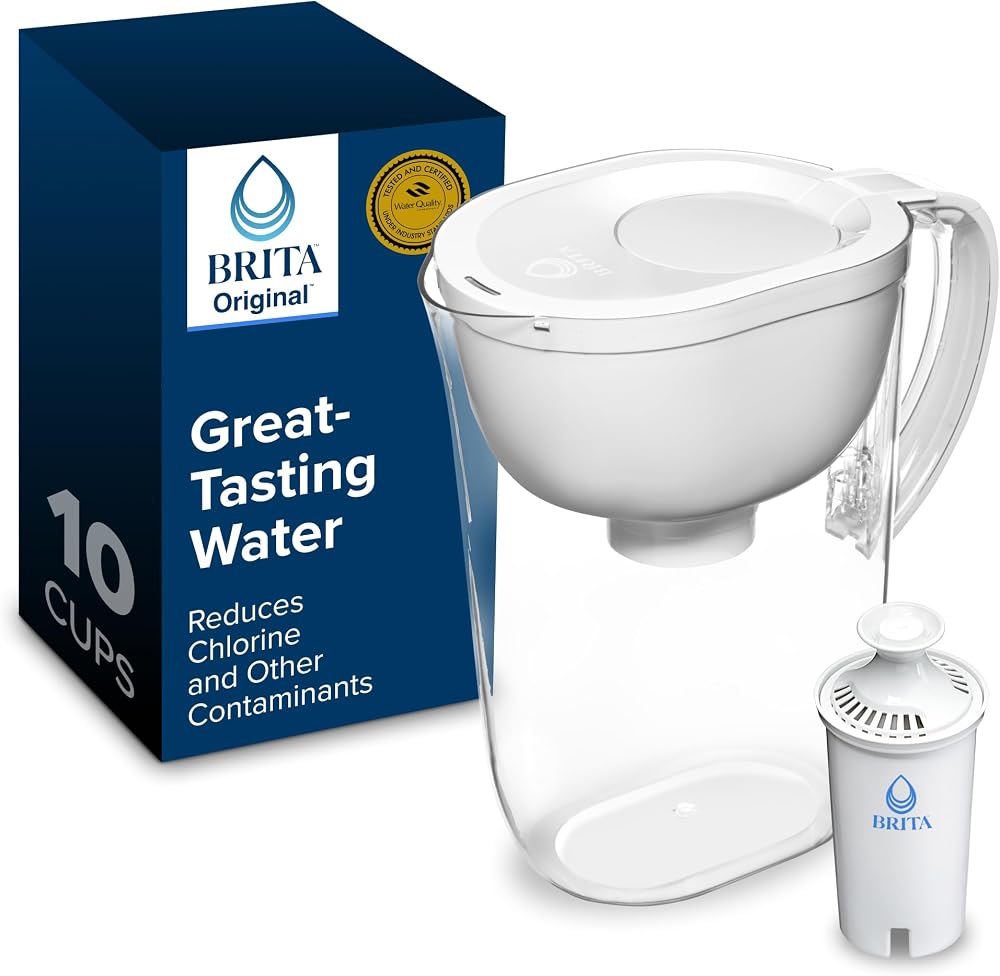
★ 4.6/5 from 60,180 verified Amazon reviews. The cheapest, simplest way to take chlorine out of your brewing water, and chlorine removal alone is a genuine taste upgrade. Be honest about its limits: a standard pitcher filter addresses chlorine, taste and some sediment, but it is not a water softener and will not fix hard water or limescale. Treat it as step one – filter the chlorine, measure your hardness, and add softening or mineralisation only if the numbers say you need it.
- Pros
- Lowest cost here ($28.33)
- 60,000+ reviews at 4.6★
- Removes chlorine and improves taste
- Zero effort – fill, wait, brew
- Cons
- Does not soften hard water
- Slow to refill
- Won't fix a machine-killing hardness problem
How to Decide in Three Steps
- Measure. TDS meter plus hardness strips. If you are inside ~75–250 ppm TDS with moderate hardness and alkalinity, you are done – descale on schedule and enjoy cheap excellent water.
- Match the fix to the reading. Chlorine-only problem → a carbon filter or pitcher. Hard water → a softening or in-tank/inline filter (see the filter guide). Very hard or very soft, or you want total control → build water from scratch with mineral packs. Contamination concerns → read PFAS in drinking water.
- Keep the machine clean anyway. Even with good water, descale on schedule. A filter slows scale; it does not remove scale that is already there – see how to descale an espresso machine.
FAQ
Do you need special water for espresso?
No, you do not need special bottled or engineered water for espresso – but you do need water that is roughly right. Espresso brews best with water that is moderately mineralised: about 150 ppm total dissolved solids (TDS), roughly 68 ppm hardness as CaCO3, about 40 ppm total alkalinity, a pH near 7 and no chlorine. Filtered tap water hits that window for most people. If your tap water is very hard, very soft, or heavily chlorinated, you treat it – by filtering, softening, remineralising or building from distilled. So the answer is: special water is not required, but the right water is.
Can I use tap water in my espresso machine?
Usually yes, if your tap water is low to moderately hard and its alkalinity is moderate and stable. Tap water that is very hard (roughly above 5 grains per gallon, or about 85 ppm of hardness) leaves limescale in the boiler, which causes slow shots, unstable temperature and eventual failure. Very soft water lacks the minerals that give espresso body. If you do not know your numbers, test first with hardness strips or a TDS meter before deciding.
What water hardness is best for espresso?
The Specialty Coffee Association (SCA) target is about 68 ppm of total hardness expressed as CaCO3, with an acceptable band of roughly 50–175 ppm. In practice, keep hardness moderate: enough calcium and magnesium to extract flavour, but not so much that the boiler scales. Above roughly 5 grains per gallon (about 85 ppm) scale becomes a real risk in a hot espresso boiler, so treat or soften if you are above that.
What TDS should espresso water be?
The SCA target is about 150 ppm total dissolved solids, with an acceptable range of roughly 75–250 ppm. Below the range, water is too flat and under-extracts, giving thin and sour shots. Above it, the cup can read chalky, bitter and over-extracted, and scale risk climbs. A cheap TDS meter is the fastest way to see which side of the window you are on.
Does water alkalinity matter for coffee?
Yes. Total alkalinity – mainly bicarbonate – acts as a buffer that neutralises coffee's natural acidity. The SCA target is about 40 ppm as CaCO3. Too little alkalinity and the cup can taste sharp and sour; too much and it flattens brightness and mutes acidity, and high alkalinity also accelerates scale. Alkalinity is separate from hardness, which is why a single TDS number does not tell the whole story.
Does magnesium in water affect espresso taste?
Magnesium is one of the two minerals (with calcium) that drive extraction, and it is especially good at pulling out the fruity and sweet compounds in coffee. That is why some filters add magnesium back (BWT) and why mineral packs such as Third Wave Water include it. Very soft or fully demineralised water – distilled or reverse osmosis – has almost none, and espresso brewed with it tends to taste flat and hollow until you remineralise.
Bottom Line
You do not need special water for espresso – you need right water. Aim for moderate minerals (~150 ppm TDS, ~68 ppm hardness, ~40 ppm alkalinity), neutral pH and no chlorine, and for most homes that is just filtered tap water. Measure first with a TDS meter and hardness strips, filter chlorine with TappWater (our pick, 10% partner offer) or a Brita pitcher, and only reach for Third Wave Water or a remineralising filter if your water is extreme. Whatever you do, descale on schedule. Next: read the TDS, hardness & alkalinity guide and best water for espresso machines.
