FTC Disclosure: LimeCrema has an affiliate partnership with TappWater, and we are a participant in the Amazon Services LLC Associates Program. If you buy through the links on this page, we may earn a commission – and it costs you nothing extra. TappWater is a direct-to-consumer brand, so its link goes to tappwater.co through our partner link; the rest go to Amazon. Learn more.
A shot of espresso is roughly 90% water, so it should not surprise anyone that water is the single biggest variable in the cup – yet almost nobody talks about it. Worse, the wrong water does not just taste wrong; it slowly destroys the machine. Scale clogs boilers, slows flow and eventually ends in a repair bill. This guide covers what good espresso water actually is, why it matters for both taste and machine life, and the six products we would actually buy to get there – every price and rating verified on Amazon.com in October 2026.
Plastic in the brew path is a related-but-separate topic: for that, see best plastic-free coffee makers. If your concern is contamination rather than taste, start with PFAS in drinking water.
| Product | Best for | Price | Link |
|---|---|---|---|
| TappWater | Best overall – filtered tap water | From $47 | See offer |
| Third Wave Water Espresso Profile | Best build-from-scratch water | $18.00 | Check Price |
| BWT Magnesium Mineralized (3-Pack) | Best remineralising filter | $34.90 | Check Price |
| Aquasana AQ-5300 Under-Sink | Best under-sink filtration | $154.99 | Check Price |
| Brita Large 10-Cup Pitcher | Best budget starting point | $28.33 | Check Price |
| Craft911 TDS Meter | Best first tool – measure first | $9.99 | Check Price |
What "Good Espresso Water" Actually Means
There is no single "espresso water," but there is a well-established target. The Specialty Coffee Association (SCA) publishes water-quality standards for brewing, and the widely cited target profile is:
| Parameter | Target / range | Why it matters |
|---|---|---|
| Total dissolved solids (TDS) | ~150 ppm (accept 75–250) | Too low = flat, thin coffee; too high = chalky, bitter |
| Total hardness (as CaCO3) | ~68 ppm (~3–4 grains/gal) | Calcium & magnesium drive extraction and sweetness – and form scale when too high |
| Total alkalinity (as CaCO3) | ~40 ppm | Buffers acidity; high alkalinity flattens brightness and accelerates scale |
| pH | ~7 (6.5–7.5) | Affects how acids and bitters are perceived |
| Chlorine | 0 | The most common off-flavour in tap water; also hard on seals and boilers |
These are the SCA's published target values, not a rule you must obey to the decimal. The practical takeaway is that espresso wants water that is moderately mineralised – enough calcium and magnesium to extract well, not so much that it scales the boiler. That is the whole game.
Why Water Matters More Than Any Upgrade
It is most of the cup
A 36 g double shot is about 90–93% water. Change the water and you change the drink far more than a new tamper or a prettier cup will. Very hard water tends to read bitter and chalky; very soft water reads hollow and sour. Getting hardness and alkalinity into the target window is one of the cheapest quality upgrades available.
Hard water kills machines
When water is heated – and an espresso boiler runs hot, far above a kettle – dissolved calcium and bicarbonate can come out of solution and deposit as limescale (calcium carbonate). Over time scale coats the boiler, the thermoblock and the narrow passages. The symptoms build slowly: shots run slower, the temperature drifts, pressure falls, and eventually a boiler or valve fails. Scale is the most common cause of premature espresso-machine death, and the fix is either softer water or a filter – see our espresso machine water filter guide and our guide to descaling an espresso machine.
The Four Routes to Better Espresso Water
- Filter your tap water. Cheapest and best for most people. A pitcher or under-sink carbon filter removes chlorine and some sediment; a resin/softening filter also pulls out some hardness. Good enough for the majority of US tap water.
- Softening + remineralising. If your water is moderately hard, a filter that exchanges calcium for something softer – and, in BWT's case, releases magnesium – lands you near the target without adding anything to the process.
- Build from scratch. Start with distilled or reverse-osmosis water (which has ~0 minerals) and add a measured mineral blend such as Third Wave Water. This gives the most repeatable, dial-in-able water, at the cost of buying distilled water and mixing.
- Under-sink filtration. A plumbed system removes chlorine, sediment, lead and PFAS and gives you filtered water at the tap for drinking and brewing alike. More money up front, no per-jug fuss.
The 6 Best Products for Espresso Water
TappWater — Best Overall Filter for Espresso & Drinking Water
Best Overall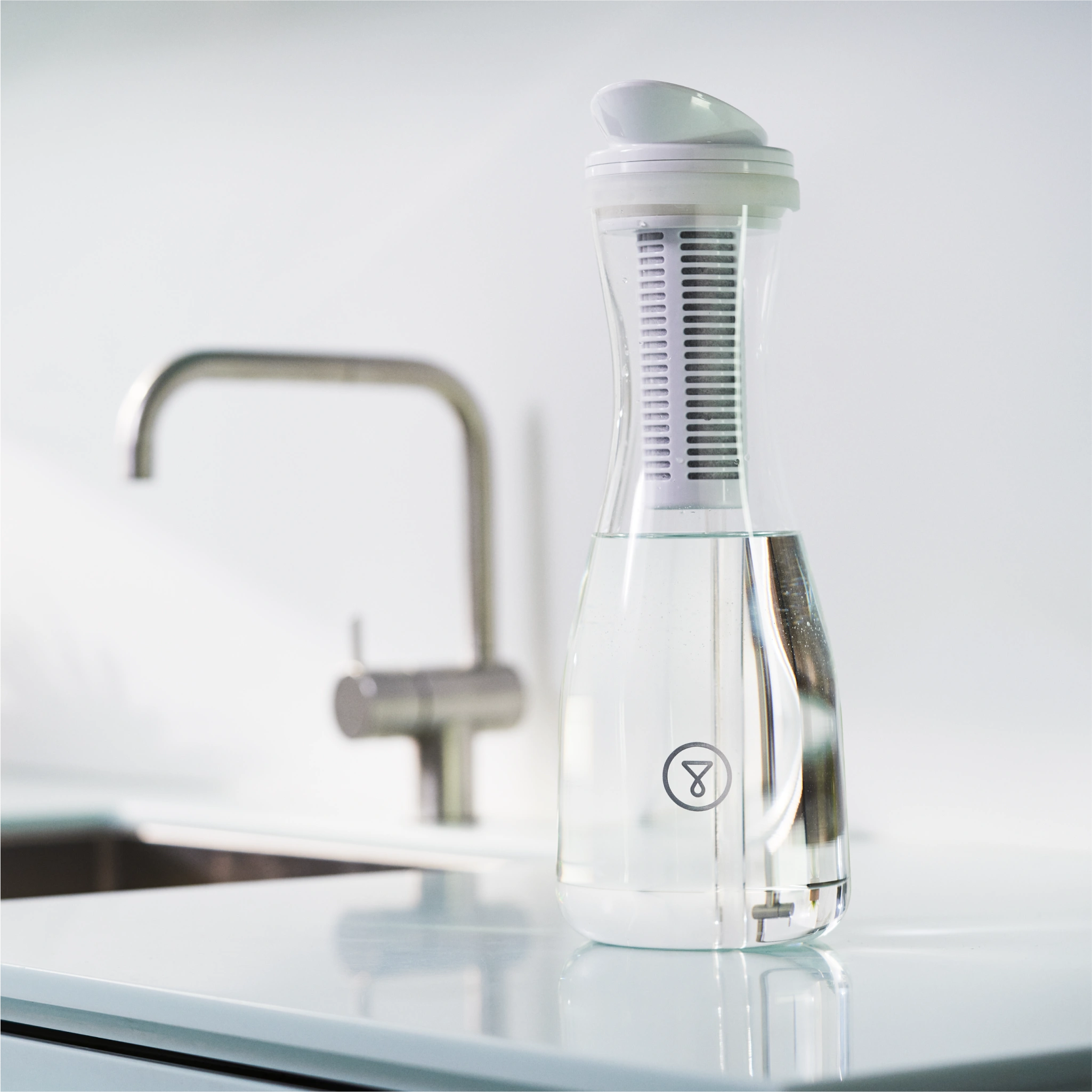
TappWater makes the case for filtered tap water simple: a range that scales from a $47 bottle up to a countertop reverse-osmosis system, so you can remove chlorine and contaminants without reordering jugs of distilled water. It is our affiliate partner for the water topic (we earn a commission, and there is a 10% partner offer through our link), which we state plainly rather than hiding behind a "top pick." For espresso, the sensible starting point is a faucet or pitcher system to strip chlorine; if your water is hard, step up to a system that also addresses scale. The exact models, current prices and the discount live in one place: our TappWater review. Those model prices are as listed by the manufacturer and may change.
- Pros
- Filtered tap water – no jug-filling ritual
- Range covers pitcher, faucet, under-sink and RO
- 10% partner offer via our link
- Removes chlorine and a broad set of contaminants (manufacturer claim)
- Cons
- DTC only – not sold on Amazon
- Not every model addresses hardness/scale
- Recurring filter cost (like all filters)
Third Wave Water Espresso Profile — Mineral Packs for Distilled Water
Best Build-From-Scratch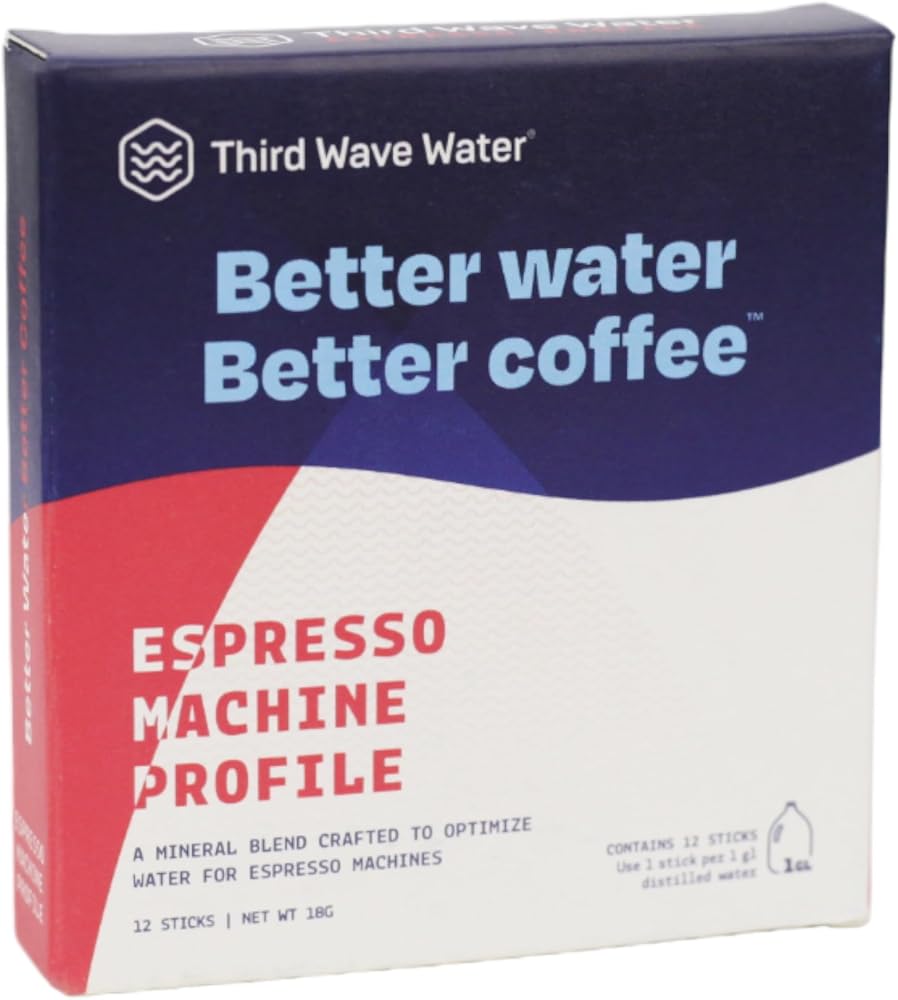
★ 4.5/5 from 919 verified Amazon reviews. Third Wave Water takes the opposite approach to filtration: you start with distilled or reverse-osmosis water and stir in a mineral packet to hit a defined profile. The Espresso Profile is the one tuned for espresso machines, and it is the tool of choice when your tap water is unpredictable, very hard, or you simply want the same result every time. The trade-off is real – you have to buy distilled water and mix – but it is the most controllable way to hit the SCA-style target window. It is a manufacturer-formulated blend; we have not lab-tested it, but the owner base is large and satisfied.
- Pros
- Most repeatable, dial-in-able water
- 4.5★ from 919 reviews
- Espresso-specific mineral profile
- Works with RO water that would otherwise be too soft
- Cons
- You must source distilled/RO water yourself
- Extra step before every brew
- Per-gallon cost adds up vs filtering tap
BWT Magnesium Mineralized Water Filter — 3 Long-Life Mg2+ Cartridges
Best Remineralising Filter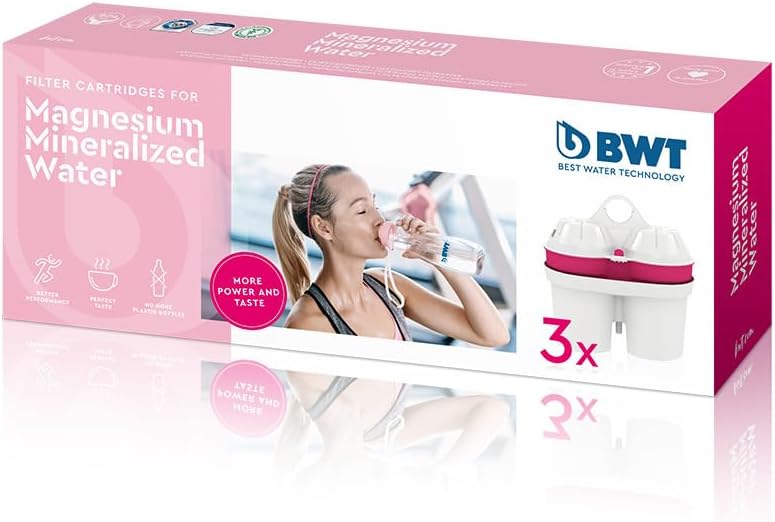
★ 4.7/5 from 5,390 verified Amazon reviews. BWT's magnesium cartridges do two jobs at once: they filter the water and they add back magnesium, one of the minerals that drives extraction and sweetness. That makes them a neat fit for espresso drinkers whose filtered water ends up a little too flat, and they are the same company behind the inline BWT Bestmax espresso filters we cover in the filter guide. The exact compatibility (pitcher, jug or machine) depends on which BWT system you have – check the listing for the cartridge series that matches your unit.
- Pros
- Filters and remineralises in one step
- Adds magnesium – good for extraction
- 4.7★ from 5,390 reviews
- Same maker as BWT's pro espresso filters
- Cons
- Must match the right BWT host system
- Not a standalone system
- Untested by us – manufacturer spec
Aquasana AQ-5300 3-Stage Under-Sink Water Filter System
Best Under-Sink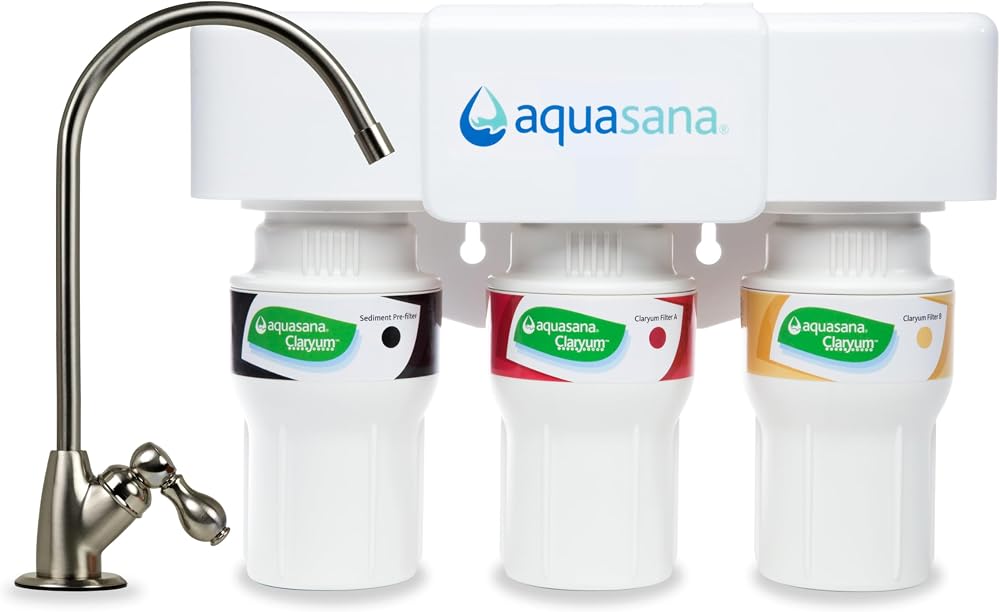
★ 4.2/5 from 2,965 verified Amazon reviews. If you want filtered water at the tap – for brewing and for drinking – an under-sink system is the clean answer. Aquasana's 3-stage is the mainstream pick: it is advertised to reduce PFAS, lead, chlorine and more, and it feeds a dedicated faucet (or your machine's water line). It is the most expensive item on this list and it removes some hardness minerals, so it is best for people who value contaminant removal over remineralisation – pair it with a mineral approach if your water ends up too soft. For the contaminant side of the story, see PFAS in drinking water.
- Pros
- Reduces PFAS, lead and chlorine (manufacturer claim)
- Filtered water on tap for brewing and drinking
- 4.2★ from 2,965 reviews
- No countertop clutter
- Cons
- Highest up-front cost here ($154.99)
- Installation required
- Strips minerals – may need remineralising for espresso
Brita Large 10-Cup Water Filter Pitcher
Best Budget Starting Point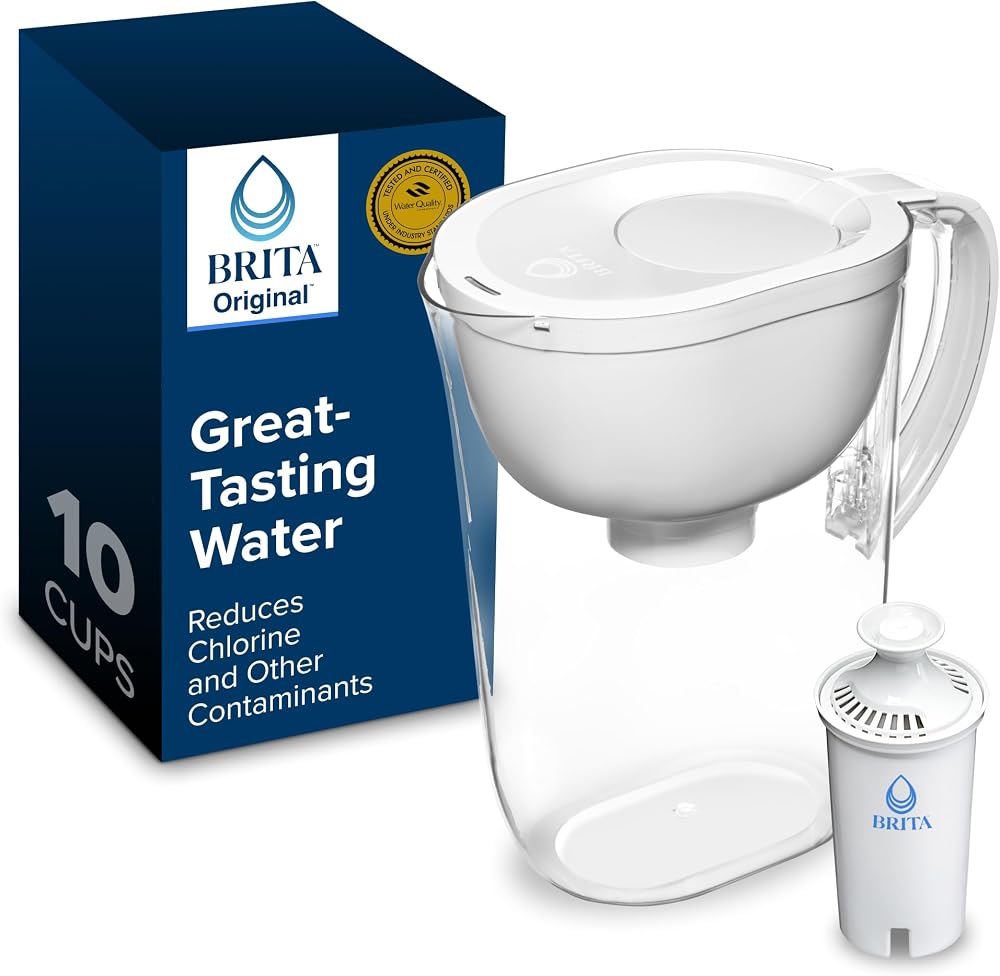
★ 4.6/5 from 60,180 verified Amazon reviews. The most-reviewed product on this page for a reason: a Brita pitcher is the cheapest, simplest way to get chlorine out of your brewing water, and chlorine removal alone is a genuine taste upgrade. Be honest about its limits – a standard pitcher filter addresses chlorine, taste and some sediment, but it is not a water softener and will not fix hard water or limescale. Treat it as step one: filter the chlorine, measure your hardness, and add softening or mineralisation only if the numbers say you need it.
- Pros
- Lowest cost here ($28.33)
- 60,000+ reviews at 4.6★
- Removes chlorine and improves taste
- Zero effort – fill, wait, brew
- Cons
- Does not soften hard water
- Slow to refill
- Won't fix a machine-killing hardness problem
Craft911 Water Tester — Digital TDS Meter
Best First Tool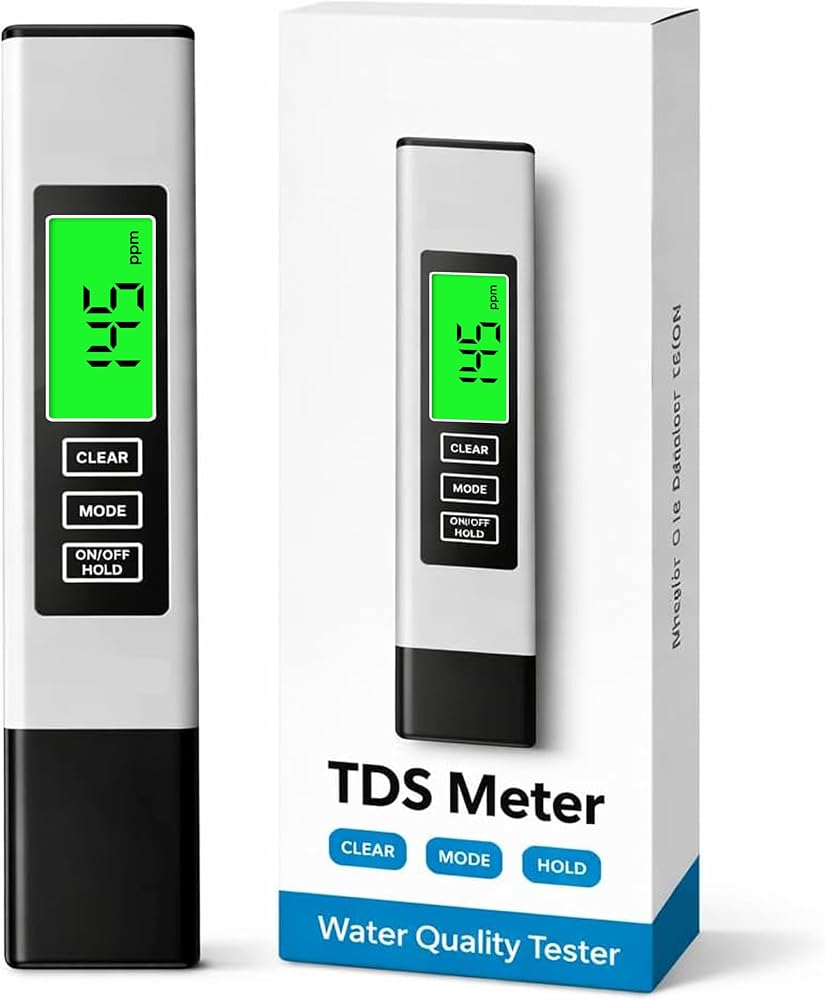
★ 4.4/5 from 3,285 verified Amazon reviews. Before you buy any filter, spend ten dollars and find out what your water actually is. A TDS meter tells you the total dissolved solids in ppm, which is the fastest way to see whether you are in the SCA's 75–250 window, too hard, or too soft. It does not separate hardness from alkalinity – for that, pair it with hardness strips (below) – but it turns "my water tastes fine" into a number you can act on. This is the smallest purchase on the page and arguably the most useful.
- Pros
- Only $9.99
- Instant ppm reading
- Tells you if you even have a problem
- 4.4★ from 3,285 reviews
- Cons
- TDS only – not hardness or alkalinity separately
- Needs calibration over time
- Does not fix anything by itself
How to Choose
1. Measure first
Test your water before buying hardware. If your TDS and hardness are already in the target range, you may need nothing more than a chlorine filter. If hardness is high (roughly above 5 grains/gal), you need softening or scale protection. A $10 TDS meter pays for itself by preventing a wrong purchase.
2. Match the fix to the problem
Chlorine-only taste problem → a pitcher or faucet filter. Hard water and machine scaling → an in-tank espresso filter or a softening system (see the espresso machine water filter guide). Very hard or very soft, or you want total control → build water from scratch with mineral packs. Contamination concerns → an under-sink system such as the Aquasana, and read our PFAS guide.
3. Remember the recurring cost
Every filter here is a consumable: pitchers, cartridges and under-sink blocks all need replacing, and mineral packs are single-use. Factor the refill cost per gallon into the decision, not just the box price. The cheapest machine is the one that never scales up and dies.
FAQ
What is the best water for an espresso machine?
The Specialty Coffee Association (SCA) publishes target values for brew water rather than one mandated water: roughly 150 ppm total dissolved solids (a 75–250 ppm range), about 68 ppm hardness (as CaCO3), about 40 ppm total alkalinity, a pH near 7 and zero chlorine. In practice, the simplest way to hit that window is filtered tap water. If your tap water is very hard or very soft, you either soften and remineralise it, or start from distilled or reverse-osmosis water and add a mineral packet such as Third Wave Water.
Can I just use tap water in my espresso machine?
You can, but whether you should depends on your water. Tap water with low to moderate hardness and stable, moderate alkalinity can brew excellent espresso. Very hard water (roughly above 5 grains per gallon / 85 ppm) leaves limescale in the boiler, which causes slow shots, temperature instability and eventual failure. Very soft or distilled water lacks the minerals that give coffee body and sweetness. If you do not know your numbers, test first with hardness strips or a TDS meter.
Is distilled water good for espresso?
Not on its own. Distilled water has essentially no dissolved minerals, and those minerals – magnesium and calcium in particular – are what extract flavour and give coffee body. Brewing with plain distilled water tends to produce flat, thin-tasting espresso. That is why mineral packets like Third Wave Water exist: you add a measured blend back to distilled or reverse-osmosis water so it lands in the SCA target range.
Does bottled water work for espresso?
It can, but it is an expensive habit and the mineral content varies enormously between brands. Some bottled waters are too hard, some too soft, and some are treated just like municipal tap water. If you want a repeatable result, filtering your own water to the SCA target range is cheaper and more consistent than buying bottles. If you do use bottled water, check the label for TDS, hardness and alkalinity rather than assuming "spring water" is ideal.
How often should I change espresso water filters and mineral packs?
It depends on the product and on your water hardness. In-tank espresso filters such as Breville ClaroSwiss or De'Longhi cartridges are typically rated for about two months or a set volume of water, and should be replaced on the maker's schedule rather than when they look dirty. Third Wave Water mineral packets are single-use per gallon or per five gallons depending on the size. Pitcher and under-sink filters follow their own rated capacity. Harder water and heavier use shorten every interval.
Will filtered water change the taste of my espresso?
Yes, and usually for the better. Removing chlorine alone removes the most obvious off-flavour in tap water. Getting hardness and alkalinity into the target range makes extraction more even, so shots taste sweeter and less bitter or hollow. Very hard water tends to over-extract and read bitter and chalky; very soft water tends to under-extract and read flat and sour. Water is the majority of the cup, so moving these numbers visibly moves what you taste.
Bottom Line
Water is the part of espresso everyone ignores and the part that changes the most. Get it roughly right and you will taste the difference and add years to your machine's life. For most people: run your tap water through a TappWater system (our pick, with a 10% partner offer) or a Brita pitcher to strip chlorine, then test with a TDS meter to see whether you also need softening. If your water is extreme – very hard or very soft – take control by starting from distilled water and adding Third Wave Water Espresso Profile. Whichever route you take, the goal is the same: moderate minerals, zero chlorine, no scale. Next, see water filters for espresso machines and how to descale an espresso machine.
