FTC Disclosure: LimeCrema is reader-supported. When you buy through links on our site, we may earn an affiliate commission at no extra cost to you. Learn more.
A manual espresso machine replaces pumps and electronics with your own hands. You pull a lever, build pressure against the coffee and control the shot from pre-infusion to finish – which is exactly why enthusiasts say a $160 lever machine can out-espresso a $500 pump machine. There is almost nothing to break, nothing to descale and no electricity required. We compared the six most popular manual machines on the US market – Flair 49 PRO, Flair Classic, Flair 2GO, Wacaco Picopresso, Nanopresso and Minipresso GR2 – on lever quality, pressure profiling, portability, build and owner satisfaction across 13,200+ verified reviews.
| Product | Key Benefit | Price | Link |
|---|---|---|---|
| Flair 49 PRO | Best Overall | $359.00 | Check Price |
| Wacaco Picopresso | Best Portable Pro | $129.90 | Check Price |
| Flair Classic | Best Value Home Lever | $159.00 | Check Price |
| Wacaco Nanopresso | Best Budget Portable | $64.90 | Check Price |
| Flair 2GO | Best Travel Lever | $169.00 | Check Price |
| Wacaco Minipresso GR2 | Cheapest Real Espresso | $54.90 | Check Price |
The 6 Best Manual Espresso Machines
Flair 49 PRO
Best Overall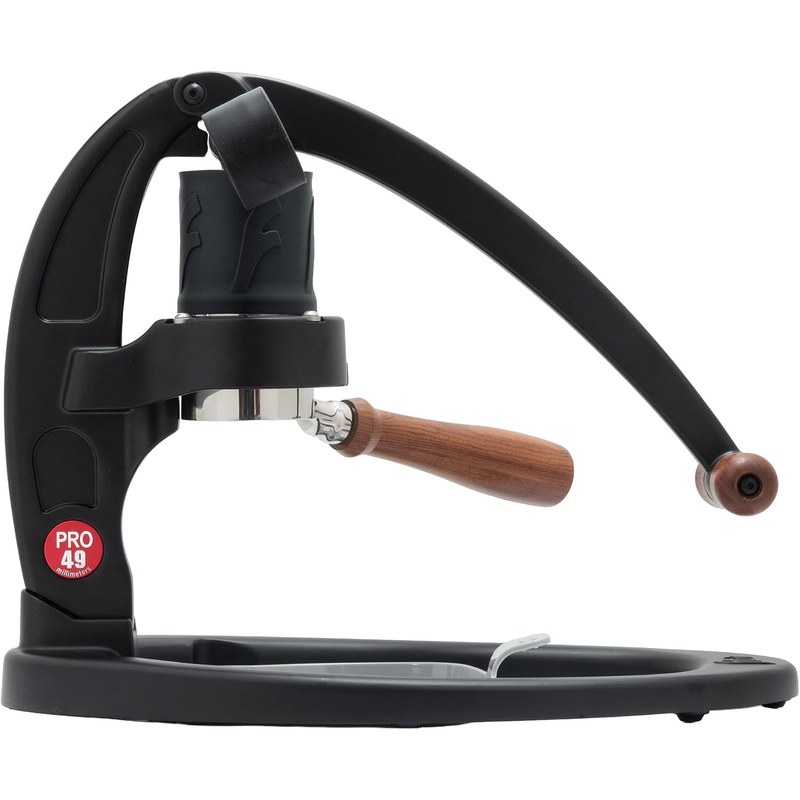
- Price
- $359.00
★ 4.2/5 from 421 verified Amazon reviews. The Flair 49 PRO is the manual machine enthusiasts graduate to. Its handled portafilter makes dosing and tamping feel like a real espresso setup, the pressure gauge teaches you exactly what 9 bar feels like, and the brew path is all metal and glass – no plastics touching your coffee. Pre-heating the cylinder adds a step, but the payoff is espresso with clarity and sweetness that pump machines at twice the price struggle to match. If you want one manual machine that can grow with your skills, this is it.
- Pros
- Handled portafilter, real workflow
- Pressure gauge for profiling
- No plastics in the brew path
- Espresso quality rivals $700+ machines
- Cons
- Pre-heating adds prep time
- One shot at a time
- No milk steaming
Wacaco Picopresso
Best Portable Pro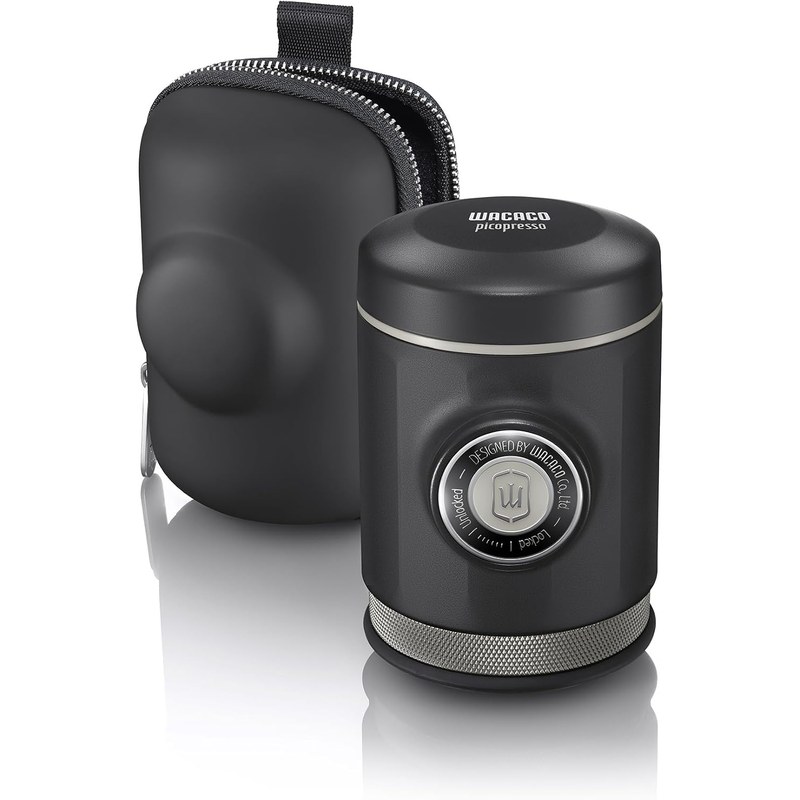
- Price
- $129.90
★ 4.4/5 from 1,417 verified Amazon reviews. The Picopresso is the portable that portable skeptics buy. It uses a true 18-gram stainless basket and a naked (bottomless) portafilter – the same tools as a pro setup – and squeezes genuine 9-bar extraction into a palm-sized package. Owners rate it 4.4★ across 1,400+ reviews, praising shot quality that rivals home lever machines. The trade-off: it is more fiddly than simpler portables and needs a fine grind. For travel espresso that doesn't taste like travel espresso, this is the one.
- Pros
- True 18g pro-style basket
- Naked portafilter included
- 4.4★ from 1,400+ owners
- Rivals home lever quality
- Cons
- More parts, more fiddly
- Needs a fine, consistent grind
- Small water capacity
Flair Classic
Best Value Home Lever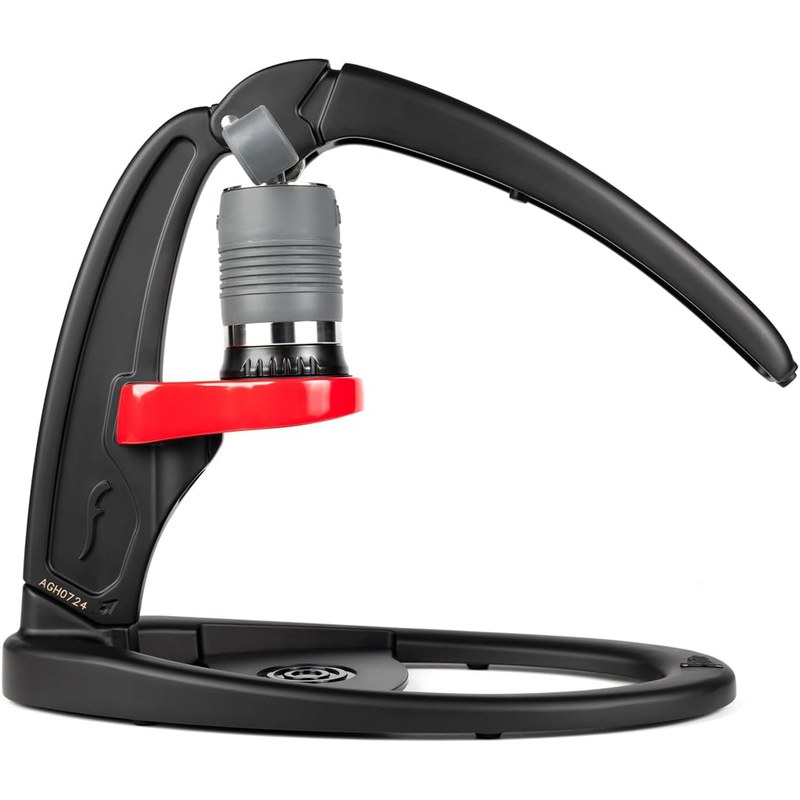
- Price
- $159.00
★ 4.1/5 from 521 verified Amazon reviews. The Flair Classic is the best way to find out if manual espresso is for you – without spending PRO money. It includes a pressure gauge (rare at this price), two portafilters for different doses and the same brew philosophy as the 49 PRO. The lever has no handle, so you press directly, and pre-heating is still part of the ritual. With 500+ reviews and a 4.1★ rating, it is the proven entry point into lever espresso.
- Pros
- Pressure gauge at $159
- Two portafilters included
- Same brew quality family as the PRO
- Nearly unbreakable
- Cons
- No handled portafilter
- Pre-heating required
- Plastic base parts
Wacaco Nanopresso
Best Budget Portable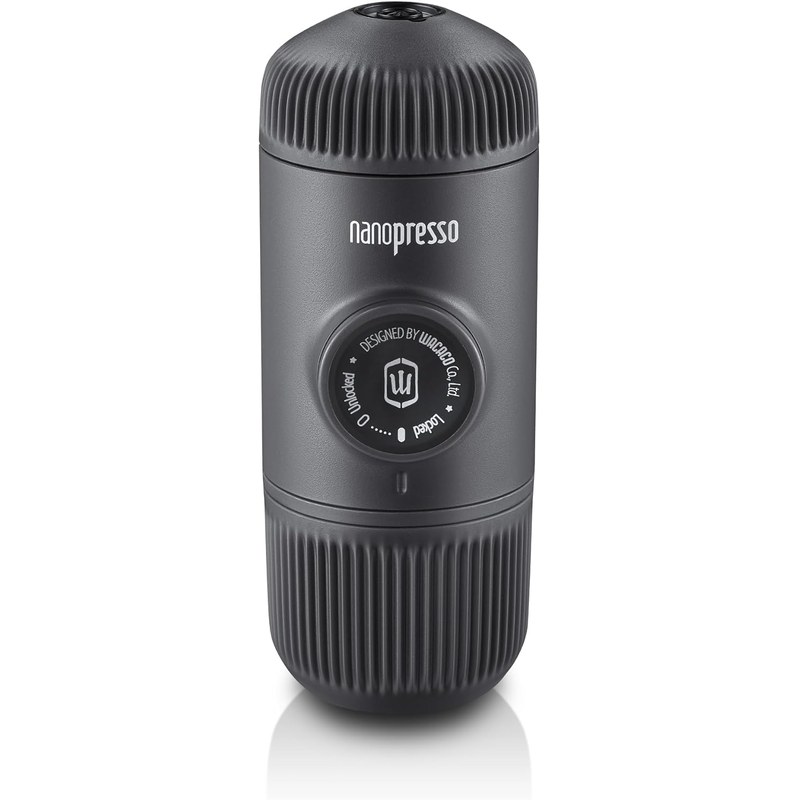
- Price
- $64.90
★ 4.4/5 from 4,645 verified Amazon reviews. The Nanopresso is the most proven portable espresso maker on the market – 4,600+ reviews at 4.4★. It generates up to 18 bar by hand, works with ground coffee (or capsules with an adapter) and needs no battery or electricity. It is not as refined as the Picopresso, but it is half the price, simpler to use and has earned its reputation over years of travel, camping and office use. The default pick for your first portable.
- Pros
- 4,645 reviews at 4.4★
- 18 bar, battery-free
- Ground coffee or capsules
- Simple, proven design
- Cons
- Small 8g basket
- Less refined than Picopresso
- Plastic brew path
Flair 2GO
Best Travel Lever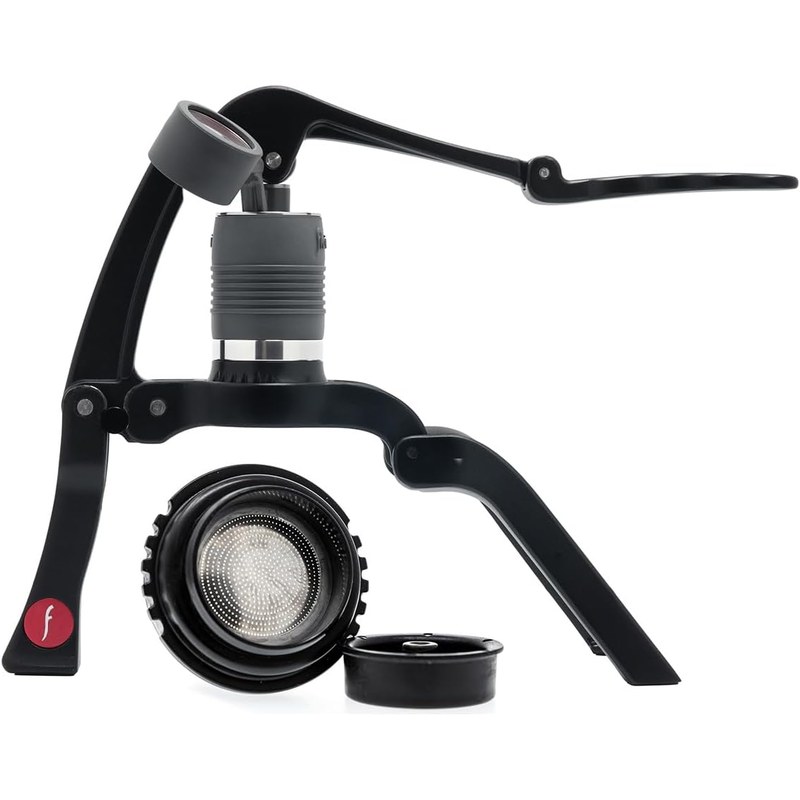
- Price
- $169.00
★ 4.1/5 from 71 verified Amazon reviews. The Flair 2GO is the newest idea in manual espresso: a collapsible lever machine that packs flat for travel but brews with the same handled-lever mechanics as the home Flairs. It delivers genuine 9-bar pressure, uses standard ground coffee and folds down small enough for a carry-on. The review base is still young (71), but the concept fills a real gap – proper lever espresso without the bulk. For frequent travelers who refuse to drink hotel coffee, this is the interesting new option.
- Pros
- Collapsible – packs flat
- Real 9-bar lever mechanics
- Flair brew quality in travel size
- No electricity needed
- Cons
- New model, few reviews (71)
- Smaller doses than home Flairs
- Premium price for a portable
Wacaco Minipresso GR2
Cheapest Real Espresso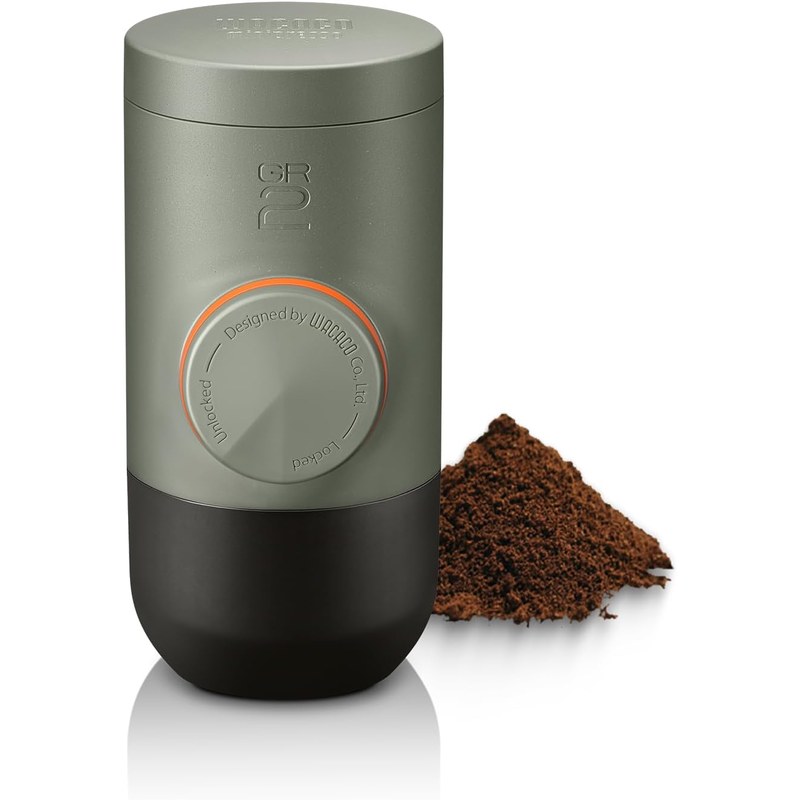
- Price
- $54.90
★ 4.4/5 from 6,190 verified Amazon reviews. The Minipresso GR2 is the cheapest way to make real espresso – anywhere. With 6,100+ reviews at 4.4★ it is the best-documented budget portable on the market. The GR2 is the updated ground-coffee version of the classic Minipresso: fill the basket, pump the lever, get a genuine 18-bar shot. It is ultra-small, tough and forgiving enough for beginners. Not the last word in refinement – but at $54.90 it is the safest, cheapest introduction to manual espresso.
- Pros
- 6,190 reviews at 4.4★
- Cheapest real espresso maker
- Ultra-small and tough
- Forgiving for beginners
- Cons
- Plastic construction
- Small basket capacity
- Less control than Picopresso
How to Choose a Manual Espresso Machine
Home lever vs portable – decide where you will use it
The biggest split in manual espresso is home vs portable. Home levers (Flair 49 PRO, Flair Classic) sit on your counter, use full-size portafilters and give you the most control – but they don't travel. Portables (Picopresso, Nanopresso, Minipresso, Flair 2GO) trade some basket size and ritual for the ability to make espresso anywhere. Be honest about where 80% of your shots happen; that decides the category.
Pressure gauge: the feature that makes you better
Espresso extracts best around 9 bar. A pressure gauge (Flair 49 PRO and Classic) shows you in real time whether you are pulling 6, 9 or 12 bar – and lets you adjust mid-shot. Beginners who learn on a gauged machine develop consistent technique far faster than those pressing blind. If you can afford the gauge, buy it; it is the difference between guessing and knowing.
Materials: keep plastics out of the brew path
Hot water and coffee extract flavors from whatever they touch. The Flair 49 PRO is explicitly designed with no plastics in the brew path (metal and glass only); budget portables like the Minipresso and Nanopresso use plastic chambers. Both make good espresso – but if you are sensitive to the idea of hot water against plastic, prioritize metal brew paths.
Milk drinkers: budget for a separate frother
No manual machine steams milk. If you drink cappuccinos and lattes, add a standalone milk frother ($20–50) or plan to use a French press for foam. Manual espresso is the right choice for straight espresso, Americanos and cortados – not for milk-forward drinks at 7 am. Know that before you buy.
FAQ
Are manual espresso machines worth it?
For espresso lovers, yes. A manual lever machine like the Flair 49 PRO produces espresso that rivals machines costing three times as much – because you control the pressure profile directly. There is no pump, no boiler and almost nothing to break. The trade-offs: no milk steaming, a learning curve, and one or two shots at a time.
Manual vs automatic espresso machine – which is better?
Automatics win on convenience: one button, built-in grinder, milk steaming. Manuals win on espresso quality per dollar, durability and control. A $160 Flair Classic makes espresso as good as a $500 pump machine in practiced hands. If espresso is a daily ritual you enjoy, go manual. If you want a latte before work with zero effort, buy an automatic.
Do manual espresso machines need electricity?
No. Lever machines use your hands to generate pressure – Flair and Wacaco models need no electricity at all, which makes them perfect for travel, camping or offices. You only need hot water from a kettle or microwave.
Can a manual espresso machine make milk drinks?
The machine itself only makes espresso. For cappuccinos and lattes you froth milk separately – with a standalone frother, French press or stovetop steamer. Manual machines suit espresso and cortado drinkers better than latte lovers.
What is the best manual espresso machine for beginners?
The Flair Classic is the best home entry: pressure gauge, two portafilters and a forgiving brew path at $159. For travel, the Wacaco Nanopresso is the most beginner-friendly portable with 4,600+ reviews. The Flair 49 PRO is the pick if you want to grow into pressure profiling.
Bottom Line
Manual espresso is the best quality-per-dollar in coffee – if you enjoy the ritual. The Flair 49 PRO is the best overall: a handled portafilter, pressure gauge and a plastic-free brew path that produce espresso to rival $700 machines. On a budget, the Flair Classic delivers the same philosophy for $159. For travel, the Picopresso is the pro portable, the Nanopresso the proven budget pick, and the Minipresso GR2 the cheapest real espresso anywhere. Whichever you choose: grind fresh and fine, pre-heat your brew chamber, and learn to read the pressure gauge – the machine is simple, the skill is yours.
