FTC Disclosure: LimeCrema is reader-supported. When you buy through links on our site, we may earn an affiliate commission at no extra cost to you. Learn more.
A super-automatic espresso machine grinds, doses, brews and steams milk at the touch of one button. No scale, no tamper, no technique – just espresso, cappuccino or latte while you finish getting ready. The catch: they cost more than semi-automatics, need real maintenance, and the cheapest ones cut corners exactly where it hurts. We compared the six most popular super-automatics on the US market – Philips 3200 and 4400, De'Longhi Magnifica Evo and Start, Gaggia Brera and Jura ENA 4 – on milk systems, grinders, drink presets, maintenance and owner satisfaction across 9,800+ verified reviews.
| Product | Key Benefit | Price | Link |
|---|---|---|---|
| Philips 3200 Series LatteGo | Best Overall | $579.46 | Check Price |
| De'Longhi Magnifica Evo | Best One-Touch Menu | $749.95 | Check Price |
| Philips 4400 Series LatteGo | Best Feature Set | $721.88 | Check Price |
| Gaggia Brera | Best Compact | $662.02 | Check Price |
| De'Longhi Magnifica Start | Best Budget | $599.95 | Check Price |
| Jura ENA 4 | Best Premium Compact | $1,199.00 | Check Price |
The 6 Best Super-Automatic Espresso Machines
Philips 3200 Series LatteGo
Best Overall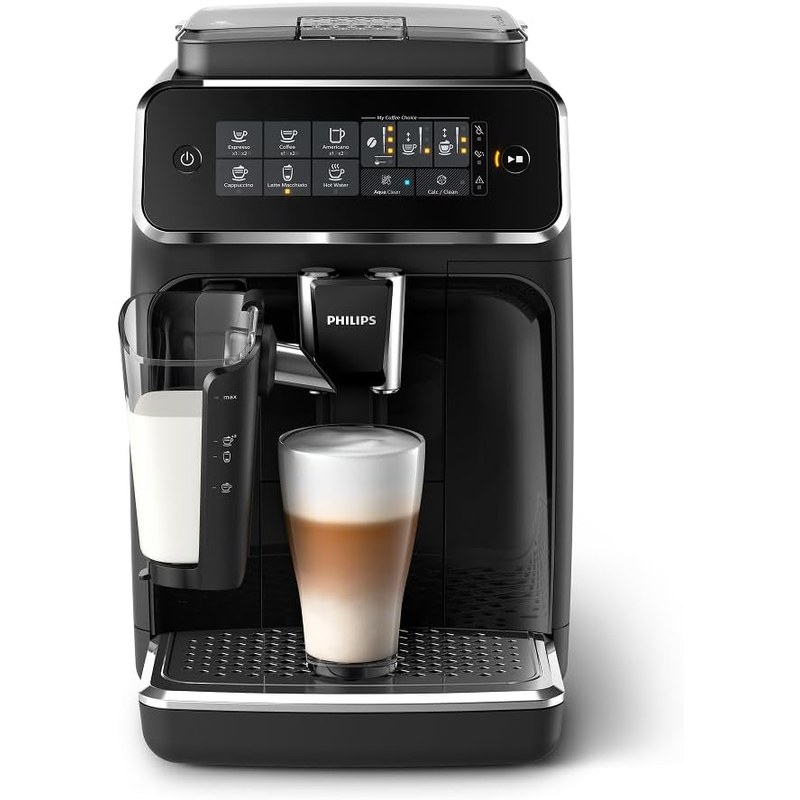
- Price
- $579.46
★ 4.0/5 from 6,207 verified Amazon reviews. The Philips 3200 is the best-selling super-automatic on Amazon for a reason: it nails the essentials and skips the gimmicks. The LatteGo milk system has no tube – just two dishwasher-safe parts – so cleaning takes seconds instead of fiddly rinsing. The ceramic grinder is quieter and longer-lived than steel, and five one-touch drinks cover espresso, coffee, cappuccino and latte. With 6,000+ reviews it is the most battle-tested machine in this list, and at $579 it undercuts the De'Longhi competition while matching them on features.
- Pros
- 6,207 reviews – most proven pick
- LatteGo: no milk tube, easy cleaning
- Ceramic grinder, quiet operation
- Best price-to-features ratio
- Cons
- Milk froth is good, not barista-grade
- No separate hot-water spout
- Plastic housing
De'Longhi Magnifica Evo
Best One-Touch Menu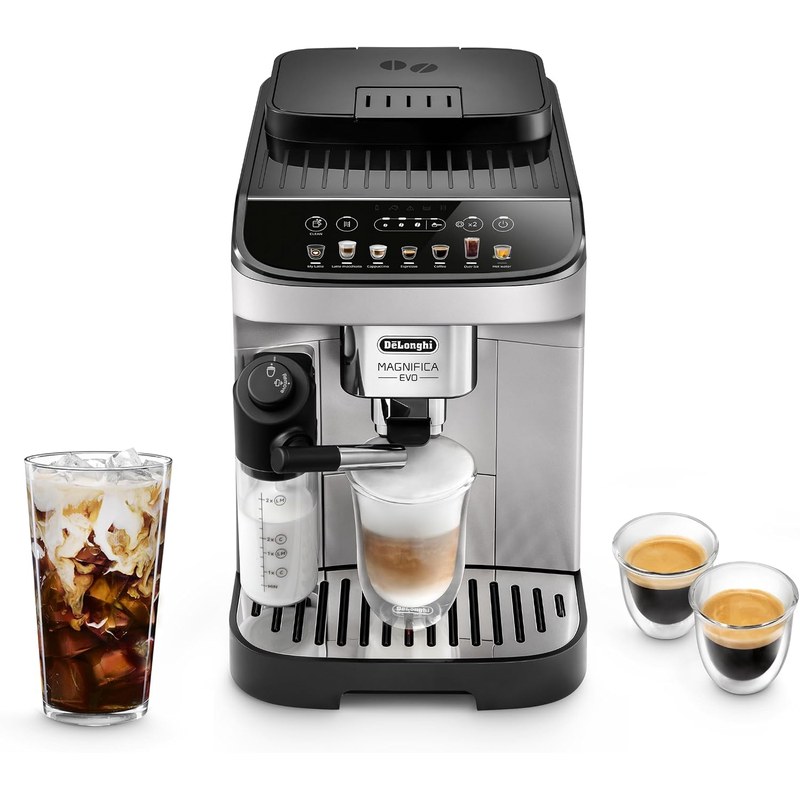
- Price
- $749.95
★ 3.9/5 from 964 verified Amazon reviews. The Magnifica Evo is De'Longhi's best-balanced super-automatic: seven one-touch recipes (espresso, coffee, cappuccino, latte, flat white and more), a built-in conical burr grinder with 13 settings, and a milk frother that produces genuinely thick foam. Owners consistently praise the espresso quality – the Evo's brew unit and thermoblock punch above their price. The milk system has more parts to clean than the Philips LatteGo, which is the main reason it sits at #2.
- Pros
- 7 one-touch milk drinks
- 13-step conical burr grinder
- Thick, consistent milk foam
- Strong owner praise for shot quality
- Cons
- More milk-system parts to clean
- Higher price than Philips 3200
- Fewer reviews than the Philips
Philips 4400 Series LatteGo
Best Feature Set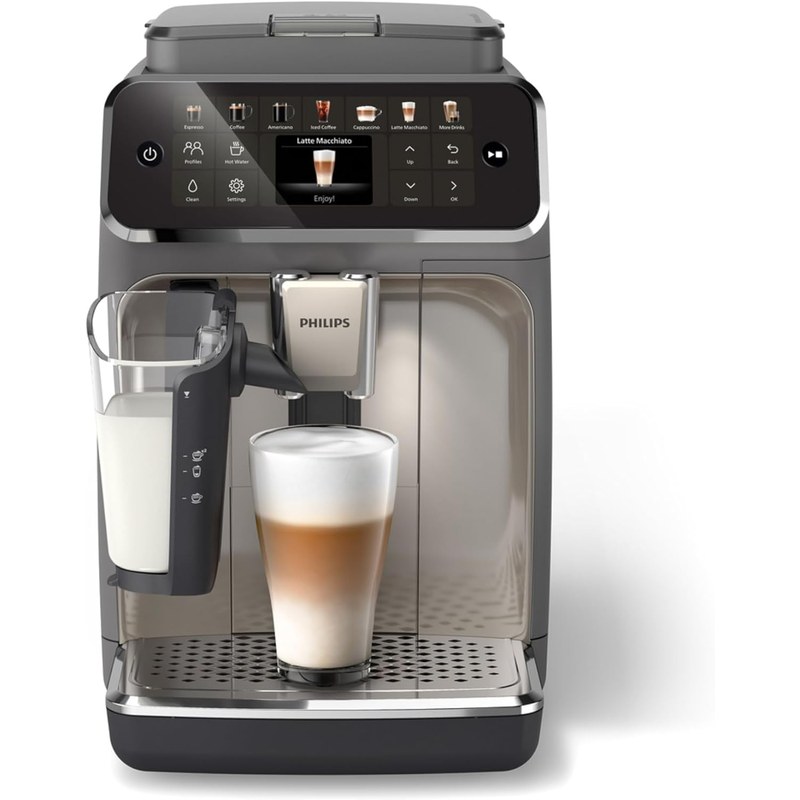
- Price
- $721.88
★ 3.8/5 from 593 verified Amazon reviews. The 4400 is the Philips 3200's feature-loaded sibling: twelve hot and iced drink presets, a touch display, SilentBrew for quieter grinding and the same easy-clean LatteGo milk system. If you want iced coffee drinks or a wider menu without moving to a $1,000+ machine, this is the pick. The review base is smaller than the 3200's, and the extra electronics add a little more that can break – but Philips' two-year warranty and the tool-free milk system keep ownership simple.
- Pros
- 12 hot & iced presets
- LatteGo no-tube cleaning
- Quieter SilentBrew grinder
- Touch display
- Cons
- Smaller review base (593)
- More electronics = more failure points
- Iced presets are a niche feature
Gaggia Brera Super-Automatic
Best Compact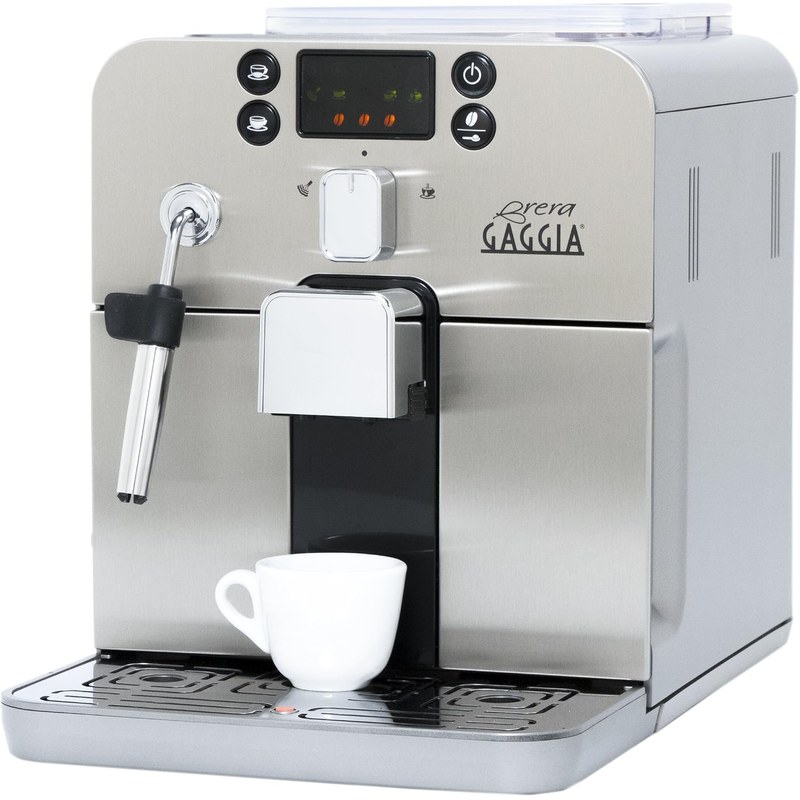
- Price
- $662.02
★ 3.8/5 from 1,551 verified Amazon reviews. The Brera is Gaggia's entry super-automatic and one of the smallest full-featured machines you can buy – a genuine advantage if your counter is tight. It uses ceramic burrs, a bypass doser for pre-ground coffee and a Pannarello wand that makes acceptable cappuccino foam. With 1,500+ reviews it is well proven, though owners note the plastic brew group and the wand's learning curve. Buy it for the footprint and the Italian pedigree, not for latte-art foam.
- Pros
- Smallest footprint on this list
- Ceramic burrs, bypass doser
- 1,551 reviews, proven
- Italian espresso heritage
- Cons
- Pannarello wand is basic
- Plastic brew group
- Fewer presets than rivals
De'Longhi Magnifica Start
Best Budget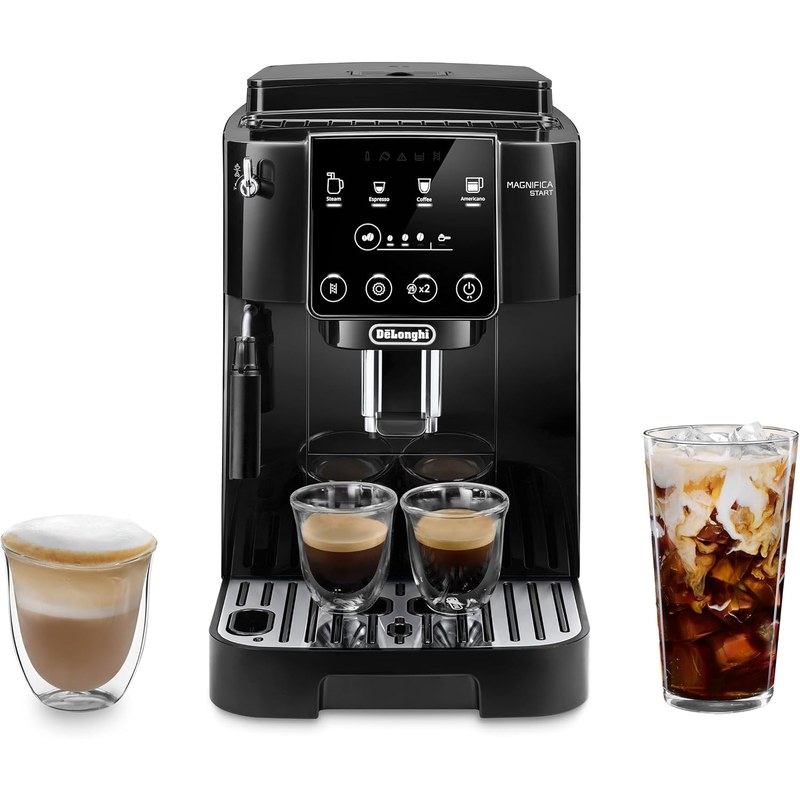
- Price
- $599.95
★ 4.1/5 from 259 verified Amazon reviews. The Magnifica Start is De'Longhi's most affordable super-automatic – and the highest-rated machine on this list at 4.1 stars. It keeps the essentials (espresso, coffee and cappuccino one-touch drinks, built-in grinder, milk frother) and strips out the extras, which means less to go wrong. The review base is still young at 259, but the early owner sentiment is excellent. If your budget stops at $600, this is the safest De'Longhi entry point.
- Pros
- Highest rating on this list (4.1★)
- Cheapest full-featured De'Longhi
- Simple = fewer failure points
- Compact for the category
- Cons
- Only 3 drink presets
- Young review base (259)
- Frother needs manual rinsing
Jura ENA 4
Best Premium Compact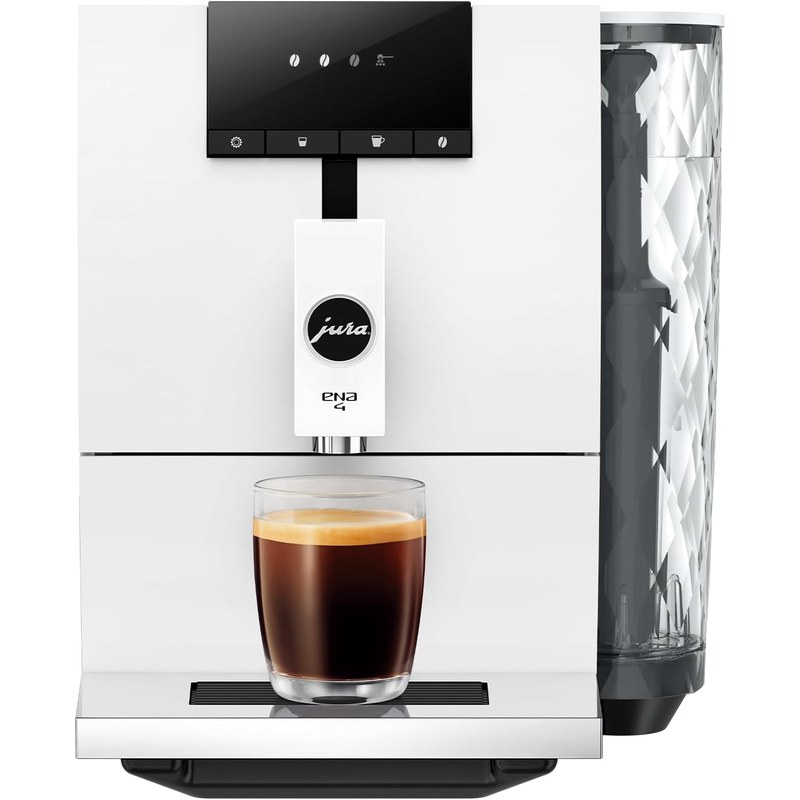
- Price
- $1,199.00
★ 3.9/5 from 300 verified Amazon reviews. The ENA 4 is Jura's compact entry into Swiss super-automatic territory. It brings Jura's Pulse Extraction Process (which pre-infuses and pulses water through the puck for better extraction) and a build quality that feels a class above the rest – all in a footprint barely larger than the Gaggia Brera. You pay for it: $1,199 is roughly double the Philips 3200. For buyers who want the smallest premium machine and plan to keep it for a decade, the ENA 4 justifies itself; for everyone else, the Philips delivers 90% of the experience for half the money.
- Pros
- Swiss build quality
- Pulse Extraction for better shots
- Compact premium footprint
- Holds resale value
- Cons
- ~$1,200 – double the Philips
- No built-in milk carafe at this price
- Service is dealer-based, pricey
How to Choose a Super-Automatic Espresso Machine
Milk system: tube vs. tool-free decides your daily routine
The milk system is the part you will clean every single day – and the part owners complain about most. Philips' LatteGo has no tube at all: milk goes into a container with two parts that rinse under the tap or go in the dishwasher in seconds. Traditional systems (De'Longhi, Gaggia) use a tube and frother that must be purged and rinsed after every use, and they harbor bacteria if skipped. If you drink milk drinks daily, prioritize a tool-free system or budget two extra minutes per day for cleaning.
Grinder quality matters – but less than on semi-automatics
All machines on this list use burr grinders; cheaper units use steel burrs, better ones ceramic. Ceramic burrs run quieter, stay sharp longer and produce less heat. Grind settings matter less here than on a semi-automatic because the machine dials in its own dose – but a machine with more grind steps (Magnifica Evo's 13) adapts better to different beans. Skip the cheapest no-name super-automatics: their grinders are the first thing to fail.
Presets: more is not always better
Three solid presets (espresso, coffee, cappuccino) cover most households. More presets add iced drinks and milk-ratio variations, but every extra drink is a software path over the same hardware. The real differentiator is whether the machine remembers your strength and cup size per drink – the Philips and De'Longhi models do. Don't pay extra for a huge menu you will never scroll through.
Maintenance is the hidden cost of convenience
A super-automatic has more moving parts than a semi-automatic: grinder, brew group, milk system, plus electronics. Budget for descaling every 2–4 months (tablets run $10–20), rinse the brew group weekly (most are removable), and expect a brew group or grinder repair at some point after year three. The most common complaint across all 9,800+ reviews we analyzed is skipped maintenance leading to clogs – not the machines themselves.
FAQ
Is a super-automatic espresso machine worth it?
If you drink milk-based espresso drinks daily and value convenience over ritual, yes. A super-automatic grinds, doses, brews and steams with one button – no scale, no tamper, no technique. The trade-offs: higher purchase price, more complex maintenance and slightly less nuanced espresso than a good semi-automatic. The sweet spot for most households is $550–900.
Super-automatic vs semi-automatic – which is better?
Semi-automatics give you control: better espresso potential and easier maintenance, but they demand skill and a separate grinder. Super-automatics trade some shot quality for one-button convenience. If you want cafe drinks with zero effort every morning, go super-automatic. If espresso is a hobby, buy a semi-automatic and a good grinder instead.
How much should I spend on a super-automatic espresso machine?
Entry models with a decent milk frother start around $550–600 (Philips 3200, De'Longhi Magnifica Start). The $650–900 range – Magnifica Evo, Philips 4400, Gaggia Brera – buys more drink presets, better grinders and quieter operation. Above $1,000 (Jura) you pay for Swiss build quality and compact design, not dramatically better coffee.
How hard is it to clean a super-automatic espresso machine?
It is the real cost of convenience. Daily: empty the drip tray and knock box, rinse the milk system. Philips' LatteGo has no milk tube – it rinses in seconds. Weekly: clean the brew group (most are removable and rinseable). Monthly to quarterly: descale. Skip maintenance and super-automatics fail faster than semi-automatics.
Which super-automatic makes the best espresso?
At the same price, a semi-automatic still makes better espresso. Among super-automatics, the De'Longhi Magnifica Evo and Jura ENA 4 get the most consistent owner praise for shot quality; the Philips 3200 is the most proven value pick with 6,000+ reviews. None beat a $300 semi-auto with a good grinder for pure espresso – buy a super-automatic for the milk drinks and the convenience.
Bottom Line
If you want one-button espresso and milk drinks every morning, the Philips 3200 Series LatteGo is the smartest buy: the most proven machine in its class, the easiest milk system to clean, and a price that undercuts the competition. Want a wider menu? The De'Longhi Magnifica Evo adds seven one-touch recipes and excellent foam. Short on space? The Gaggia Brera fits where others don't. And if your budget stops at $600, the Magnifica Start is the highest-rated entry point on the market. Whatever you choose: rinse the milk system daily, clean the brew group weekly and descale on schedule – maintenance, not brand, is what separates a five-year machine from an eighteen-month one.
