FTC Disclosure: LimeCrema has an affiliate partnership with TappWater. If you buy through the links on this page, we may earn a commission – and it costs you nothing extra. TappWater is a direct-to-consumer brand, so every product link here goes to tappwater.co through our partner link, not to Amazon. Learn more.
- Click our voucher link (the button below) – that is what activates your 10% discount code. Ordering directly at tappwater.co does not give the discount.
- Pick your filter – use the “See the product page” links on this page to compare the six models, then choose a starter pack (1 refill) or an annual pack (~1 year of refills).
- Enter the code at checkout – 10% comes off the price.
| Model | Starter pack | Annual pack |
|---|---|---|
| EcoPro Faucet Filter | $64.90 (1 refill) | $118.00 (4 refills – about a year) |
| EcoPro Compact Tap Water Filter | $59.90 (White) / $69.90 (Chrome) | $150.00 (6 refills) |
| PitcherPro SMR Water Filter Jug | $55.90 (1 refill) | $101.20 (4 refills) |
| ShowerPro Diamond Shower Filter | $54.90 | $100.00 (2 refills) |
Coffee is roughly 98% water. The moment you accept that, the water filter for coffee stops being an afterthought and becomes part of the recipe. The water you brew with decides two things at once: how the cup tastes, and how long your equipment lasts. Chlorine flattens aroma, limescale slowly strangles a boiler, and dissolved solids (TDS) and trace contaminants such as microplastics set the ceiling on everything else. This page reviews TappWater's US range for coffee – the faucet, pitcher, under-sink and reverse-osmosis filters – on what actually matters to a brewer: taste, hardness control, refill cost and how well each one fits a real kitchen. We looked at tap filters, pitcher filters and a countertop RO unit, and matched each to the setups it suits best – because the best water for coffee brewing has a specific answer, not just a slogan on a bottle.
| Product | Best for | Price (Starter pack / Annual pack) | Offer |
|---|---|---|---|
| TappWater EcoPro Faucet Filter | Most coffee drinkers | from $64.90 (starter pack) · $118 annual pack | Get 10% off |
| TappWater PitcherPro Filter Pitcher | Pour-over & French press | from $55.90 (starter pack) · $101.20 annual pack | Get 10% off |
| TappWater Countertop RO SMR | A full espresso bar | $478 | Get 10% off |
Why Water Ruins Coffee
A bag of coffee is mostly the flavour; a cup of coffee is mostly water. That means the water is not a neutral carrier – it is an ingredient, and it can be a destructive one. Three things in ordinary tap water do the most damage to a good brew: chlorine, hardness and whatever else the water is carrying.
Chlorine and chloramine: aroma and taste
Chlorine is added to municipal water to keep it safe to drink, and it does its job – but it is a reactive compound that goes after the aromatic oils in roasted coffee. Chlorine in coffee water is the single most common reason a home brew tastes flat and dull. The practical result is a cup that tastes flat, papery or faintly of the pool, with the fruit and floral notes muffled. The effect is strongest in delicate, light-roasted coffees, which is exactly where you notice it. It is also the easiest problem to fix: a carbon-based filter reduces chlorine and the taste-and-odor compounds that come with it.
Hardness and limescale: the machine killer
The question "does hard water ruin coffee?" really has two answers – it flattens the taste, and it attacks the machine. Hard water carries dissolved calcium and magnesium. Heat it and those minerals precipitate out as limescale, and in an espresso machine that scale collects on the boiler, the heating element, the group head and the valves. Flow drops, brew temperature becomes less stable, descaling becomes a chore – and in the worst cases scale shortens a machine's working life. Water for coffee is not only a taste question. The Specialty Coffee Association's guidance points to a total dissolved solids window of roughly 75–250 ppm: soft enough to limit scale, but still mineral-rich enough to extract coffee properly. Water that is too hard scales your machine; water that is fully demineralised can taste hollow and flat.
Microplastics, PFAS and the rest
Beyond taste and scale, there is what tap water may carry: microplastics, per- and polyfluoroalkyl substances (PFAS) and other trace contaminants that have drawn growing attention in drinking-water research. Filtration is a straightforward way to reduce your exposure while improving the water you brew with. Here is the honest boundary on what we can claim: TappWater's reduction figures for microplastics and PFAS come from the manufacturer's published independent lab reports, not from tests we ran ourselves. We report them as the manufacturer's results and flag them as such throughout.
Which TappWater for Which Setup
Six models cover the range from a travel bottle to a countertop reverse-osmosis unit. Here is how each one lines up, from the best all-round entry to the flagship espresso-bar pick.
TappWater EcoPro Faucet Filter — TappWater Review Overall
Best Overall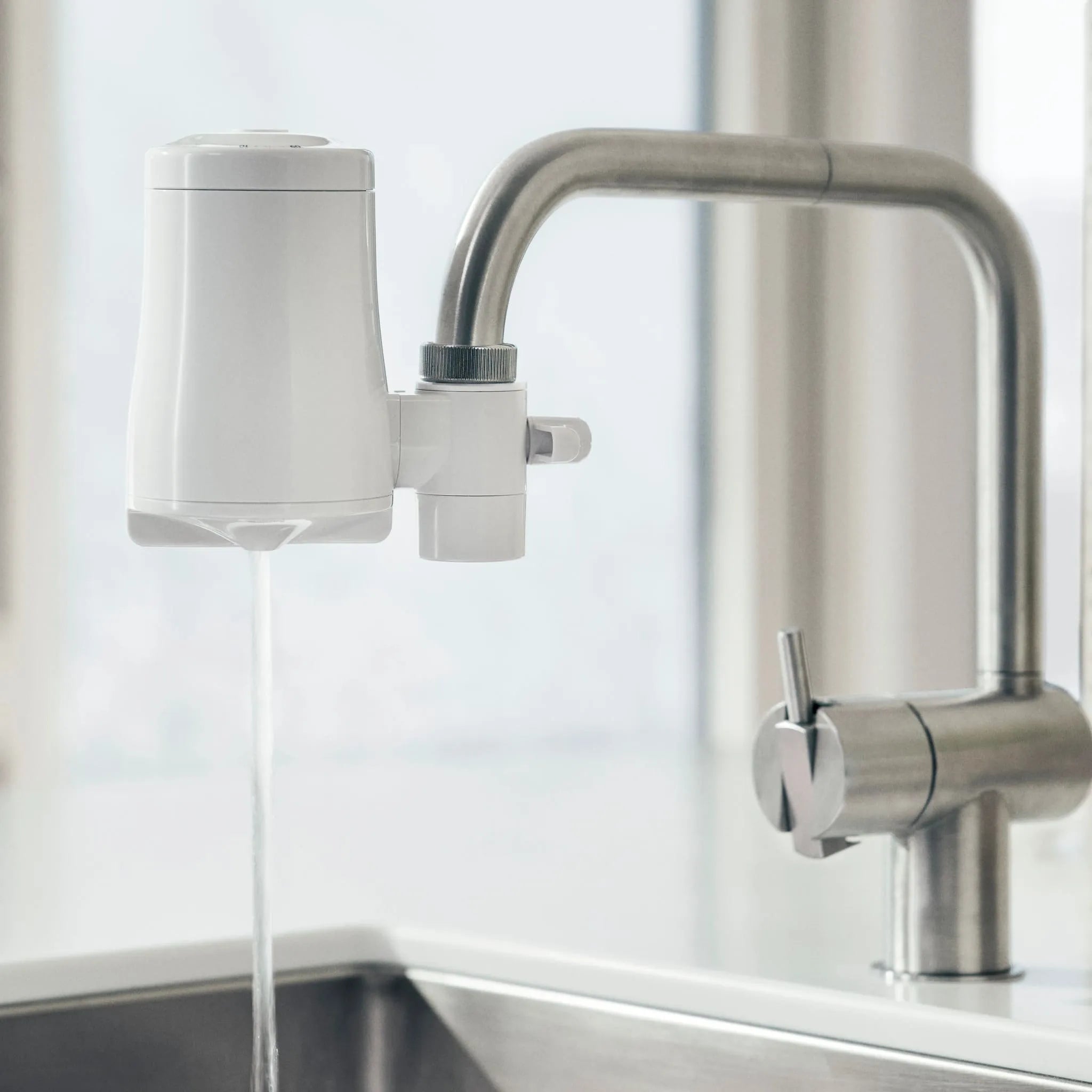
- Price
- from $64.90 (starter pack) · $118 annual pack
- Refills
- $78
The EcoPro is the simplest way to put filtered water on a coffee counter: it mounts on the kitchen tap, so you draw filtered water directly for the kettle, dripper or press instead of waiting on a pitcher. With the Starter pack from $64.90 – or the Annual pack at $118, which bundles about a year of refills – it is the lowest-cost entry into TappWater's coffee-relevant range. Its carbon-block cartridge is designed to reduce chlorine and taste-and-odor compounds and – per the manufacturer's published independent lab reports – microplastics and PFAS. For most coffee drinkers who simply want better-tasting brew water on demand, this is where we would start.
- Pros
- Lowest-cost entry into the coffee range
- Filtered water on demand at the tap
- Refills are the cheapest of the range at $78
- No under-sink installation needed
- Cons
- Cartridge refills are an ongoing cost
- Faucet fit needs checking before you buy
- Performance figures are the manufacturer's, not our own lab tests
TappWater PitcherPro Filter Pitcher
Best for Pour-Over & French Press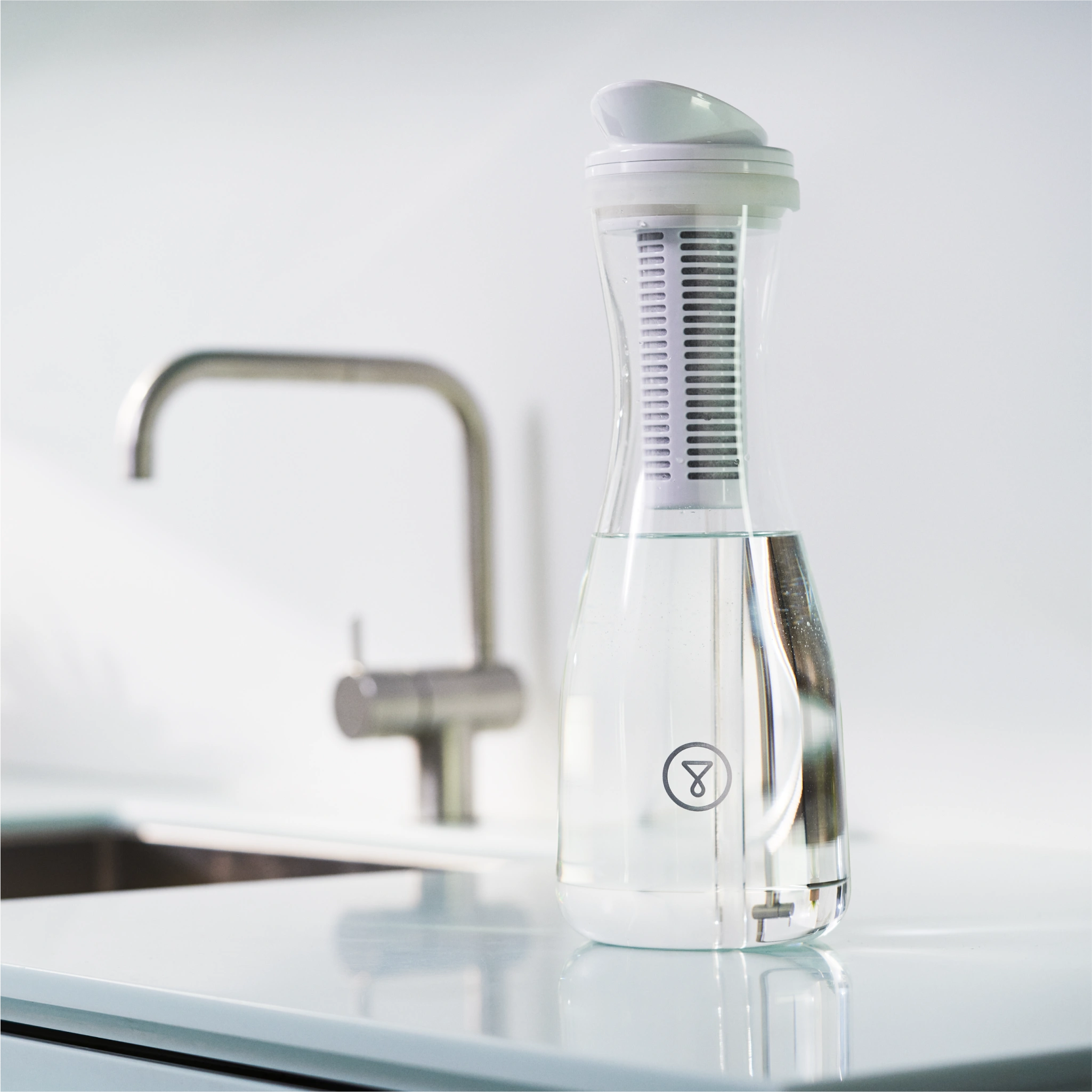
- Price
- from $55.90 (starter pack) · $101.20 annual pack
- Refills
- $56
If you brew pour-over, drip or French press and want filtered water without touching your plumbing, the PitcherPro is the pick. You fill it, it filters, and you pour into your kettle – no faucet adapter, no under-sink work. With the Starter pack from $55.90 – or the Annual pack at $101.20 for about a year of refills – it is the cheapest model to keep running over time, and its cartridge is designed to reduce chlorine and taste-and-odor compounds that flatten delicate, light-roasted coffee. It is the gentlest way to upgrade your brew water with almost no commitment.
- Pros
- No installation at all
- Cheapest refills of the range at $56
- Great fit for light roasts and manual brewing
- Simple, low-commitment upgrade
- Cons
- Filtering takes time and batches are small
- Less suited to heavy hardness than plumbed filters
- Not a plumbed supply for an espresso machine
TappWater Countertop RO SMR
Best for Espresso Bars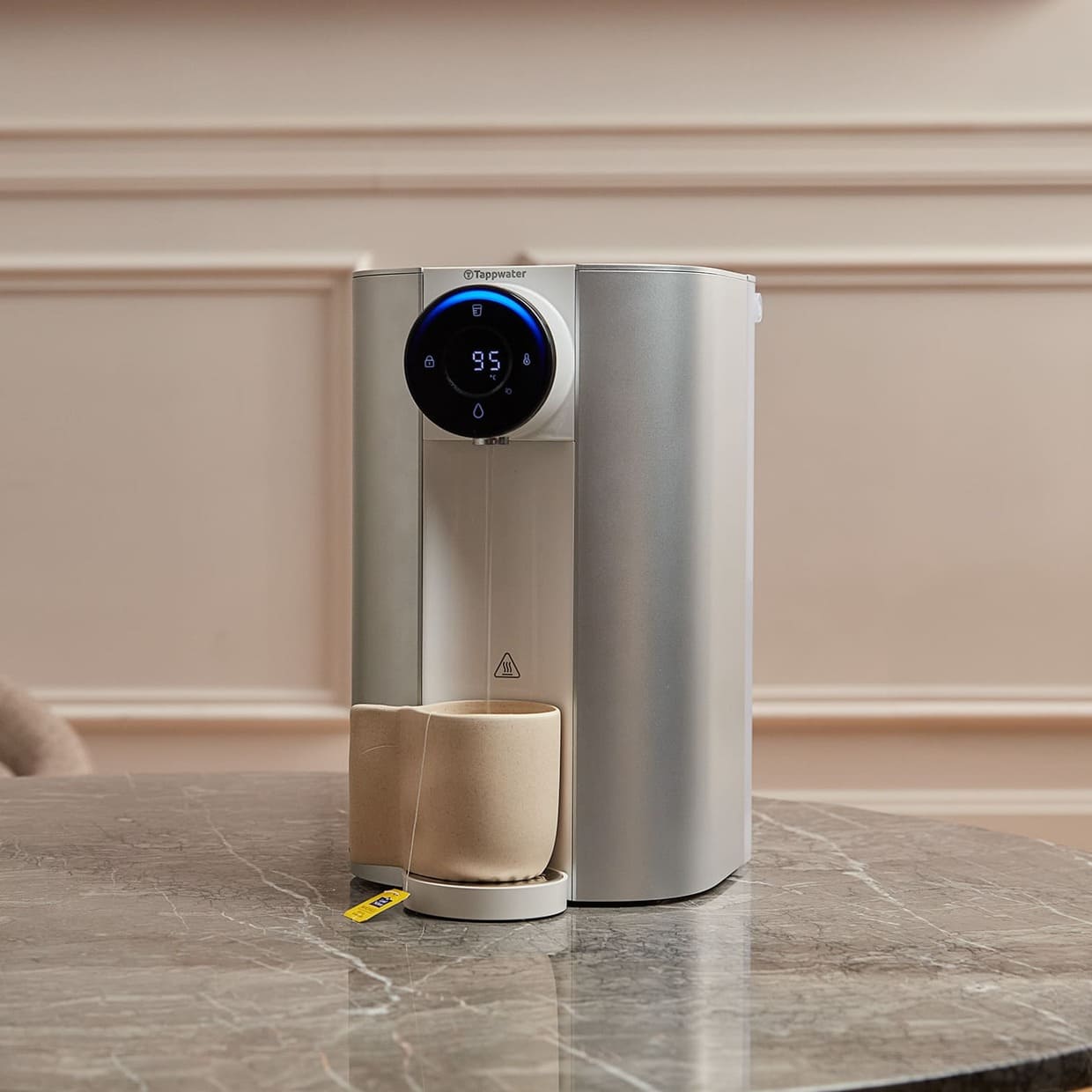
- Price
- $478
- Refills
- $96
For a full espresso setup – especially one that steams milk – the Countertop RO SMR is the heavyweight. It is a countertop reverse-osmosis unit, so it removes far more than a carbon filter, and at $478 with $96 refills it is the most expensive option here. RO water is very low in minerals, so if you use it for espresso, taste it against your usual water and follow the SCA mineral guidance rather than assuming softer is always better – you may want to remineralise. For anyone chasing the cleanest possible starting water and happy to pay for it, this is the flagship.
- Pros
- Most thorough filtration (reverse osmosis)
- Stands up to a steam-heavy espresso routine
- Countertop – no plumbing required
- Tackles the widest range of contaminants
- Cons
- Highest price at $478
- RO strips minerals – may need remineralising for espresso
- Refills cost $96
TappWater EcoPro Compact Tap Water Filter
Best for Small Kitchens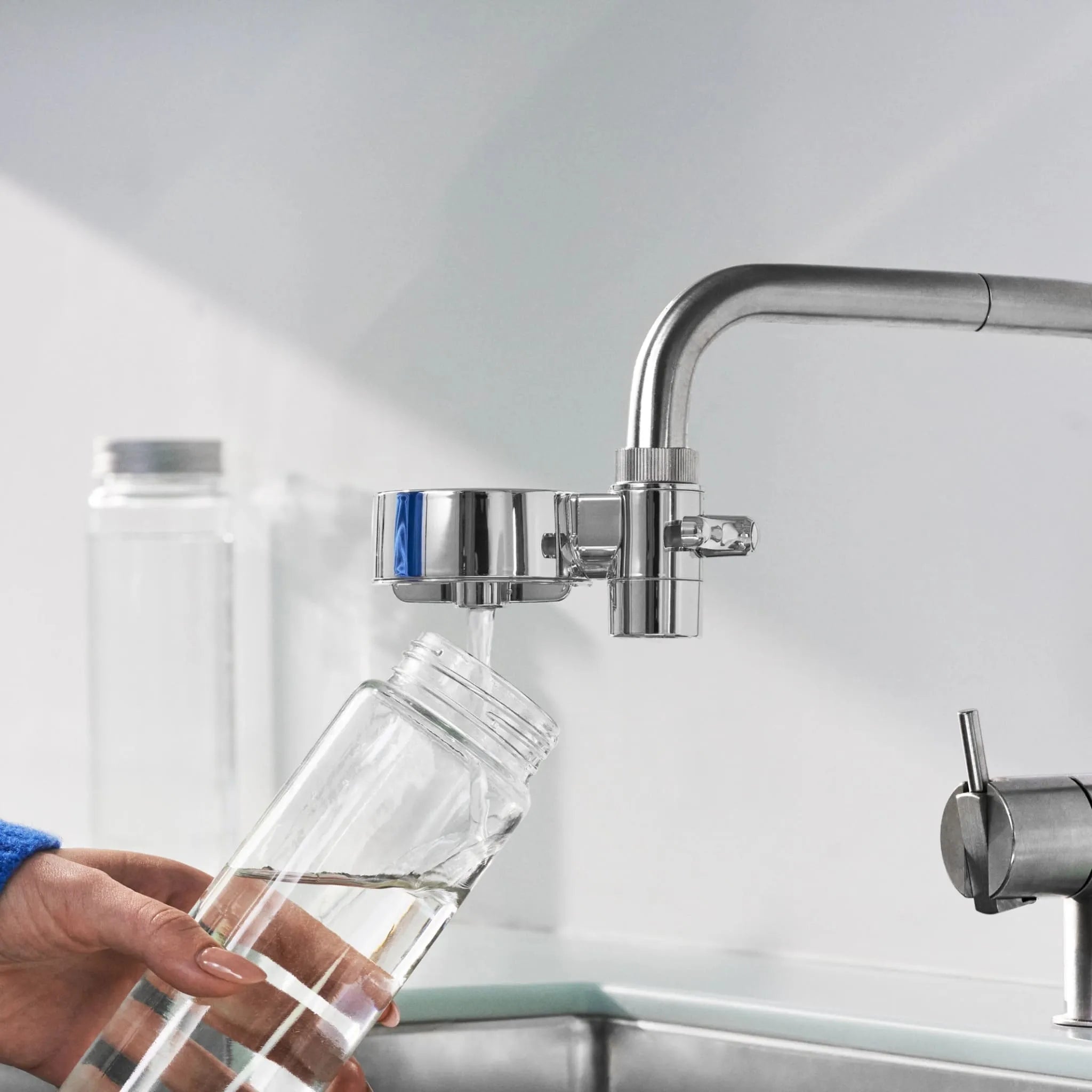
- Price
- from $59.90 (starter pack) · $150 annual pack
- Refills
- $98
The EcoPro Compact is the space-saving sibling of the EcoPro faucet filter, made for kitchenettes, small apartments and second taps where a bulkier system will not fit. The Starter pack starts at $59.90 (White) or $69.90 (Chrome), while the Annual pack is $150 with six refills and its refills run higher at $98 – so it is a size-and-fit choice rather than a value one. If your counter or tap is tight but you still want filtered water for coffee on demand, this is the model to look at.
- Pros
- Compact footprint for tight kitchens
- Filtered water on demand at the tap
- Same carbon-block approach as the EcoPro
- Cons
- Annual pack is pricier than the standard EcoPro's at $150
- Refills cost $98
- Faucet fit still needs checking
TappWater InlinePro SMR Under-Sink Filter
Best Installed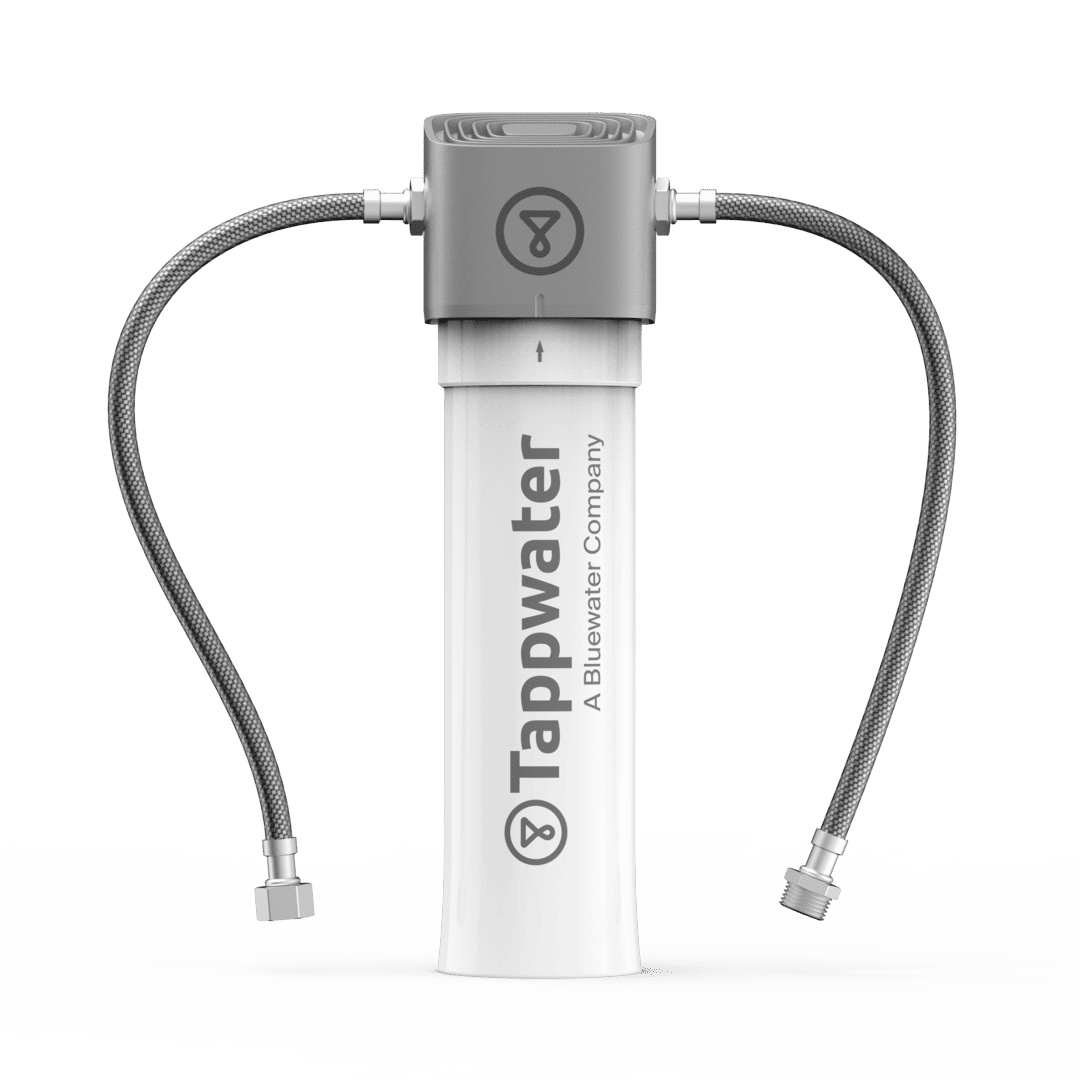
- Price
- $144
- Refills
- ~$48
The InlinePro SMR installs under the sink inline with your water supply, so filtered water comes out of the tap itself and nothing sits on the counter. At $144 with refills around $48 it offers the lowest ongoing cost here, which makes it attractive if you want a fixed, long-term setup. It does need a one-time plumbing install, so it suits a permanent kitchen rather than a rental you might leave next year.
- Pros
- Nothing on the counter
- Lowest ongoing cost – refills around $48
- Convenient plumbed supply for a permanent kitchen
- Cons
- Needs a one-time under-sink installation
- Not portable or renter-friendly
- Refill figure (~$48) is the manufacturer's published price
TappWater BottlePro Filter Bottle
Best for Travel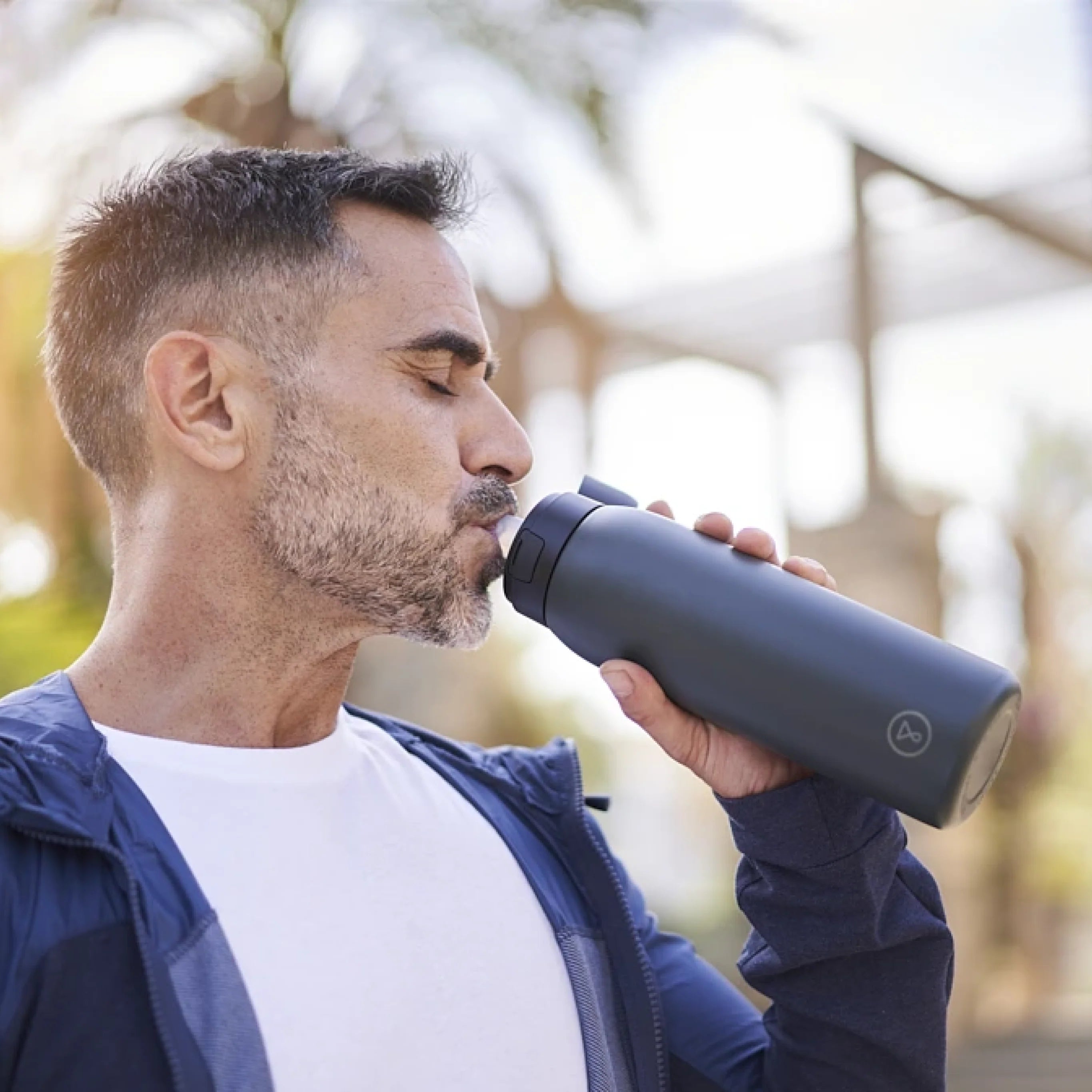
- Price
- $47
The BottlePro is the on-the-go member of the family – a filter bottle at $47 for making coffee or drinking water away from your kitchen, whether that is an office kettle, a hotel room or a campervan. It will not plumb into an espresso machine, but it is the cheapest single item in the range and a sensible travel companion when bad-tasting water is what stands between you and a decent brew on the road.
- Pros
- Lowest price in the range at $47
- Genuinely portable
- Good for travel, office and camping
- Cons
- Small capacity
- Not for plumbed or machine use
- Cartridge refills still needed
TappWater Models Compared
Every model, side by side – what it is best at, the Starter/Annual pack price, and the ongoing refill cost. All prices are the published USD prices from tappwater.co/en-us, verified September 2026.
| Product | Best for | Price (Starter pack / Annual pack) | Refill cost | Offer |
|---|---|---|---|---|
| EcoPro Faucet Filter | Filter coffee & kettle | from $64.90 (starter pack) · $118 annual pack | $78 | Get 10% off |
| EcoPro Compact Tap Water Filter | Small kitchens | from $59.90 (starter pack) · $150 annual pack | $98 | Get 10% off |
| PitcherPro Filter Pitcher | Pour-over & French press | from $55.90 (starter pack) · $101.20 annual pack | $56 | Get 10% off |
| InlinePro SMR Under-Sink Filter | Fixed installation | $144 | ~$48 | Get 10% off |
| Countertop RO SMR | Espresso bar & steam | $478 | $96 | Get 10% off |
| BottlePro Filter Bottle | Travel & office | $47 | — | Get 10% off |
Refills for the EcoPro are also sold separately at $78. For completeness, TappWater also makes a ShowerPro Diamond (from $54.90 starter pack · $100.00 annual pack) – that one is a shower filter for skin and hair, not for coffee or drinking water, so we have left it out of the comparison.
Filtered vs Bottled vs Unfiltered: The Cost
Water is the one ingredient you buy again and again, so the running cost matters as much as the sticker price. Here is a transparent sample calculation. Assumption: one household uses about 2 litres of brewing water a day – roughly 730 litres a year. We only use the TappWater prices listed above plus an illustrative bottled-water price to make the arithmetic easy to follow.
- Bottled water: at an illustrative $1 per litre, 730 litres is about $730 a year – and it repeats every year.
- TappWater EcoPro (filtered): the EcoPro Annual pack is $118 and includes refills for about a year – TappWater lists four refills. Buying those four refills separately at $78 each would cost 4 × $78 = $312, so the Annual pack is clearly the cheaper route (assumption: one Annual pack covers a year of brewing water). On that basis the EcoPro runs at about $118 a year, and the Starter pack is $64.90 if you just want to try it with a single refill.
- TappWater PitcherPro (filtered): the PitcherPro Annual pack is $101.20 and includes about a year of refills (four refills). Bought separately, four refills at $56 each would cost 4 × $56 = $224. So under the same assumption the PitcherPro runs at about $101.20 a year, and the Starter pack is $55.90 – the cheapest way to keep filtered water flowing.
- Unfiltered tap: the lowest direct cost – near zero at the tap – but hard water means more frequent descaling and can shorten a machine's life. That is a real cost; it just does not appear on a water bill.
The refill frequency is the variable to watch. Use the rated capacity TappWater publishes for your cartridge and your own water use, then run the same arithmetic – the point is not our sample number, it is that filtered water tends to beat bottled water quickly while keeping descaling down.
Refill-only prices, for reference: EcoPro $78 · EcoPro Compact $98 · PitcherPro $56 · Countertop RO $96 (published USD prices, tappwater.co/en-us, September 2026).
TappWater Review: What We Like and What to Know
What we like
- A clear fit for coffee. The range covers the whole path – a travel bottle, a pitcher for manual brewing, faucet filters for the kettle, an under-sink model for a plumbed supply, and a countertop RO for espresso bars.
- Carbon filtration targets the taste problem. Reducing chlorine and taste-and-odor compounds is the single most noticeable upgrade for most brewers. See the range at TappWater.
- Published lab reports. TappWater publishes independent laboratory reports for its cartridges, which is more transparency than many water-filter brands offer – per the manufacturer's published independent lab reports.
- Scalable spend. You can start with the PitcherPro Starter pack from $55.90 or the EcoPro Faucet Starter pack from $64.90 and move up to a $478 RO unit only if you actually need it.
What to know
- It is direct-to-consumer, not Amazon. TappWater sells from its own site, so there are no Amazon listings and no Prime shipping. You order from tappwater.co and it ships to you.
- Refills are an ongoing cost. Every model needs cartridges on a schedule, from $48 to $98 depending on the filter. Budget for it like you budget for coffee beans.
- Performance claims are the manufacturer's, not ours. All reduction figures for chlorine, microplastics and PFAS are reported as they appear in the manufacturer's published independent lab reports. We did not run our own laboratory tests, and we are not pretending otherwise.
- RO changes the water profile. Reverse osmosis strips minerals along with contaminants, so espresso drinkers should taste-test and consider remineralising rather than assuming the softest water is best.
FAQ
Does hard water ruin espresso machines?
Yes – limescale is the main enemy. Dissolved calcium and magnesium in hard water precipitate as scale when they are heated, and that scale builds up on the boiler, the heating element, the group head and the valves. The result is reduced flow, unstable brew temperature and more frequent descaling. Left unchecked, heavy scale can clog a machine and shorten its working life – which is why filtered or softened water is standard advice for espresso.
Does a water filter improve coffee taste?
It can, and chlorine is the clearest reason. A brewed cup is roughly 98% water, so anything the water carries – chlorine, chloramine or a strong mineral taste – ends up in the coffee. A carbon-based filter reduces chlorine and the taste-and-odor compounds that come with it, which lets the coffee's own flavours come through more cleanly. The difference is usually easiest to notice in lighter roasts and in filter, pour-over and French press brewing.
How often do TappWater cartridges need replacing?
It depends on the model and how much water you use. TappWater publishes a rated capacity for each cartridge – usually expressed in litres or months – on the product page, and the cartridge should be replaced when that volume or time is reached. Because those figures come from the manufacturer, check the current numbers for your specific model before you buy. The refill prices quoted on this page ($56–$98 depending on model) are the published USD prices from tappwater.co.
Does TappWater remove microplastics and PFAS?
TappWater states that its filters reduce microplastics and that its carbon-block cartridges are designed to reduce PFAS, chlorine and other contaminants. Those are the manufacturer's claims, supported by the independent laboratory reports TappWater publishes – we report them as the manufacturer's published results, not as our own measurements, because we did not run laboratory tests. For exact reduction rates, check the lab report for the specific product.
Is filtered water okay for espresso machines?
Generally, yes – filtered water is usually better for an espresso machine than hard tap water, because reducing scale protects the boiler and helps keep brew temperature stable. Two cautions. First, avoid water that is too soft or fully demineralised: the Specialty Coffee Association's guidance points to a mineral window of roughly 75–250 ppm, so the water still carries enough minerals for flavour. Second, confirm with your machine's manufacturer that using filtered water will not affect the warranty.
Is a pitcher filter enough for coffee?
For many coffee drinkers, yes. A pitcher filter reduces chlorine and taste-and-odor compounds – exactly what shows up in the cup – and it needs no installation, so it is a low-commitment upgrade for drip, pour-over and French press. It is less effective than a faucet or under-sink filter at removing the scale-forming hardness that matters most to espresso machines, and it is not a plumbed supply. If better-tasting water for manual brewing is the goal, a pitcher is a reasonable place to start.
How do I get the 10% discount?
Follow our link to TappWater, choose your system – a starter pack, an annual pack or a yearly subscription – and enter the voucher code at checkout: the 10% is deducted from the price. The offer only works through our link. If you go to tappwater.co directly, the discount does not apply.
Bottom Line
Water is most of what is in your cup, so it deserves the same attention as your beans. For most coffee drinkers, the TappWater EcoPro Faucet Filter (from $64.90 starter pack · $118 annual pack) is the model we would pick for most coffee setups – filtered water on demand for the kettle, dripper or press at the lowest entry price. If you brew pour-over or French press and want zero installation, the PitcherPro (from $55.90 starter pack · $101.20 annual pack) is the simple, cheap-to-run pick. And if you run a full espresso bar with steam, the Countertop RO SMR ($478) is the flagship – just taste-test the very soft RO water before you commit. Get 10% off at TappWater →
