FTC Disclosure: LimeCrema is reader-supported. When you buy through links on our site, we may earn an affiliate commission at no extra cost to you. Learn more.
Classic French presses are rarely as neutral as they look. The usual design pairs a glass or steel body with a plastic lid, a plastic or nylon seal and a nylon mesh around the plunger – all of which sit in hot water and coffee for the full brew. If you want the rich, immersion-brewed cup a French press is famous for without those contact points, the fix is a press built from stainless steel and glass only. We compared three plastic-free French presses on the US market – materials in the brew path, build quality, capacity, heat retention and owner satisfaction across more than 19,000 verified Amazon reviews. If you would rather see the whole category first, start with our best plastic-free coffee maker guide.
| Product | Key Benefit | Price | Link |
|---|---|---|---|
| Non-Toxic Stainless Steel French Press 34 oz | Best Overall | $42.95 | Check Price |
| WALDWERK French Press 34 oz | Best Double-Wall | $39.99 | Check Price |
| Veken 34oz French Press | Best Value | $26.98 | Check Price |
The 3 Best Non-Toxic French Presses
Non-Toxic Stainless Steel French Press, 34 oz
Best Overall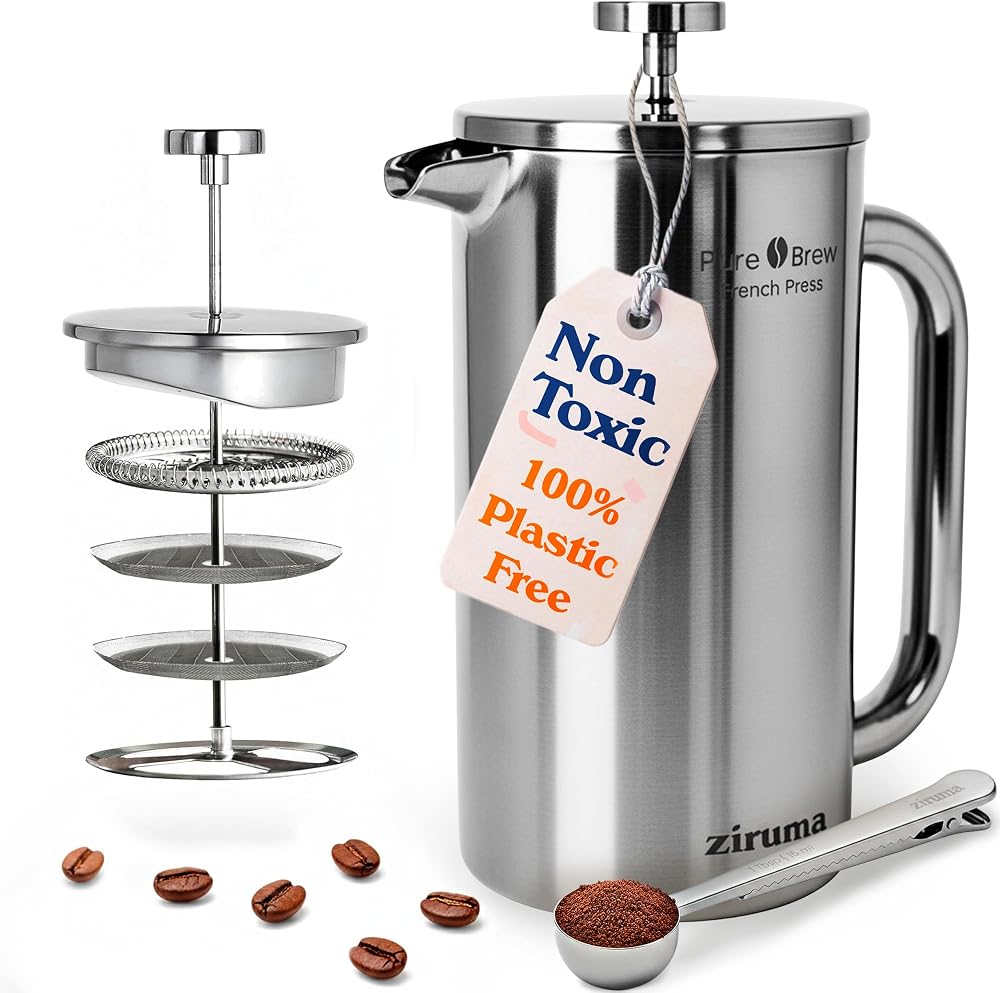
- Price
- $42.95
★ 4.7/5 from 951 verified Amazon reviews. This press answers the question directly: it is stainless steel inside and out and marketed as containing no plastic or heavy metals, so the hot water and coffee stay in contact with metal only. It holds 34 ounces – about three cups of full-bodied, immersion-brewed coffee – and the metal body is built to survive daily use and the occasional knock. At 4.7★ from 951 owners and $42.95, it is the most proven non-toxic press here and the safe default.
- Pros
- Stainless steel inside and out
- Marketed as no plastic, no heavy metals
- 4.7★ from 951 verified reviews
- 34 oz – about three cups
- Cons
- You cannot watch the brew through steel
- No double-wall insulation – it cools faster than the WALDWERK
- Needs a coarse grind
WALDWERK French Press (34 oz) — Double Wall, Oak Wood Handle
Best Double-Wall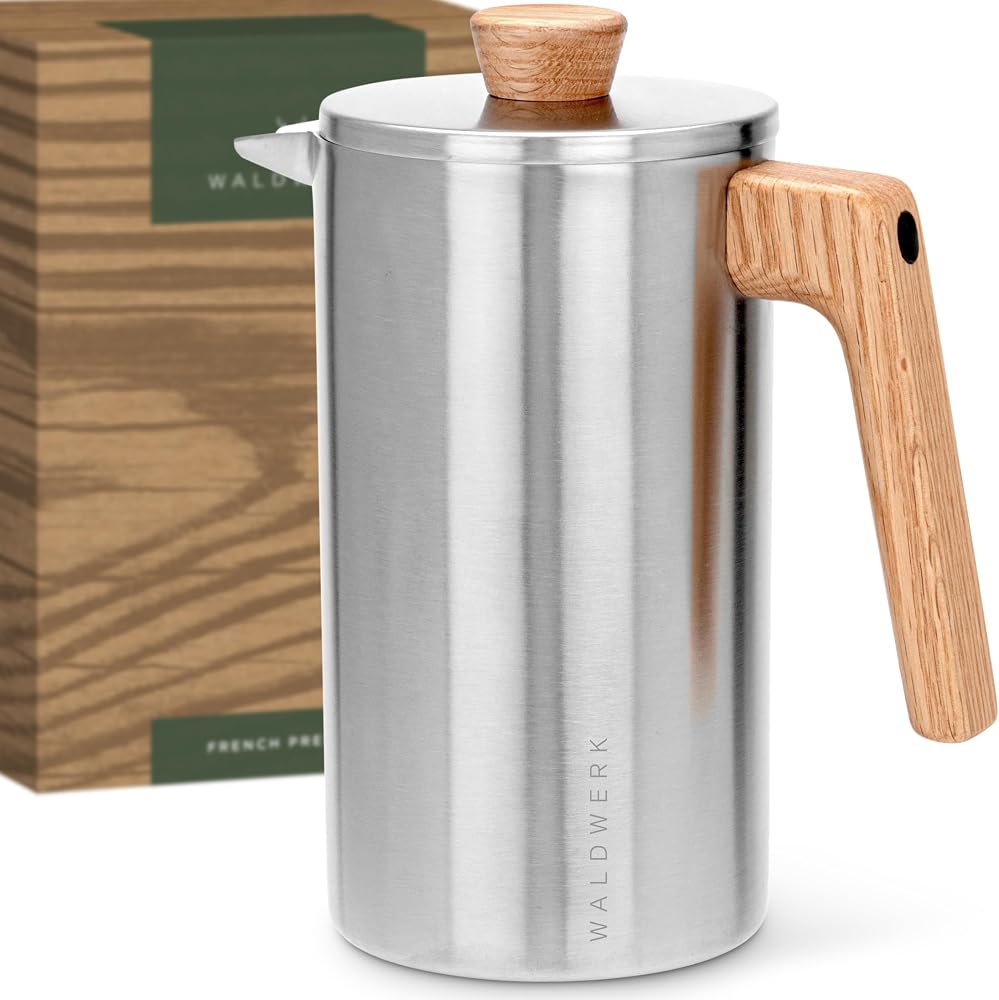
- Price
- $39.99
★ 4.7/5 from 346 verified Amazon reviews. The WALDWERK adds the one thing the winner does not: a double wall. That insulation keeps the coffee hot well past the first cup, which suits the unhurried, sit-and-sip ritual a French press is made for. It is stainless steel with an oak wood handle, marketed as non-toxic, double-wall and plastic-free, and it costs slightly less than the winner at $39.99. The owner base is smaller at 346 reviews, but the 4.7★ rating matches the top pick.
- Pros
- Double-wall steel keeps coffee hot longer
- Warm-toned oak wood handle
- Marketed non-toxic and plastic-free
- 4.7★ from 346 reviews at $39.99
- Cons
- Fewer reviews than the other two
- Heavier than a single-wall press
- Wood handle needs hand-washing care
Veken 34oz French Press Coffee Maker
Best Value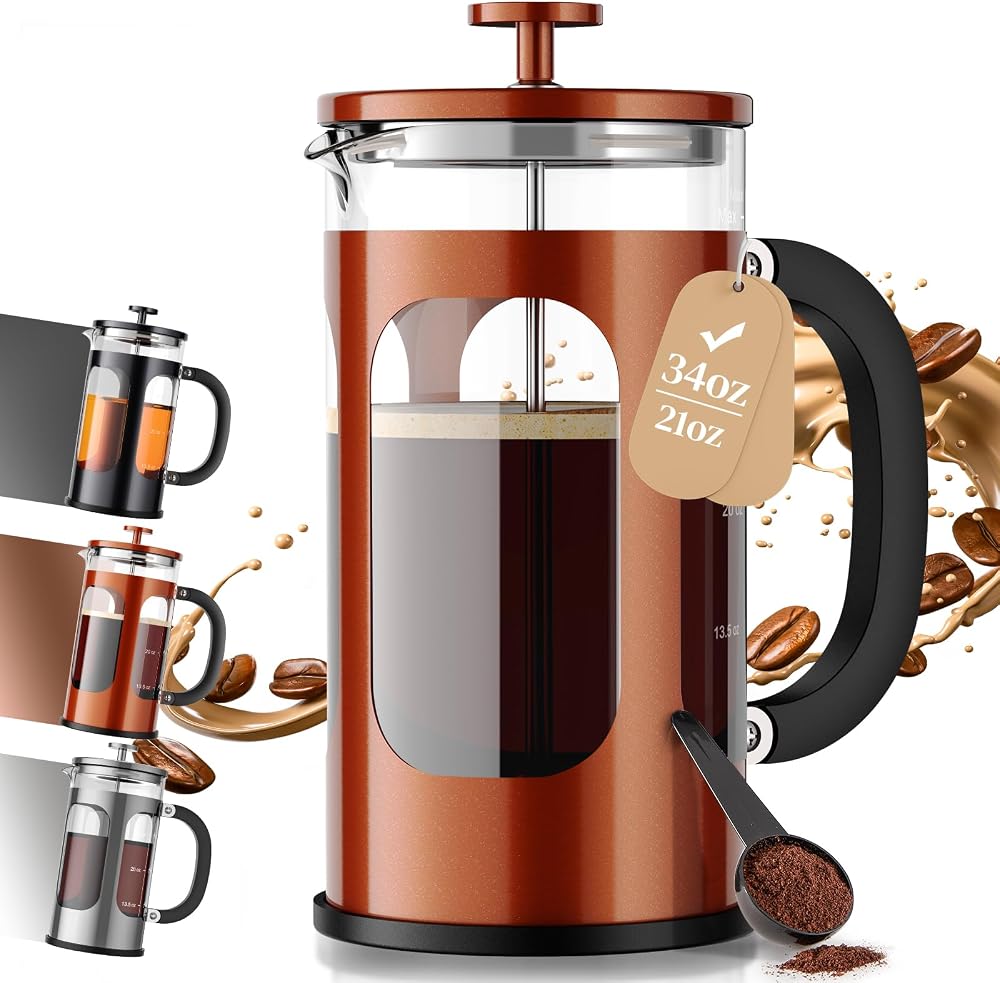
- Price
- $26.98
★ 4.6/5 from 18,000 verified Amazon reviews. The Veken is the press to buy when price is the deciding factor: $26.98 for a 34-ounce brewer with more than 18,000 reviews behind it. It is marketed so that no plastic touches the coffee – the plastic that remains is kept to the exterior and handle – which makes it a genuinely low-cost way to cut plastic out of the brew path. It will not match a heavy double-wall steel press for heat retention or heft, but at this price and review volume it is the clear value pick.
- Pros
- Cheapest here at $26.98
- 18,000+ reviews at 4.6★
- No plastic touches the coffee
- 34 oz – about three cups
- Cons
- Not advertised as fully plastic-free
- Lighter build than the steel presses above
- No double-wall insulation
How to Choose a Non-Toxic French Press
What to avoid in a French press
Three things push a French press off a non-toxic shortlist. Plastic lids and seals: the lid, the top seal and often a secondary filter sit right above the coffee, so hot water and steam pass them for the whole brew – a steel plunger with a silicone or steel seal replaces them. Plastic or nylon mesh filters: many cheaper presses wrap the plunger in a nylon mesh that is constantly immersed; look for a stainless steel mesh, or a steel disc system. Lead-containing ceramic and cheap metal coatings: some ceramic bodies and low-cost "stainless" pots can carry glazes or alloys you would rather not brew in – favor food-grade stainless steel (such as 304 / 18-8) and be wary of unbranded metal presses with no material disclosure.
Stainless steel vs glass
Both are inert and perfectly safe to brew in, so the choice is about how you use the press. Glass lets you watch the brew and is completely neutral, but it is fragile and loses heat quickly. Stainless steel is tough, travel-friendly and – in a double-wall design – insulates far better, but you cannot see the coffee through it. If you want see-through brewing with no plastic in sight, choose a glass press with a steel plunger; if you want durability and heat retention, choose steel.
Double-wall vs single-wall
A single-wall steel press is lighter and usually cheaper, but it radiates heat; a double-wall model like the WALDWERK traps a layer of air between two steel shells so your second cup is still hot. The trade-off is weight and a slightly higher price. For one quick cup in the morning, single-wall is fine; for slow weekend brewing where you linger over the pot, double-wall is worth it.
Oil film, cleaning and the "seasoning" myth
French press coffee leaves fine sediment and an oily film on the metal and mesh. Rinse the parts with warm water and a soft brush after each use, and every few weeks soak them in a warm water and white vinegar solution to dissolve coffee oils and mineral film – then rinse thoroughly. Avoid abrasive pads that scratch stainless steel. Some drinkers let the film build up for "seasoning," but there is no evidence it improves taste, and stale oils can go rancid, so keep it clean.
French press myths: does the filter change cholesterol?
Immersion coffee made without a paper filter contains more cafestol and kahweol – the coffee oils that researchers have studied for their effect on LDL ("bad") cholesterol – while paper filters trap much of them. A French press, whether the body is plastic or stainless steel, uses a metal mesh that lets those oils through, so moving from a plastic press to a steel one does not change the cholesterol question at all. If that is your concern, the lever is the filter or the brewing method (for example a paper-filtered plastic-free pour-over), not the body material. This is general information, not medical advice – talk to your doctor about your own numbers.
Grind, ratio and technique
Use a coarse grind – roughly sea-salt texture – so fine particles do not slip through the metal mesh and leave sludge in the cup. A common starting ratio is about 1 part coffee to 15–16 parts water by weight, a four-minute steep, then a slow, steady plunge. If you do not yet own a grinder, a burr grinder set to coarse is the single best upgrade for French press coffee – see our best coffee grinder for French press guide.
FAQ
What makes a French press non-toxic?
A non-toxic French press keeps hot water and coffee away from plastic, nylon and questionable metal coatings. The parts that matter are the lid, the plunger seal and the mesh filter around the plunger – in a classic press these are often plastic or nylon and sit in the brew for the full four minutes. A stainless steel body with a steel plunger and a silicone or steel seal, like the presses on this list, removes almost all of that contact. You do not need to see the word "non-toxic" on the box; look at what the hot water actually touches.
Does French press coffee raise cholesterol, and does a metal filter change that?
Immersion coffee made without a paper filter contains more cafestol and kahweol – the coffee oils that researchers have studied for their effect on LDL ("bad") cholesterol – while paper filters trap much of them. A French press, whether the body is plastic or stainless steel, uses a metal mesh that lets those oils through. So switching from a plastic press to a steel one does not change the cholesterol question at all; the lever is the filter or the brewing method (for example paper-filtered pour-over), not the body material. This is general information, not medical advice – talk to your doctor about your own numbers.
Is stainless steel or glass better for a non-toxic French press?
Both are inert and safe to brew in. Glass lets you watch the brew and is completely neutral, but it is fragile and loses heat quickly. Stainless steel is tough, travel-friendly and – in a double-wall design – insulates far better, but you cannot see the coffee through it. If you want to watch the brew with no plastic in sight, choose a glass press with a steel plunger; if you want durability and heat retention, choose steel.
Are plastic-free French presses more expensive?
No – the category is genuinely affordable. On this list the Veken 34oz press is $26.98, the WALDWERK double-wall press is $39.99 and the winner is $42.95, all well under the price of most automatic coffee makers. Plastic-free is a materials choice, not a premium segment: a stainless steel press often costs the same as, or less than, a plastic-lidded glass one.
How do I clean a stainless steel French press?
Rinse the body, plunger and mesh with warm water and a soft brush after every use – the fine sediment and oily film left by French press coffee go stale and can taste rancid if left to build up. Every few weeks, soak the parts in a warm water and white vinegar solution to dissolve coffee oils and hard-water film, then rinse thoroughly. Avoid abrasive pads that can scratch stainless steel, and do not put a glass carafe or steel press in the dishwasher unless the maker states it is dishwasher-safe.
What grind should I use in a French press?
Use a coarse grind, roughly like sea salt. A French press uses a metal mesh rather than a paper filter, so fine grounds slip through and leave sludge in the cup, while a very coarse grind under-extracts and tastes weak. If you do not yet own a grinder, a burr grinder set to coarse is the single best upgrade – see our best coffee grinder for French press guide.
Bottom Line
For most kitchens, the Non-Toxic Stainless Steel French Press (34 oz) is the best non-toxic pick: steel inside and out, no plastic or heavy metals in the brew path, and the strongest review record here at 4.7★ from 951 owners. If you want your coffee to stay hot to the last cup, the WALDWERK double-wall press is the better-insulated alternative at $39.99. And if budget leads the decision, the Veken 34oz gets you out of plastic contact for $26.98. Whatever you choose: use a coarse grind, steep about four minutes, and keep the mesh clean.
