FTC Disclosure: LimeCrema is reader-supported. When you buy through links on our site, we may earn an affiliate commission at no extra cost to you. Learn more.
Prices shown are pulled from the Amazon API and were last checked on 01.11.2026. Amazon prices and availability change constantly – the price on Amazon at the time of purchase is the one that applies.
Frothed milk is two things at once, and most failed attempts get one of them wrong: air, broken into bubbles small enough to stay suspended, and heat, applied slowly enough that the proteins holding those bubbles survive. Get the air right and the heat wrong and you have hot milk with a skin on top. Get the heat right and the air wrong and you have a cappuccino made of dish soap.
The method matters less than two numbers. Steam wand, $25 French press or $9 battery whisk, the target is the same: aerate briefly, then spin the milk into a vortex until it reaches 140–150°F (60–65°C). Below are the four methods that work at home, and five verified tools.
| Tool | Best for | Price | Link |
|---|---|---|---|
| Breville Milk Café | Best overall frother | $199.95 | View on Amazon |
| SIMPLETASTE 4-in-1 | Best budget electric | $44.97 | View on Amazon |
| Zulay Handheld Frother | Cheapest that works | $7.99 | View on Amazon |
| Bodum Chambord 12 oz | No electricity needed | $24.99 | View on Amazon |
| Dailyart Pitcher + Thermometer | Best for steam wands | $13.86 | View on Amazon |
What frothed milk actually is
US whole milk is about 87% water, 3.3% protein and 3.25% fat, and frothing works on the protein. Whey unfolds at the surface of each bubble and forms a film around it; fat and casein thicken that film, which is why whole milk holds foam and skim milk collapses. Heat is the second half: proteins denature at around 140°F (60°C), exactly when foam becomes stable, and past 158°F (70°C) they over-denature, the foam breaks and the milk tastes cooked.
The texture distinction matters. Microfoam is air folded in so finely that the milk reads as one glossy liquid, bubbles under about 0.5 mm – what you need for latte art. Foam is a separate layer of stiff peaks on hot milk. A steam wand makes microfoam; a press or handheld whisk makes airy foam. That is texture, not taste.
Method 1: The steam wand (best microfoam)
The only method that produces true microfoam at home, and it takes about 15 seconds once you can do it. Three phases, whatever the machine.
- Start cold. Fridge-cold milk, 38–41°F, in a pitcher no more than half full. Cold milk gives a longer window before it hits 150°F, and that window is where foam is built.
- Aerate 3–5 seconds. Wand tip just under the surface near the spout, then open the steam. You want a quiet, rhythmic tsk-tsk-tsk: a hiss means the tip is out of the milk, a roar means it is buried and you are only heating.
- Spin for the rest. Lower the pitcher so the tip sits about a centimetre under, and tilt so the milk rolls in a vortex.
- Stop at 140–150°F. No thermometer? When the pitcher is too hot to hold against your palm for two seconds, you are there.
- Tap and swirl. Bang the pitcher on the counter, swirl five seconds until foam and milk are one texture, pour.
Two common failures: aerating for ten seconds instead of three, which gives stiff foam and no milk, and steaming in an overfull pitcher where the milk has nowhere to spin.
Method 2: The French press (best without electricity)
The mesh acts as a whisk: each pump pushes milk through the screen and draws air back in, and thirty strokes roughly double the volume of a third of a pitcher.
- Fill a 12 oz press no more than one third – about 4 fl oz (120 ml). More and it overflows when it foams.
- Warm the milk first: microwave 30–45 seconds to about 140°F, or start with hot but not boiling milk.
- Lid on, plunger just above the milk, then pump firmly 30–45 times over about 30 seconds. Short, fast strokes beat long, slow ones.
- Let it settle 20 seconds so large bubbles rise, then pour. Frothed cold? Microwave 20–30 seconds and stir once.
The result is airy, slightly wet foam – fine for a cappuccino, acceptable in a latte, not good enough for latte art. It also handles barista oat milk more gently than a steam wand does.
Method 3: The electric frother
A standalone frother heats and agitates in one sealed jug, usually in 60–90 seconds, and stops itself at a preset temperature. Better models use induction heating, which is gentler than a bare element and gives smaller bubbles.
Two capacities matter, and they differ. A "17 oz" frother typically heats 500 ml but froths only 250 ml – the jug needs headroom. Most offer four programmes: thick hot foam, thin hot foam, hot milk, cold foam. For a latte use thin, for a cappuccino thick. The limitation is texture: a whisk cannot build a vortex, so the result lands closer to a French press than a café.
Method 4: The handheld whisk
A battery whisk – 13,000 rpm, a shaft, a coiled spring head – is the cheapest tool that works, and the best one for cold foam. Hold the head just under the surface of 4 fl oz of milk in a tall glass and move it up and down for 15–20 seconds.
It does not heat, which is the trade-off: pour over ice, or microwave the glass for 30–45 seconds, which partly collapses the foam. The bubbles are the coarsest of the four methods – fine for a lazy Sunday cappuccino, not for latte art.
Which milk to froth
- Whole dairy, 3.25% fat, 3.3% protein: the reference. Stable, sweet, easy to pour. If a method fails with whole milk, the method is wrong.
- 2% reduced fat: foams almost as well, slightly less body.
- Skim: foams highest, collapses fastest – less fat to thicken the film.
- Barista oat: about 3% added fat plus stabilisers. Works in all four methods; standard oat milk does not.
- Almond and soy: only barista versions froth properly.
- Lactose-free: behaves like whole milk – lactase only affects the sugar.
One thing worth saying plainly: milk near its sell-by date froths badly. Protein degrades before milk tastes sour, so if your technique suddenly stopped working, check the carton before the machine.
Temperature, in one table
| Stage | Temperature | What is happening |
|---|---|---|
| Fridge cold | 38–41°F / 3–5°C | Starting point – longest window to build foam |
| Protein denatures | ~140°F / 60°C | Whey unfolds and stabilises the bubble film |
| Target | 140–150°F / 60–65°C | Peak foam stability and sweetness – stop here |
| Too hot | 158°F+ / 70°C+ | Over-denatured protein, foam collapses, cooked flavour |
The 5 best tools for frothing milk at home
Breville BMF600XL Milk Café Frother
Best Overall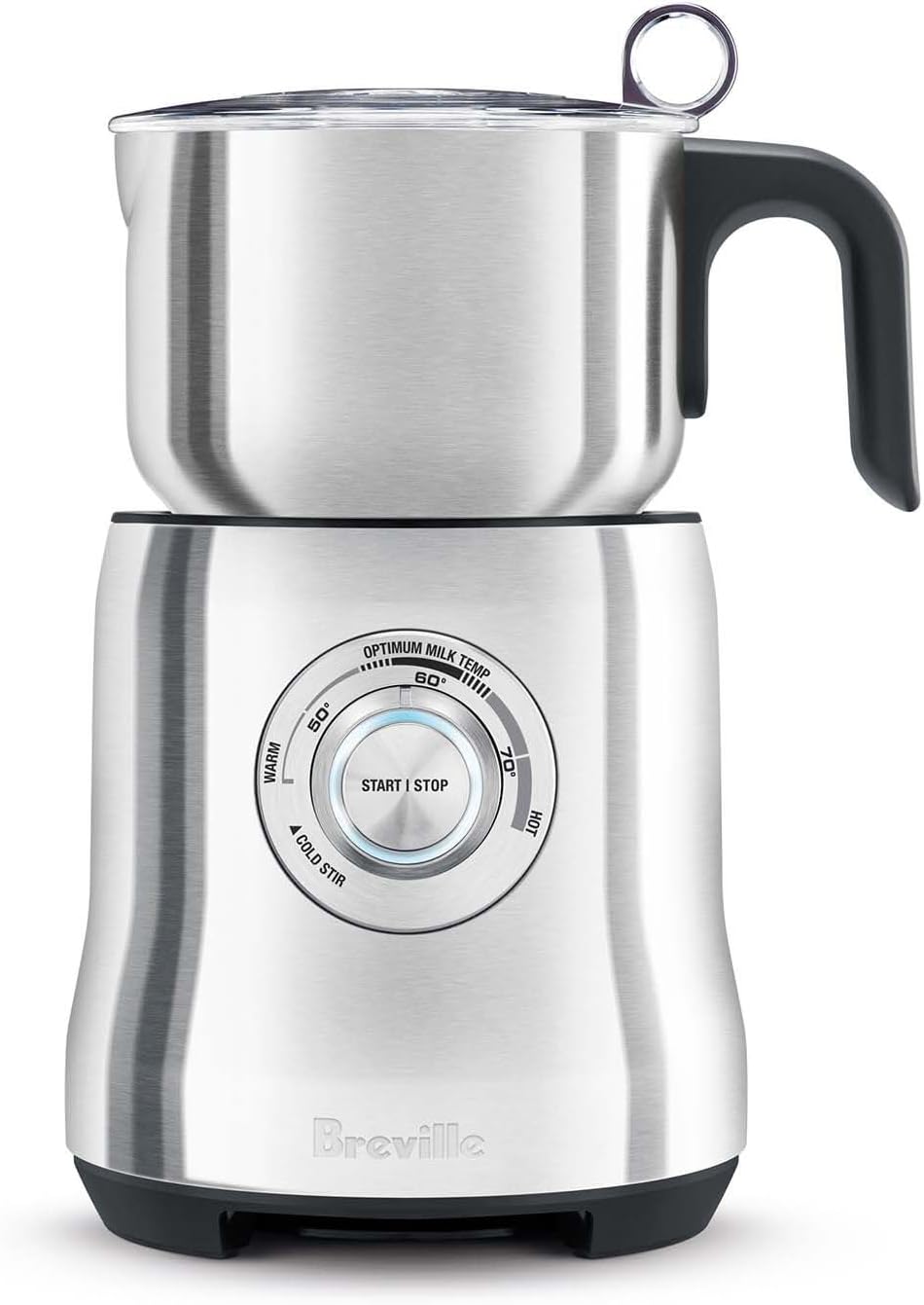
- Price
- $199.95
★ 4.4/5 from 7,306 verified Amazon reviews at $199.95. The closest thing to a steam wand without an espresso machine, because induction heating warms the whole jug evenly instead of shocking the milk from a hotplate. Choose a temperature, pick the latte disc for dense foam or the cappuccino disc for a stiffer one, press start, and it switches off at temperature; The jug goes in the dishwasher. It costs more than most entry-level machines with a wand, so if you own one, buy the $13.86 pitcher instead.
- Pros
- Even induction heating, gentlest on milk proteins
- Two discs for latte vs cappuccino texture
- Auto shut-off, dishwasher-safe jug
- Cons
- $199.95 is espresso-machine money
- One jug means one drink at a time
SIMPLETASTE 4-in-1 Electric Milk Frother, 16.9 oz
Best Budget Electric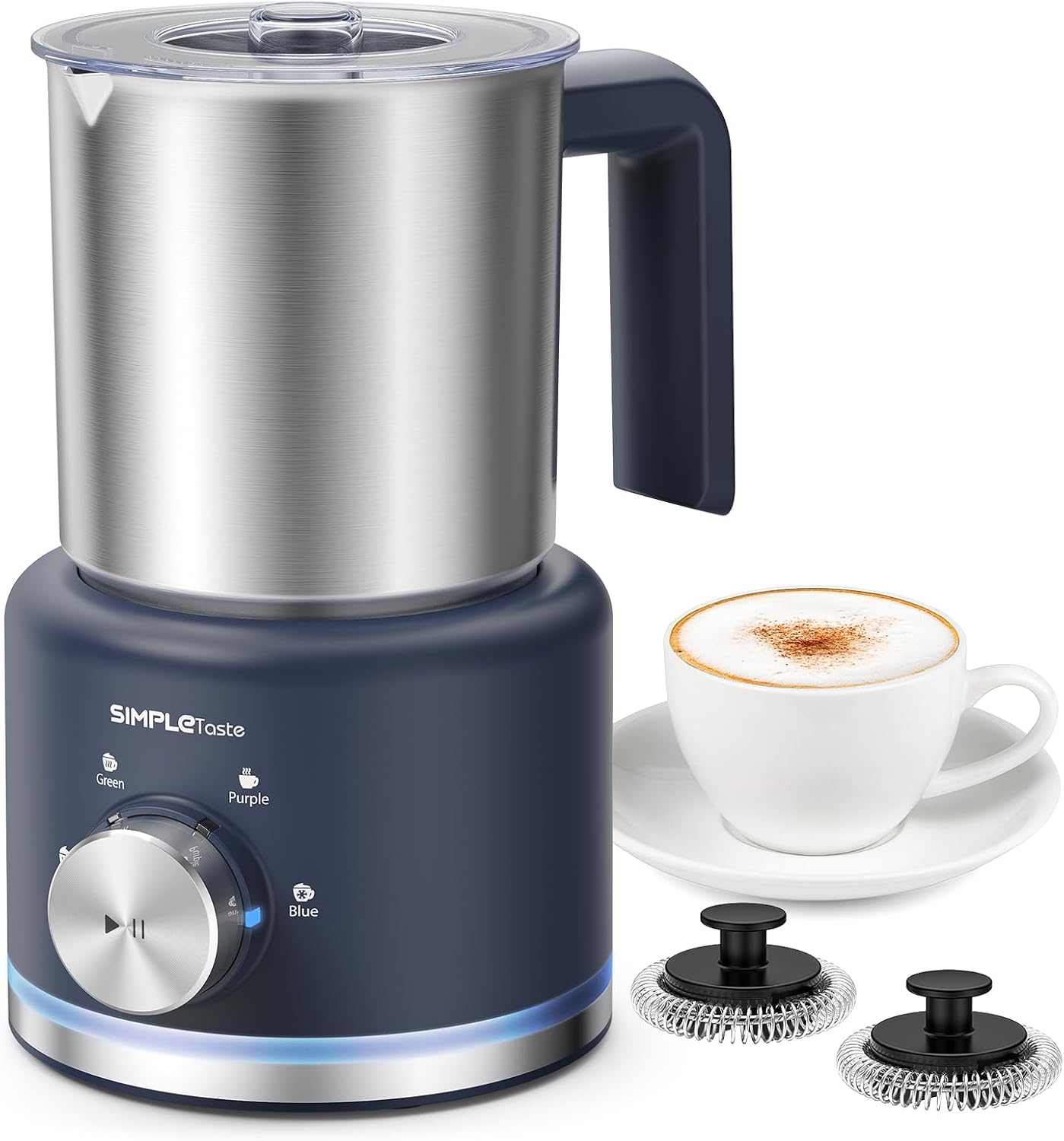
- Price
- $44.97
★ 4.2/5 from 15,166 verified Amazon reviews at $49.97. One knob, four programmes: thick hot foam, thin hot foam, hot milk, cold foam. It heats to 65 ± 5°C, the top of the useful range, so pull the jug a few seconds early. Honest capacities: 500 ml to heat, 250 ml to froth – one large latte. 304 stainless with no non-stick coating and a detachable whisk.
- Pros
- 15,166 reviews at 4.2 stars
- Four programmes including cold foam
- A quarter of the Breville's price
- Cons
- Airy foam, not microfoam
- Only 250 ml of frothing capacity
Zulay Kitchen Handheld Milk Frother
Cheapest That Works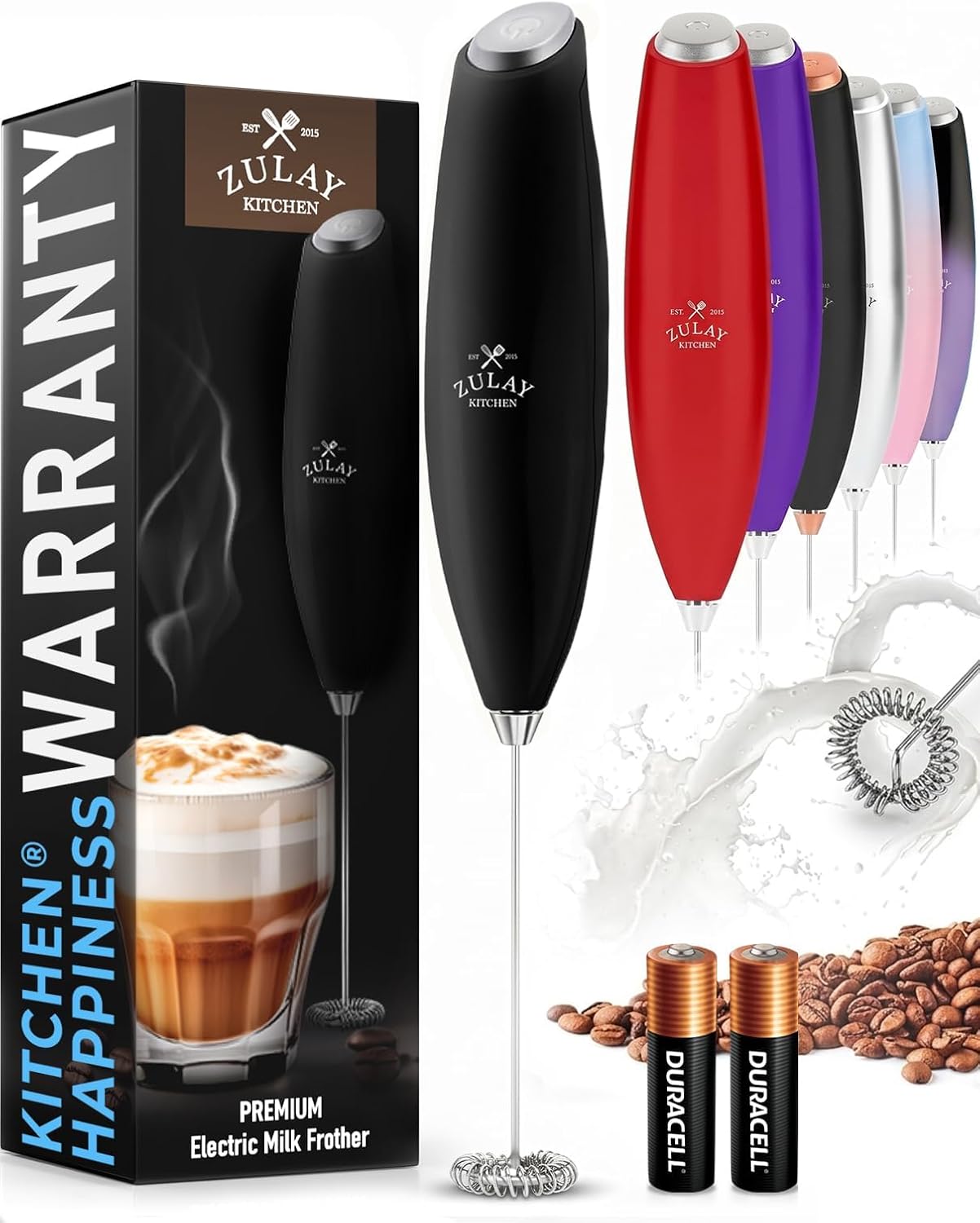
- Price
- $7.99
★ 4.4/5 from 235,622 verified Amazon reviews at $8.99. The largest review base here by a factor of thirty, and the cheapest tool that makes real foam. A 13,000 rpm motor drives a shaft with 25 spiral rings, whipping 4 fl oz of milk into foam in 15–20 seconds; two Duracell batteries are included. It does not heat, so it is wrong for a hot latte and right for iced coffee, cold brew and matcha, and it handles barista oat. Treat it as a consumable at this price.
- Pros
- $8.99 with 235,622 reviews at 4.4 stars
- 15–20 seconds, batteries included
- Best tool for cold foam
- Cons
- No heating – cold foam only
- Battery motor has a finite life
Bodum Chambord French Press, 12 oz
Best No-Electricity Method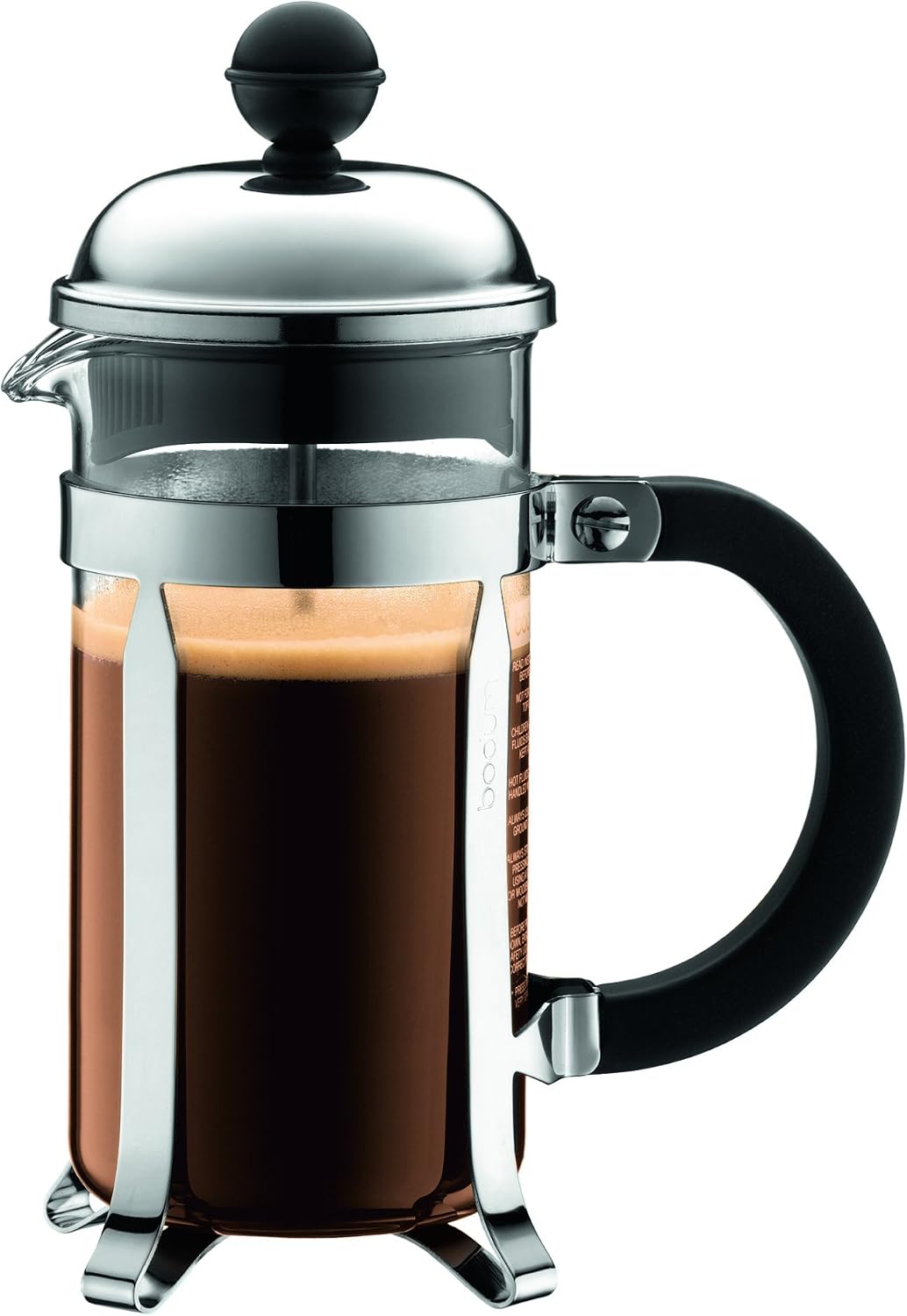
- Price
- $24.99
★ 4.5/5 from 7,261 verified Amazon reviews at $24.99. Sold as a coffee brewer, and good at that – but the 12 oz size is the best frothing tool in the range. Fill it a third, pump 30–45 times, and you have cappuccino foam in half a minute with no electricity. The glass lets you watch the foam form, which makes it the easiest method to learn. Airy foam rather than microfoam, and the carafe is breakable.
- Pros
- No electricity, no consumables
- You can watch the foam form
- Doubles as a one-cup brewer
- Cons
- Airy foam, not microfoam
- Glass carafe is breakable
Dailyart Milk Frothing Pitcher 20 oz with Thermometer
Best for Steam Wands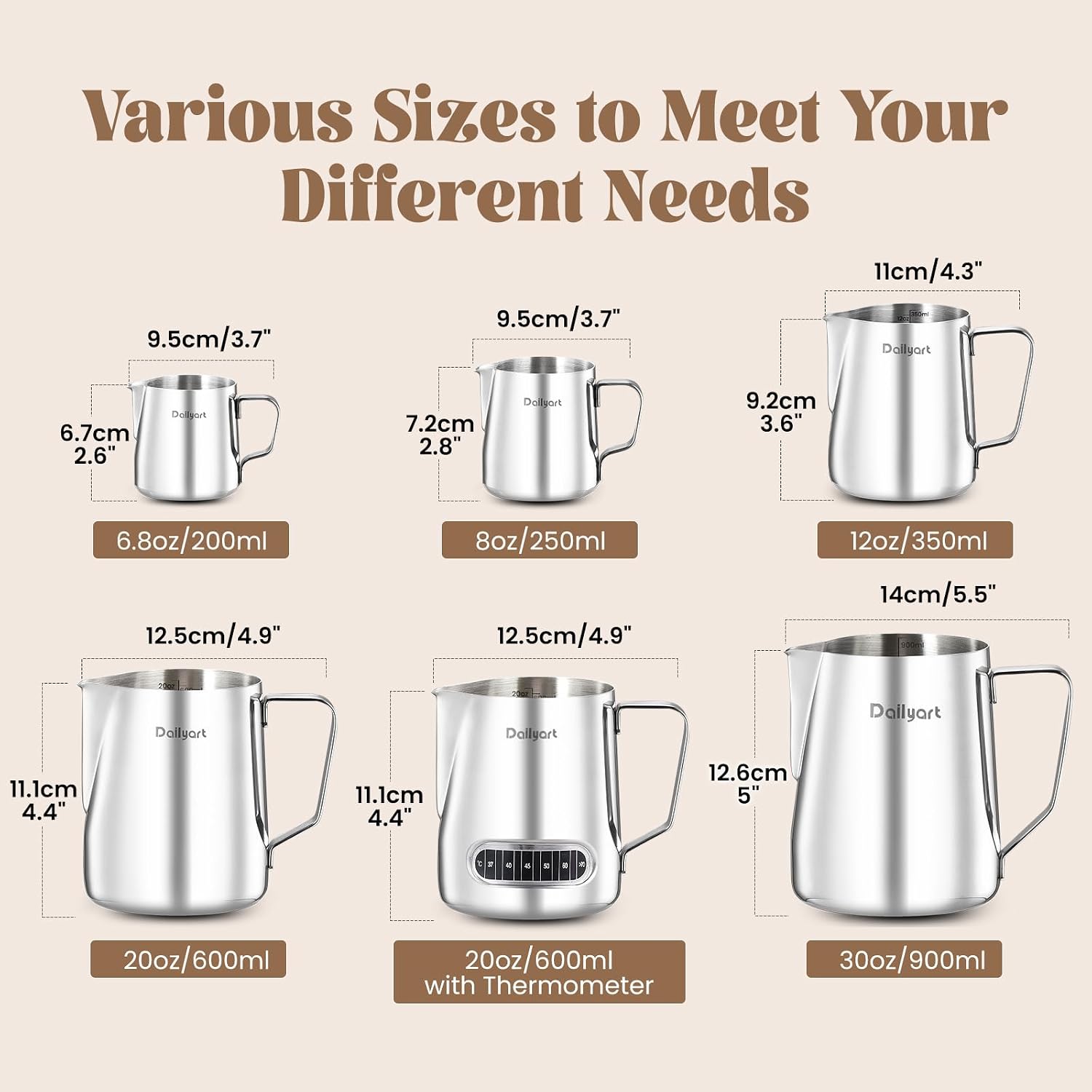
- Price
- $13.86
★ 4.6/5 from 2,680 verified Amazon reviews at $13.86. If you own an espresso machine, this is the only item here you need. Twenty ounces is right for one large latte, with headroom to build a vortex; 304 stainless holds temperature and survives the drip tray; and the strip on the side changes colour as the milk warms, removing the guesswork. Use low-to-medium steam – full steam outruns the strip. Highest rating in this guide.
- Pros
- Highest rating here at 4.6 stars
- Thermometer strip removes the guesswork
- Cheapest real upgrade for a steam wand
- Cons
- Useless without an espresso machine
- Strip reacts slower than a dial probe
Troubleshooting
| Problem | Likely cause | Fix |
|---|---|---|
| Foam collapses within a minute | Milk too hot, over 158°F | Stop at 140–150°F |
| Big soapy bubbles | Aerated too long at the start | 3–5 seconds of air, then vortex only |
| No foam at all | Old milk, or skim/standard plant milk | Check the date; switch to whole or barista |
| Foam sits as a separate layer | Not enough vortex after aeration | Tilt the pitcher, tip 1 cm under, spin until glossy |
| Milk tastes cooked | Overheated, or steamed twice | Never re-steam milk; start fresh and stop earlier |
FAQ
What temperature should frothed milk reach?
Stop at 140–150°F (60–65°C). Below 130°F the foam is unstable and the drink tastes lukewarm; above 158°F (70°C) the whey proteins denature past the point where they hold structure, the milk tastes cooked and the foam collapses. With no thermometer, stop when the pitcher is too hot to hold against your palm for more than two seconds.
Can you froth milk in a French press?
Yes, and it is the best method that needs no electricity. Fill the press no more than one third with milk, put the lid on with the plunger just above the surface, and pump firmly 30 to 45 times over about 30 seconds. Warm the milk to about 140°F first, or pump it cold and microwave for 30–45 seconds afterwards, stirring once.
What milk froths best?
Whole milk at 3.25% fat: the fat stabilises the bubbles. Skim foams higher but the bubbles are larger and collapse quickly. Barista oat works because producers add about 3% fat and stabilisers; standard almond milk foams thin.
Why does my frothed milk collapse?
Usually heat: above 158°F the protein structure holding the air breaks down, so the foam deflates as it cools. The other cause is too much air early – ten seconds of aeration instead of three gives big unstable bubbles. Aerate briefly, then spin.
Do I need an espresso machine to froth milk?
No. A steam wand gives the best microfoam, but a French press, an electric frother or a $9 handheld whisk all produce usable foam for a cappuccino or latte. The texture differs – press and whisk foam is airier and less integrated, which makes latte art harder but does not affect the taste.
Bottom Line
The method matters less than two numbers: aerate for three to five seconds, then stop at 140–150°F. Get those right and a $25 French press makes a passable cappuccino; get them wrong and a $200 appliance makes hot milk with bubbles on top.
With an espresso machine, spend $13.86 on the Dailyart pitcher and learn the wand – the only route to real microfoam, and the cheapest item here. Without one, the Breville Milk Café at $199.95 is the closest substitute, the SIMPLETASTE at $49.97 does the same job with airier foam, and the Zulay at $8.99 covers cold drinks. For the machine side, see our best espresso machine for lattes and the frothing pitcher guide.
