FTC Disclosure: LimeCrema is reader-supported. When you buy through links on our site, we may earn an affiliate commission at no extra cost to you. Learn more.
If you only change one thing about your coffee, change the grinder. The difference between a blade grinder and a burr grinder is the difference between coffee that's randomly bitter or sour and coffee that tastes the way it should. Here's the honest version of why, and when a blade grinder is still fine.
The Short Answer
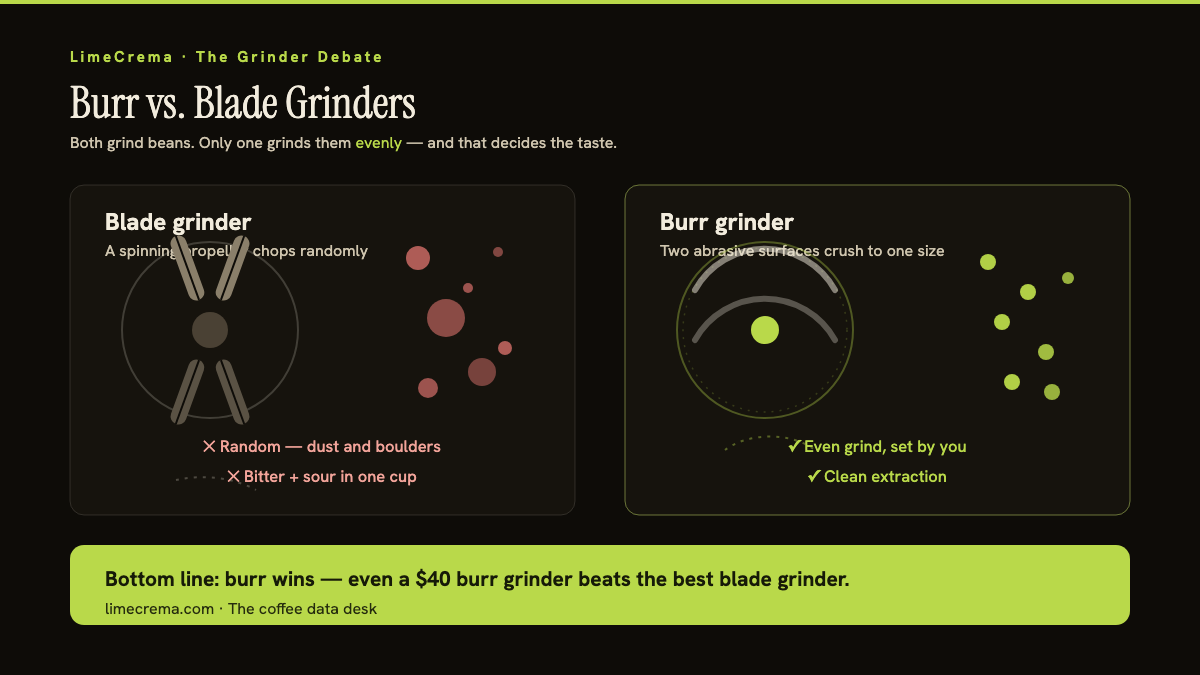
What a Blade Grinder Actually Does
A blade grinder is a spinning propeller. It chops beans until you stop it – which means the pieces are random: fine powder alongside coarse chunks. When you brew, the fine particles over-extract (bitter) while the coarse ones under-extract (sour). The result is muddy, inconsistent coffee. You can improve it by shaking the grinder or grinding in pulses, but you can't fix the fundamental randomness.
What a Burr Grinder Actually Does
A burr grinder has two abrasive surfaces (conical or flat) that crush beans to a consistent size. You set the grind – coarse for French press, fine for espresso – and every particle comes out close to that size. Consistent particle size means even extraction, which means the coffee tastes like the beans, not like the grinding. That's why every serious coffee drinker and every cafè uses burrs.
Head to Head
| Blade Grinder | Burr Grinder | |
|---|---|---|
| Grind consistency | Random – dust + boulders | Uniform, set by you |
| Taste | Bitter + sour in the same cup | Clean, even extraction |
| Espresso-capable | No – can't grind fine enough | Yes (with fine settings) |
| Price | $15–30 | $40–300+ |
| Best for | Spices, occasional coffee | Anyone who drinks coffee daily |
Two Real-World Examples
To make the difference concrete, here are the best-selling grinders from each camp – verified Amazon data, September 2026.
Cuisinart DCG-20BKN – the blade classic
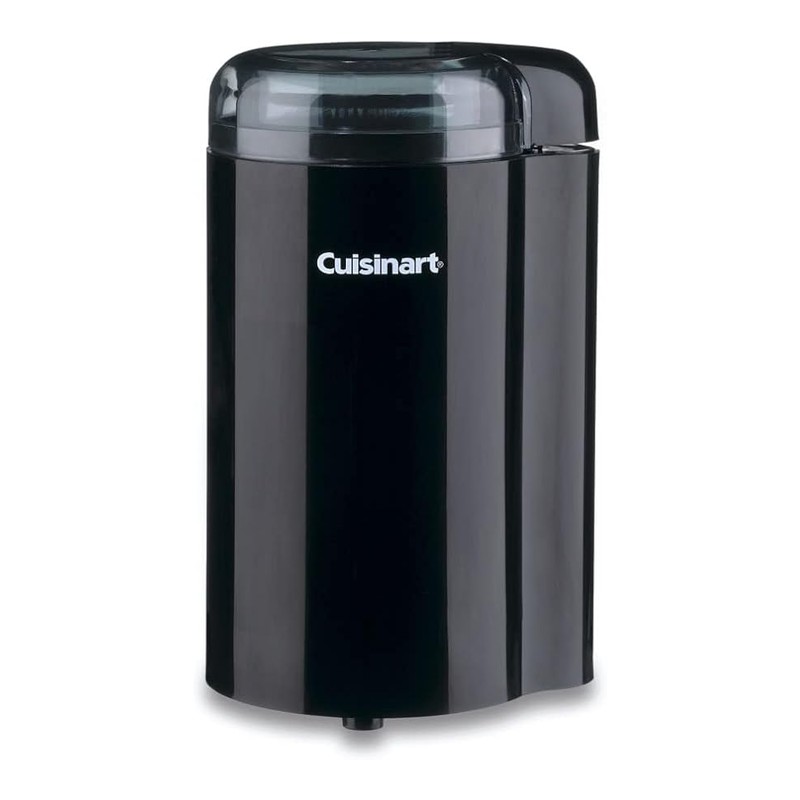
★ 4.4/5 from 14,000+ verified Amazon reviews. This is the blade grinder that defined the category – a one-touch pulse switch, stainless steel blades and a dishwasher-safe cup. At $25 it grinds coffee perfectly fine. It just grinds it randomly, which is exactly the trade-off explained above.
Check price on Amazon →OXO Brew Conical Burr – the burr upgrade
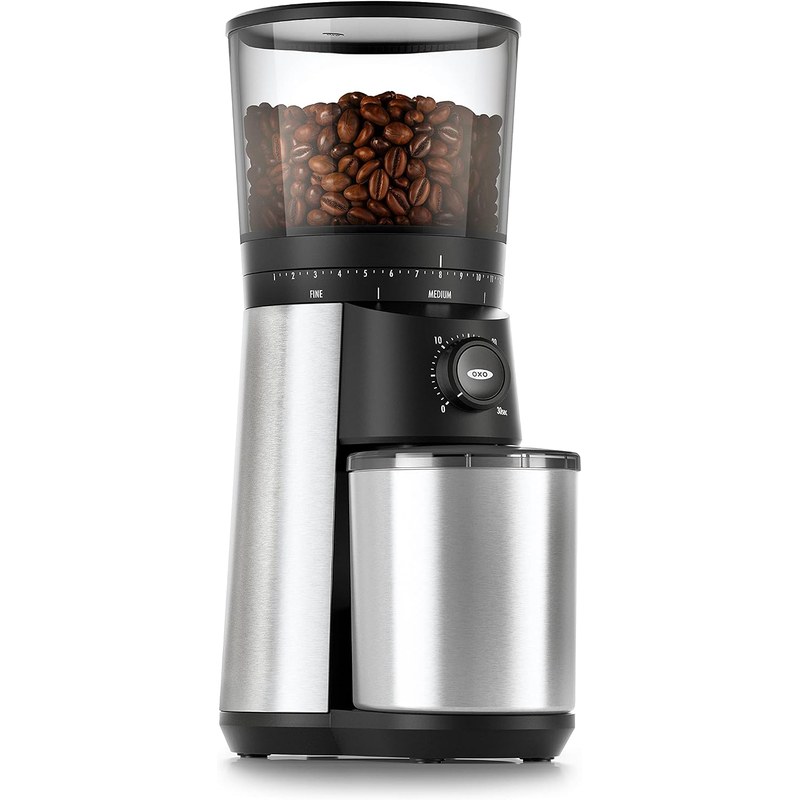
★ 4.3/5 from 23,000+ verified Amazon reviews. The winner of our best burr grinder guide – the most proven grinder in its class. One-touch dosing, 43 settings from espresso to cold brew, stainless steel conical burrs. For three times the price of the Cuisinart you get the single biggest taste upgrade available in coffee.
Check price on Amazon →When a Blade Grinder Is Still Fine
Honestly? If you drink coffee occasionally, use pre-ground beans, or only make drip coffee from a cheap machine, a blade grinder won't ruin your day. The jump from pre-ground to freshly blade-ground is still a step up. But the moment you care about the taste of your coffee – or want espresso – a burr grinder is the first upgrade to make. It matters more than the machine you brew with.
Conical vs Flat Burr
Within burr grinders: conical burrs (most home grinders) are quieter, cheaper and easier to maintain – ideal for home use. Flat burrs are more consistent at the finest settings and preferred by espresso enthusiasts, but cost more. For 95% of home users, a good conical burr grinder is the right call. See our best burr grinder guide for the picks.
How Much Should You Spend?
- $40–60: decent conical burr grinders – a massive upgrade over blades
- $80–200: the sweet spot – consistent burrs, more settings, better build
- $200+: espresso-grade precision and prosumer features
