FTC Disclosure: LimeCrema is reader-supported. When you buy through links on our site, we may earn an affiliate commission at no extra cost to you. Learn more.
Prices shown are pulled from the Amazon API and were last checked on 01.11.2026. Amazon prices and availability change constantly – the price on Amazon at the time of purchase is the one that applies.
A French press is the most forgiving brewer in the kitchen and the most punishing one, depending on what you put in it. It forgives sloppy pouring, a cold carafe and bad technique. It does not forgive the wrong grind, or a bean with nothing left after four minutes.
The mesh filter is why. Water and coffee sit together for about four minutes, and metal lets oils and fine particles into the cup that paper would have trapped – so flavours that read as bright through a Chemex can read as sour without one. We picked six bags that hold up: four whole-bean coffees worth grinding coarse, one pre-ground bag already the right size, and one Italian classic that behaves well under immersion. Prices and review counts were read on Amazon.com on 1 November 2026.
One limit up front: we have not cupped these bags side by side in a lab. We can tell you roast level, origin, the grind the roaster recommends and what thousands of owners report – and where a claim is the roaster's rather than ours, we say so.
| Bean | Best for | Price | Link |
|---|---|---|---|
| Peet's Major Dickason's | Best overall | $9.97 | View on Amazon |
| Lavazza Crema e Aroma | Best value per ounce | $22.53 | View on Amazon |
| Stumptown Holler Mountain | Best medium roast | $14.98 | View on Amazon |
| Kicking Horse Kick Ass | Best dark roast | $10.48 | View on Amazon |
| Primos French Press | Best pre-ground | $14.99 | View on Amazon |
| illy Classico | Smoothest, least bitter | $14.99 | View on Amazon |
What a French press actually asks of a bean
A French press is an immersion brewer with a metal mesh filter: water and coffee sit together about four minutes, then a plunger presses the grounds down. Three consequences change which coffee you should buy.
The mesh lets oils through. Paper traps most of the oils and the fine particles that carry them; a 300–400 micron mesh does not. That is why a press tastes rounder and heavier than the same bean in a Chemex – and why a stale bag tastes flat here, because oxidised oils are the first thing you notice when nothing filters them out.
Contact time is long. Four minutes extracts more of the bitter, woody compounds at the tail of the curve than a two-and-a-half-minute pour over, and a very dark bean has already had its sugar caramelised away, leaving nothing to balance the char.
Temperature drops fast. A cold carafe pulls 8–12°F out of the slurry in the first minute, so pre-heat it.
Grind, dose and time: the numbers that matter
- Grind: coarse, 800–1,000 microns, like coarse sea salt. On a numbered grinder, French press usually sits two to four clicks coarser than drip.
- Ratio: 1:15 by weight to start – 30 g coffee to 450 g (15 fl oz) water for a two-cup press, 60 g to 900 g for a large one.
- Bloom: pour twice the coffee's weight in water, wait 30 seconds, then add the rest. Skipping this is why some presses taste hollow.
- Steep: 4 minutes total, lid on, plunger up.
- Press: slowly, over about 10 seconds. If it fights back, the grind is too fine.
- Pour: decant immediately. Coffee left on the grounds keeps extracting and turns bitter within five minutes.
Treat those as a starting point. If the cup tastes weak and sour, grind one click finer before adding coffee; if it tastes dry and bitter, coarsen the grind first. Grind size moves the cup more than any other variable.
Dark or medium roast for immersion brewing?
The honest answer is medium-dark, for mechanical reasons. Roast level decides how much of the bean has been broken down before water touches it. Medium roasts – roughly Agtron 55–65, brown with no visible oil – keep enough sugar and acid to give the cup shape after four minutes of steeping. Dark roasts at Agtron 40–50 have surface oils, smoky-sweet aroma and far less acidity: instant body, but a narrow margin before they turn ashy.
Light roasts are the awkward case. Through paper, a light Ethiopian gives clarity and fruit; through a metal mesh it often reads thin and sharp – all acidity, no middle. Not wrong, just a deliberate choice. So: drink it black and want the classic heavy cup, buy medium-dark. Take milk, buy darker than you think – milk flattens acidity, and a medium roast that tastes balanced black will taste like nothing under 60 ml of whole milk.
The 6 best coffee beans for French press
Peet's Coffee Major Dickason's Blend Whole Bean, 10.5 oz
Best Overall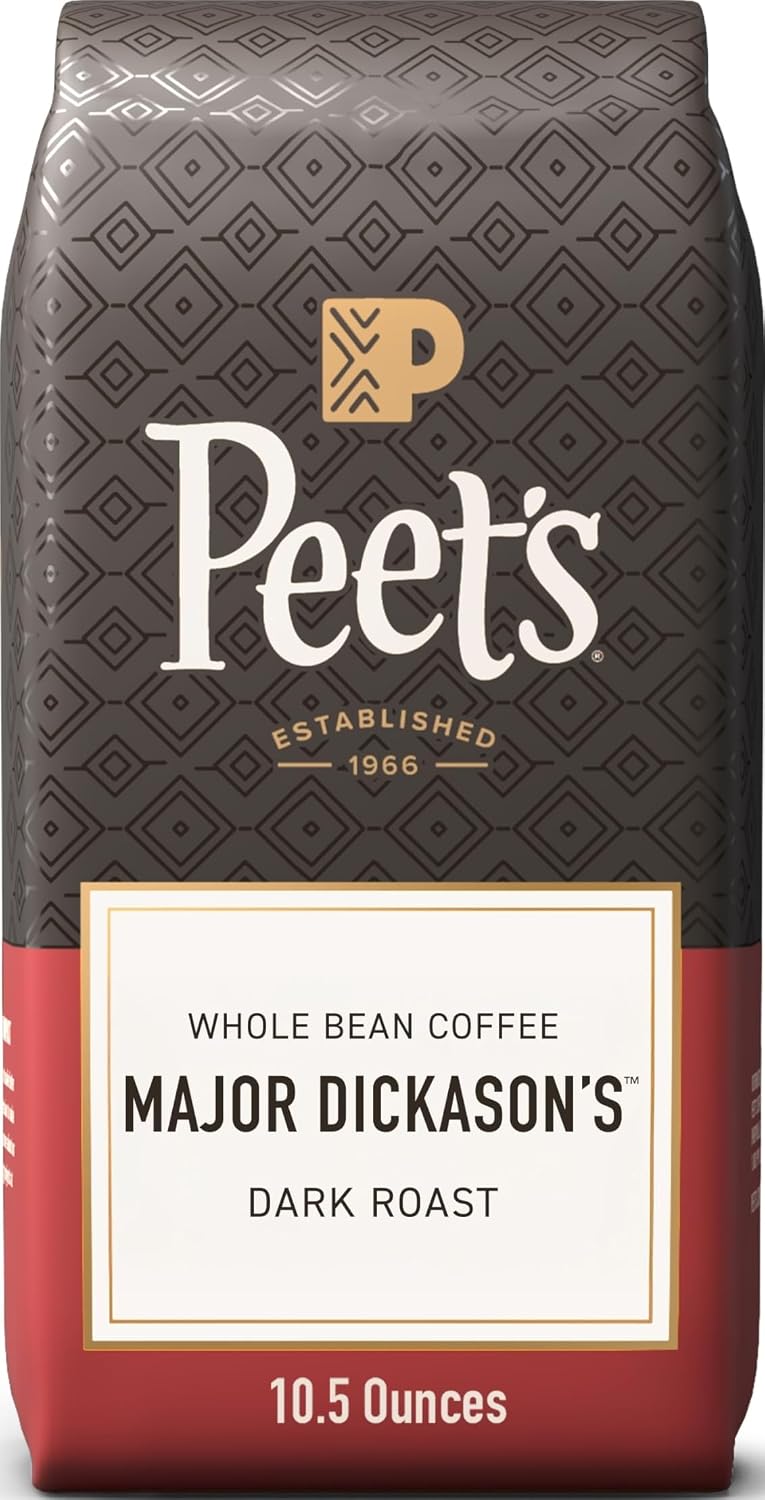
- Price
- $9.97
★ 4.6/5 from 8,552 verified Amazon reviews at $9.97. Major Dickason's is the blend Peet's built its name on, and it suits a press for a boring reason: the bag says so. Peet's instructions name coarse-ground coffee – "the consistency of coarse sea salt" – explicitly for French press. Full-bodied and chocolatey with an earthy finish, and at 95 cents an ounce the cheapest per dose here. Trade-off: supermarket availability, so check the date.
- Pros
- Roaster explicitly recommends coarse grind for French press
- Full body, chocolate and earth, low acidity
- Cheapest per dose of the six
- Cons
- Dark roast leaves little origin character
- 10.5 oz bag empties fast at 30 g a brew
- Shelf stock can be older than a specialty roaster's
Lavazza Crema e Aroma Whole Bean, 2.2 lb
Best Value
- Price
- $22.53
★ 4.5/5 from 16,409 verified Amazon reviews at $22.53. Lavazza sells this as an espresso blend, and it is – but the 2.2-pound bag is where the value lives: 64 cents an ounce, about 68 cents per 30 g dose. Arabica and Robusta, medium roast, intensity 8/10, chocolate on the nose. The Robusta adds the body that stops cheap beans tasting watery in a press. Dose lower than you would an Arabica blend: Robusta extracts aggressively.
- Pros
- 64 cents an ounce – cheapest per cup by a wide margin
- Robusta adds body that suits immersion brewing
- 2.2 lb bag lasts a month of daily brewing
- Cons
- Not a single origin; flavour is broad rather than precise
- Robusta can read harsh if overdosed
- Big bag goes stale before it is finished if you brew once a week
Stumptown Holler Mountain Organic Whole Bean, 12 oz
Best Medium Roast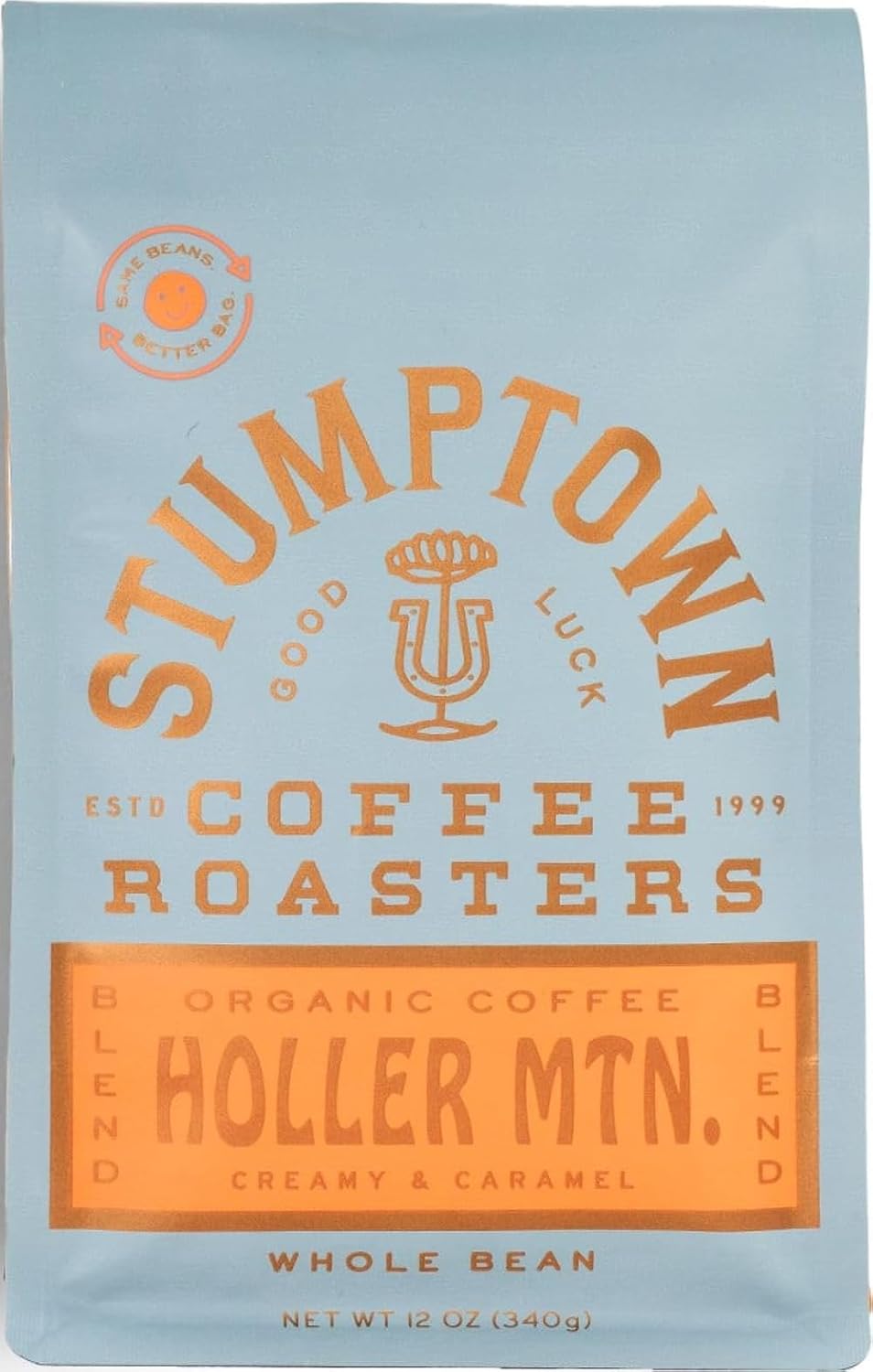
- Price
- $14.98
★ 4.3/5 from 4,698 verified Amazon reviews at $14.98. Holler Mountain is Stumptown's oldest blend and most versatile: citrus and berry jam up front, caramel through the middle, enough body for a press. Organic, 100% Arabica, Direct Trade, $1.25 an ounce. The pick if you find Peet's too roasty and Lavazza too blunt. Its rating is the lowest here at 4.3, and owners report variation between bags.
- Pros
- Real fruit and caramel complexity, not just roast
- Organic and Direct Trade sourcing
- Works in press, drip and espresso
- Cons
- Lowest rating on this list at 4.3
- Bag-to-bag variation reported by owners
- $1.25/oz is mid-premium for a blend
Kicking Horse Kick Ass Dark Roast Whole Bean, 10 oz
Best Dark Roast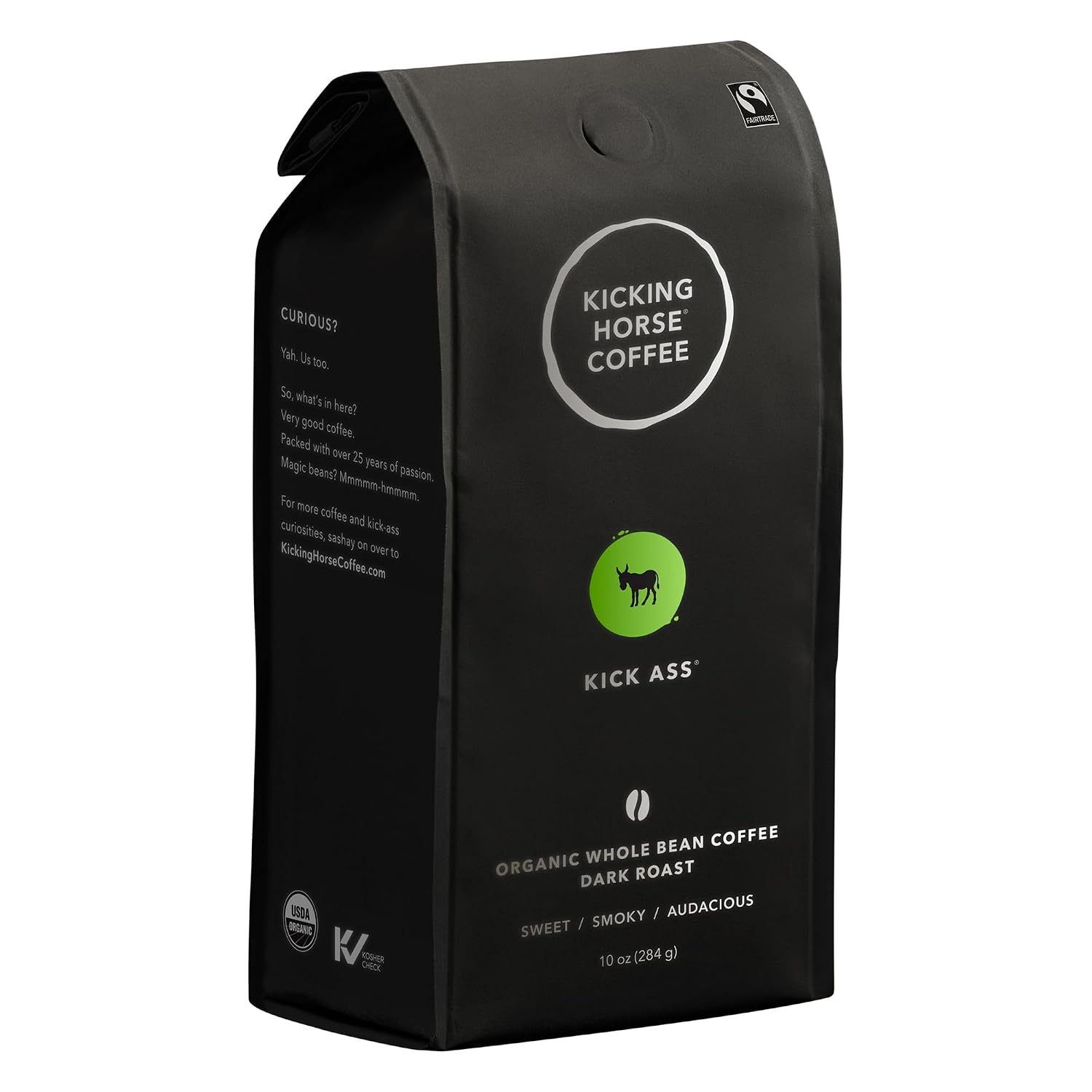
- Price
- $10.48
★ 4.5/5 from 8,310 verified Amazon reviews at $14.99. The darkest cup here that does not taste ashy. Kicking Horse describes chocolate malt, molasses and licorice with an earthy finish – a dark roast that keeps its sweetness. Organic, 100% Arabica, no flavourings. Heaviest body of the six, which makes it the best match for coffee with milk. At $1.50 an ounce, also the priciest per gram.
- Pros
- Dark roast that stays sweet rather than ashy
- Organic, no additives, 100% Arabica
- Heaviest body in this guide
- Cons
- $1.50/oz – the priciest per gram here
- 10 oz bag is small for daily brewing
- Dark roast hides origin character by design
Primos French Press Coffee, Coarse Ground, 12 oz
Best Pre-Ground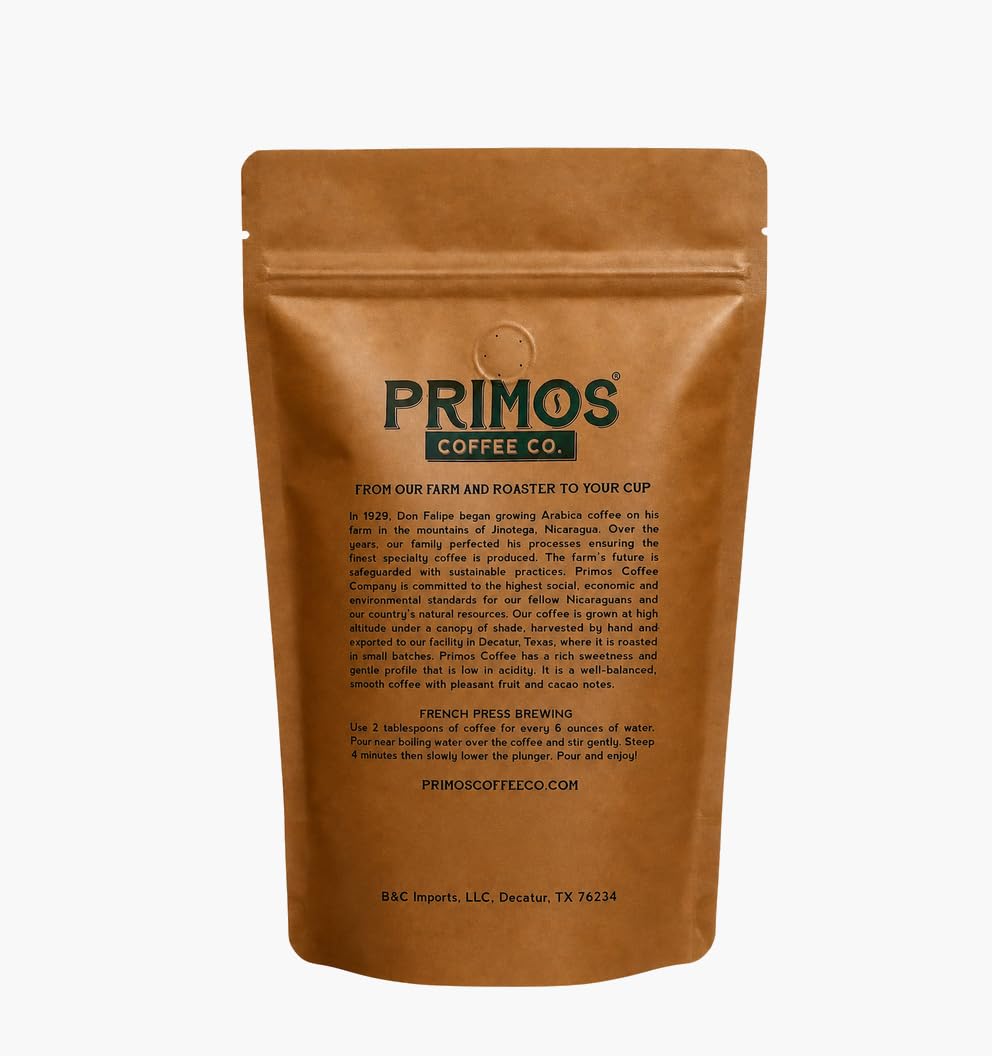
- Price
- $14.99
★ 4.4/5 from 2,451 verified Amazon reviews at $14.99. The only bag here ground for you, and ground correctly: Primos sells a coarse grind sized for immersion, which removes the main reason press coffee comes out muddy. Single-estate Nicaraguan Arabica, shade grown, hand harvested, medium roast with fruit and cacao, deliberately low acid. $1.25 an ounce is whole-bean money for a ground product – the fair criticism. With no grinder, still the best option.
- Pros
- Ground coarse specifically for French press
- Single-estate, traceable Nicaraguan Arabica
- Low-acid, smooth medium roast
- No grinder required
- Cons
- Pre-ground stales faster than whole bean
- Whole-bean price for a ground product
- Only 2,451 reviews – a smaller base than the leaders
illy Classico Whole Bean Coffee, 8.8 oz
Smoothest Cup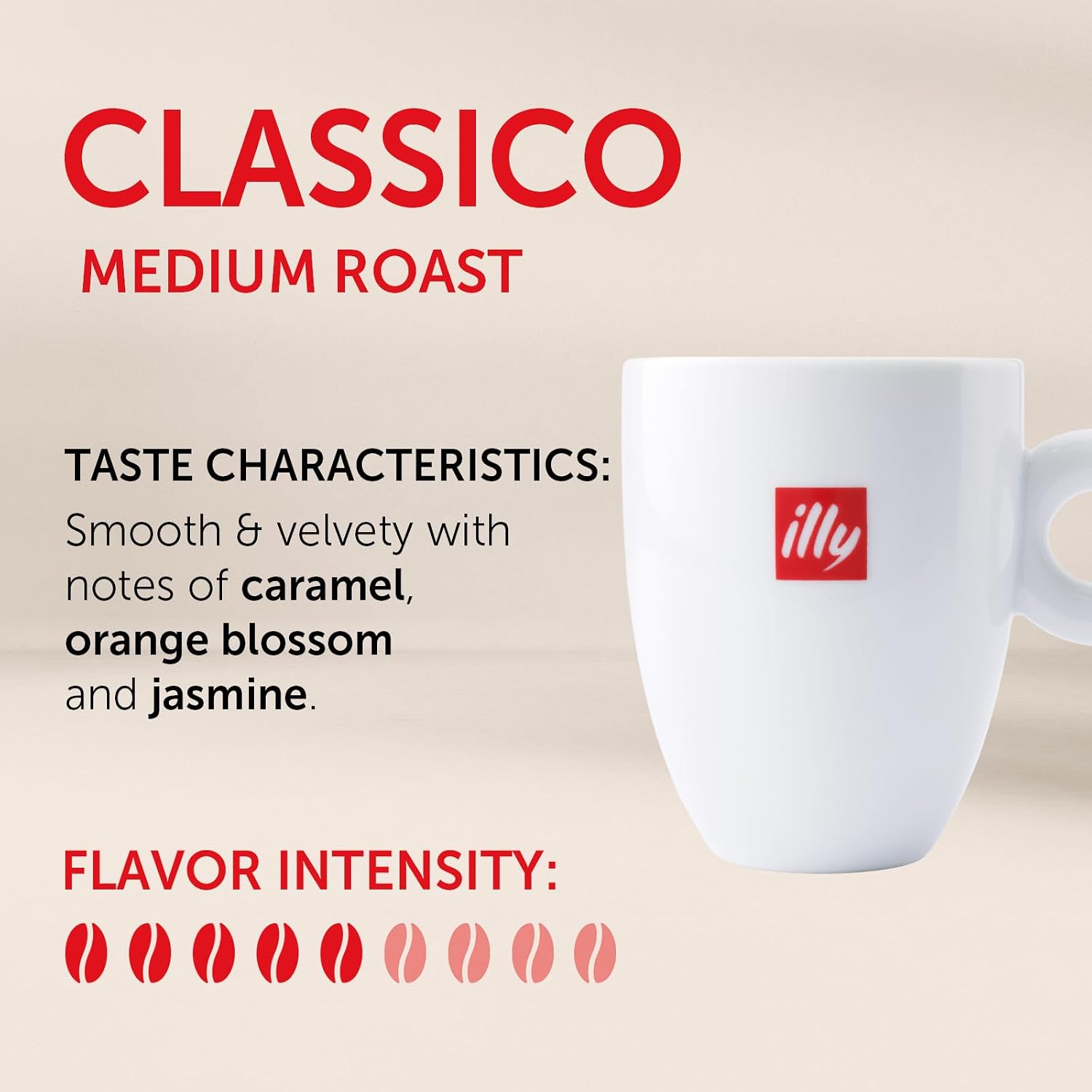
- Price
- $14.99
★ 4.5/5 from 4,356 verified Amazon reviews at $13.19. illy Classico is the lowest-bitterness coffee here, and that is its whole argument. Nine origins, 100% Arabica, medium roast, caramel and orange blossom; the cup stays soft even when you over-extract it. The pressurised can holds freshness well. The catch is arithmetic: 8.8 ounces at $13.19 is $1.50 an ounce, barely eight doses.
- Pros
- Smoothest, least bitter cup here
- Pressurised can holds freshness well
- Forgiving if you over-steep
- Cons
- $1.50/oz and only 8.8 oz per can
- Delicate profile can taste thin through a metal filter
- Expensive for a coffee that is not single origin
Whole bean or pre-ground?
Whole bean, if you own any burr grinder. Ground coffee loses most of its aromatic volatiles within 15 minutes and goes flat within a week; whole beans hold three to four weeks after the roast date. Nothing filters out the oxidation products in a press, so you taste the difference directly.
Pre-ground is not a moral failure. With no grinder, a correctly coarse bag like the Primos beats whole bean hacked at with a blade grinder, which produces dust and boulders that clog the mesh. Coarse and fresh beats fine and fresh; fresh beats stale. Store beans opaque and airtight at room temperature – never the fridge, where condensation forms every time you take the bag out. Our storage container guide has the details.
What $10 actually buys, per cup
Price per bag is a distraction. At a 30 g dose, a 10.5 oz bag yields about 10 brews, a 12 oz bag about 11, the 35.2 oz Lavazza about 33. Per cup: Peet's $1.00, Lavazza $0.68, Stumptown $1.36, Kicking Horse $1.67, illy $1.65.
FAQ
What grind size is best for a French press?
Coarse – roughly 800 to 1,000 microns, the texture of coarse sea salt. Medium grinds slip through the mesh and leave sediment; espresso-fine grinds clog the filter and turn the brew muddy. Aim for the coarsest setting that still looks like coffee rather than gravel.
How much coffee should I use for a French press?
Start at 1:15 by weight – 30 g of coffee to 450 g of water for a two-cup press, 60 g to 900 g for a large one. That is stronger than drip because immersion extracts less efficiently. Adjust from there: 1:17 if it tastes heavy, 1:13 if it tastes thin.
Is dark roast better for French press?
Medium-dark is the sweet spot for most drinkers. A press keeps the oils and fines a paper filter traps, which builds body, but it does nothing to hide bitterness – an oily, very dark roast can turn harsh over four minutes. A medium or medium-dark roast gives you the body without the ash.
Can I use pre-ground coffee in a French press?
Yes, as long as it is coarse. Supermarket "all-purpose" grinds are usually too fine and leave sludge, so look for bags labelled coarse, French press or immersion grind – Primos grinds specifically for the method. Pre-ground stales faster than whole bean, so buy smaller bags.
Why does my French press coffee taste bitter or muddy?
Three usual causes: the grind is too fine, the steep ran past five minutes, or the plunger was pushed hard and forced fines through the mesh. Coarsen the grind, stop at four minutes, press slowly over about ten seconds, and decant immediately rather than leaving coffee on the grounds.
Should I use boiling water in a French press?
No. Boiling water scalds the coffee and pulls out harsh, burnt notes. Use 195–205°F (91–96°C): boil the kettle, then wait 30 to 45 seconds. Pre-heating the carafe also stops the brew dropping 10°F in the first minute.
Bottom Line
Buy the Peet's Major Dickason's if you want one bag that does everything – it is the only coffee here whose roaster prints French press instructions on the bag. Buy the Lavazza Crema e Aroma 2.2 lb bag if you brew daily and care about cost per cup; at 68 cents it is roughly half the specialty options. Stumptown Holler Mountain brings fruit and caramel, Kicking Horse Kick Ass suits coffee with milk, and Primos is the no-grinder option. The illy Classico is the smoothest cup of the six and the worst value per ounce.
Whichever bag you choose, the grind matters more than the label: coarse, consistent, 1:15, four minutes, 200°F. If your press tastes muddy, the fix is usually a better grinder – our grinder guide covers that, and the French press buying guide covers the brewer.
